After running 50+ campaigns across DeFi protocols, GameFi platforms, token presales, and Web3 wallets, the ICODA team keeps seeing the same mistakes kill good projects. Not bad tech. Not bad timing. Bad marketing decisions that were entirely avoidable.
CoinGecko has tracked over 20 million crypto projects — more than half are now dead, and 96% of token failures since 2021 occurred in 2024–2025 alone. The graveyard isn’t full of bad ideas. It’s full of good projects that treated marketing as an afterthought. These aren’t edge cases. They’re patterns — and as a crypto marketing agency that has audited hundreds of campaigns, we see all of them weekly.
Mistake #1: Buying Engagement Instead of Building It
Inflated social metrics fool nobody who matters — and actively destroy credibility with the investors and partners you actually need.
The temptation is obvious. A Telegram group with 50,000 members looks impressive in a deck. But experienced investors run due diligence, and what they find tells a very different story: groups with five organic messages a day, X accounts that spiked from 2,000 to 80,000 followers in a week, Discord servers packed with bots posting emoji reactions that never ask a real question.
Tools like FollowerAudit, Social Blade, and on-chain analytics make verification trivial. When a venture fund, an exchange listing team, or a blockchain marketing agency partner discovers padded numbers, the damage is instant and often permanent.
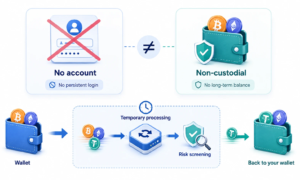
What ICODA does instead: For a non-custodial crypto exchange in open beta, the team replaced paid promotion with native comment-based testing across YouTube and Reddit — story-driven posts inside threads where real users were already debating exchanges and fees. No branding, no ad spend, no inflated metrics. In four weeks: 2.4M+ organic views, 100% Top Comment placement on YouTube, and real user feedback that shaped the entire messaging strategy.
Mistake #2: Treating the Launch as the Finish Line
Marketing that stops at TGE (Token Generation Event) is the single most common reason crypto projects lose momentum within 60 days.
The data is unambiguous: the majority of failed crypto projects in 2024–2025 didn’t collapse because of bad technology. They collapsed because awareness dried up after the initial buzz. Projects that stop marketing after launch spend three to five times more to recapture the same attention later — often when sentiment has already turned.
This is a structural budget problem, not a strategy problem. Teams allocate everything to pre-launch, then find themselves with empty pipelines post-TGE. Every responsible crypto marketing agency builds a post-launch roadmap before the first ad goes live — because compounding only works if you don’t stop.
The fix is simple but ignored: Build a 12-month marketing roadmap before launch — with monthly milestones, content calendars, quarterly budget allocation, and community retention mechanics. Post-launch, treat every month as a new campaign: product updates, educational content, ecosystem partnerships, milestone announcements. Projects that stop at TGE spend three to five times more to recapture the same attention later.
Mistake #3: Running Paid Ads Before the Product Is Ready
Paid advertising amplifies whatever already exists — if that’s an incomplete product, you’re paying to give thousands of users a bad first impression.
Too many teams allocate 40–60% of their initial budget to PPC campaigns and crypto ad placements before they have a working MVP or basic documentation. The result is predictable: high click-through rates, abysmal conversion, and a first impression that’s nearly impossible to reverse.
The crypto audience has a long memory. A user who clicks an ad, lands on a broken dApp, and leaves will remember it months later. They share the experience on crypto Twitter, Reddit, and Telegram. Google restricts crypto advertising to certified exchanges in approved regions. Meta requires pre-approval for blockchain marketing agency campaigns. These platforms don’t make exceptions for projects that aren’t ready.
| Readiness Checkpoint | Before Ads | Notes |
| Functional MVP or testnet | ✅ Required | Users need something to interact with |
| Whitepaper + tokenomics | ✅ Required | Investor-grade documentation |
| Audit report published | ✅ Required | Trust signal for DeFi/GameFi |
| Active community channels | ✅ Required | Somewhere to direct traffic |
| Legal compliance review | ✅ Required | Especially for EU (MiCA) and US markets |
| Landing page with clear CTA | ✅ Required | Conversion point must exist |
Skipping any of these before spending on paid acquisition is burning budget. Build the foundation first.
Mistake #4: Ignoring AI Search Visibility
Most crypto projects have zero idea whether they appear in ChatGPT, Perplexity, or Google AI Overviews — and that blind spot is costing them users they never see leave.
This is the mistake we’re watching accelerate in real time. AI-driven traffic grew 4,700% year-over-year by mid-2025, and when AI summaries appear, users click traditional links at half the rate. A user asks ChatGPT which DEX to use, gets three recommendations, visits one directly — your analytics never register the loss because they never arrived to begin with.
Less than 15% of crypto projects have taken meaningful steps to optimize for LLM visibility. That gap is an opportunity — but it’s closing fast.
AI SEO for crypto is something the ICODA team handles directly. We ran a full LLM visibility strategy for a crypto prop trading firm entering a saturated niche: within 90 days, the brand achieved consistent top positions in Google AI Overviews, ChatGPT, Perplexity, and Gemini for high-intent discovery queries — despite a major Google Core Update hitting the sector during that period. The method was the same one we apply across all our blockchain marketing agency engagements: authoritative content clustered around core topics, PR placements in trusted editorial sources, and technical structure that gives LLMs the clarity to confidently cite and summarize the brand.
That same expertise extends beyond crypto. For brands outside the Web3 space that need identical LLM visibility results, the team runs STIVE — an AI marketing agency focused on organic discoverability across all industries. It’s the same practice, the same methodology, applied to a different vertical. One team, two focused applications.
What AI SEO requires in practice:
- Topical authority over isolated posts — 15–20 interconnected pages on a specific topic outperform one comprehensive guide
- Editorial presence in trusted sources — LLMs are trained on credible publishers; if you’re not there, you don’t exist to them
- Structured, question-answering content — AI rewards content that directly answers specific queries, not keyword stuffing
- Schema markup and entity clarity — Help LLMs understand exactly what your project does and who it serves
- Monitoring your LLM footprint — Tools like LLMrefs track where your brand appears (or doesn’t) across ChatGPT, Perplexity, Gemini, Claude, and Grok
Most crypto marketing agencies are still optimizing for 2020 Google. Your users have already moved on.
Mistake #5: Messaging Everyone, Reaching No One
Targeting “all crypto investors” is not a targeting strategy — it’s a way to waste budget on audiences who will never convert.
A DeFi yield farmer has completely different motivations than someone buying their first Bitcoin. A GameFi player responds to entirely different triggers than an institutional LP assessing a token round. When you try to speak to everyone, you write copy so generic it connects with no one.
This shows up as a specific pattern: projects run identical messaging across Telegram, X, LinkedIn, Discord, and YouTube — same language, same visuals, same CTA. The result is mediocre performance on every channel, not because the channels are wrong, but because no message is built for any particular person on any of them. Sharp audience segmentation is what separates an effective crypto marketing agency strategy from one that burns budget evenly across channels and measures nothing.
The approach that actually works:
- Define one or two primary audience segments before allocating any channel budget
- Map each segment to the channels where they actually spend attention
- Build distinct creative and messaging for each segment
- Measure conversion, not just impressions, to validate segment-channel fit
- Expand to new segments only after establishing traction with the first
ICODA’s campaigns consistently outperform on conversion — not because of larger budgets, but because of sharper segmentation from day one.
The Pattern Behind All Five Mistakes
Every one of these errors shares a common root: building for launch momentum rather than long-term authority. Purchased engagement, launch-only budgets, premature ad spend, invisible AI footprints, and generic messaging are all symptoms of the same short-term mindset.
Projects that outlast their competitors build compounding assets: genuine communities, content that earns LLM citations, paid channels activated only when the product can convert, and messaging sharp enough to cut through noise. Working with the right crypto marketing agency — one that spots these patterns before they cost you — is often what separates the projects that compound from the ones that fade after month two.
If you’re making any of these mistakes — and most projects are making at least two — an audit takes 30 minutes. The cost of not doing one is measured in wasted budget and lost users every week.