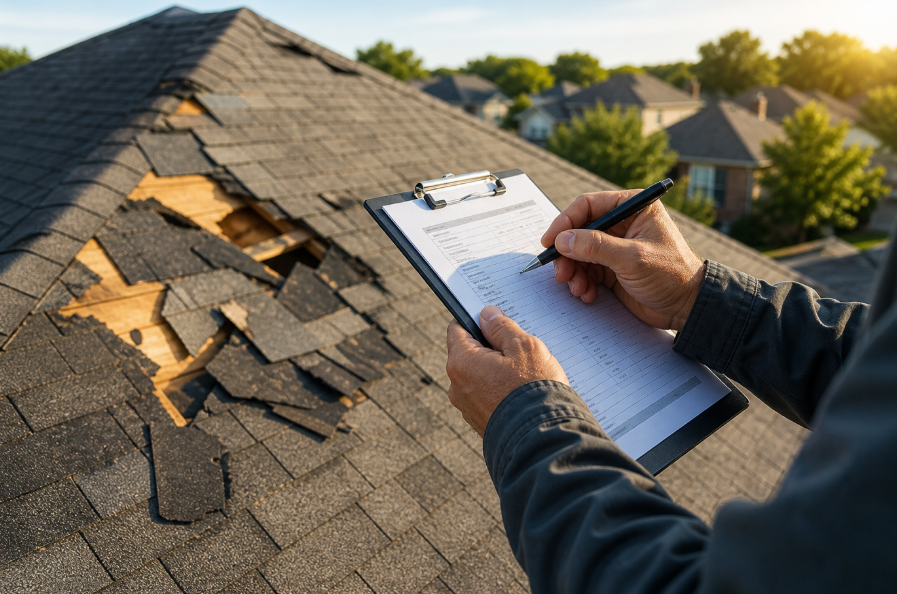
You’re staring at your roof after a storm. Shingles scattered. Maybe a leak inside. You file a claim, expecting your insurance company to handle everything fairly. Then the estimate comes in… and it feels low. Really low. That’s when the question hits: should I hire a public adjuster for a roof claim?
It’s a smart question. And one that can directly impact how much money ends up in your pocket.
Let’s break this down clearly, honestly, and with zero fluff. Because this decision matters.
What Is a Public Adjuster?
A public adjuster is a licensed professional who represents you, not the insurance company.
That distinction alone changes everything.
Here’s how the roles differ:
- Insurance Adjuster – Works for the insurance company
- Independent Adjuster – Hired by the insurer, still represents them
- Public Adjuster – Works for the policyholder (you)
A public adjuster evaluates your damage, documents everything, builds a claim, and negotiates directly with your insurance carrier.
They are your advocate. Not your insurer’s.
How Roof Insurance Claims Actually Work
On paper, the process looks simple. In reality, it’s anything but.
The typical flow:
- Storm damage occurs
- You file a claim
- Insurance sends an adjuster
- They inspect your roof
- An estimate is created
- Payment is issued (often partial)
Seems straightforward. But here’s the catch…
Most initial estimates are incomplete.
Not always intentionally. But consistently.
Where things go wrong:
- Damage is overlooked
- Scope is limited
- Pricing is minimized
- Important components are excluded
And once that initial estimate is set, everything builds from it.
Common Problems in Roof Claims
This is where homeowners lose money. Quietly.
Typical issues:
- Missing items in scope
- Underlayment
- Flashing
- Ridge caps
- Ventilation components
- Improper damage classification
- “Wear and tear” instead of storm damage
- Depreciation games
- Excessive deductions
- Weak documentation
- Not enough photos
- Poor angle coverage
- Missing interior damage
- Denied claims
- Often based on insufficient evidence
These aren’t rare scenarios. They’re common.
What Does a Public Adjuster Actually Do?
This is where things shift.
A Public Adjuster for Roof Claim doesn’t just “look at your roof.” They rebuild your entire claim from the ground up.
Core responsibilities:
- Conduct a detailed inspection
- Document all damage (roof + exterior + interior)
- Create a comprehensive estimate
- Use tools like Xactimate for accurate pricing
- File supplements for missing items
- Handle all communication with the insurer
- Negotiate for a fair settlement
They don’t accept the first number.
They challenge it.
Pros of Hiring a Public Adjuster for a Roof Claim
Let’s talk upside. Because there is real upside.
Key benefits:
- Higher payouts
- More complete claims = more compensation
- Better documentation
- Strong evidence changes outcomes
- Less stress
- You don’t manage the process
- Stronger negotiation
- They speak the insurer’s language
- Better results on denied claims
- Reopened with stronger support
Quick comparison:
| Factor | Without Adjuster | With Public Adjuster |
| Documentation | Basic | Comprehensive |
| Scope accuracy | Limited | Detailed |
| Negotiation | Minimal | Strategic |
| Final payout | Lower | Often higher |
Cons of Hiring a Public Adjuster
It’s not always the right move. Let’s be real.
Potential downsides:
- Fees
- Typically 5%–15% of the claim
- Not needed for small claims
- Minor repairs may not justify cost
- Quality varies
- Not all adjusters are equal
- Possible delays
- If the adjuster is inexperienced
The key is knowing when the benefits outweigh the cost.
When You SHOULD Hire a Public Adjuster
There are clear situations where the answer to should I hire a public adjuster for a roof claim is a strong yes.
You should consider hiring one if:
- Your claim was underpaid
- Your claim was denied
- Damage is extensive or complex
- Multiple areas are affected (roof + interior)
- You don’t have time to manage the process
- You suspect missing items in the estimate
In these cases, a public adjuster isn’t optional. It’s strategic.
When You MAY NOT Need One
Not every claim requires outside help.
You may skip it if:
- Damage is minor
- Insurance approved full replacement quickly
- A contractor is handling everything effectively
- You understand the claims process well
Even then, it’s worth reviewing your estimate carefully.
Public Adjuster vs Roofing Contractor
This one confuses a lot of homeowners.
Key difference:
- Contractors fix roofs
- Public adjusters handle claims
A contractor may point out damage. They may even help with supplements. But in many places, they cannot legally negotiate your claim.
That’s where a public adjuster steps in.
Best-case scenario:
- Contractor handles repairs
- Public adjuster handles the claim
That combination often produces the strongest results.
Public Adjuster vs Insurance Adjuster
This is where the conflict becomes clear.
Insurance adjuster goals:
- Control claim cost
- Limit payout
- Follow company guidelines
Public adjuster goals:
- Maximize your claim
- Expand scope
- Ensure fair pricing
Two different incentives. Two very different outcomes.
How Much Does a Public Adjuster Cost?
Let’s talk numbers.
Typical structure:
- 5%–15% of the final settlement
- Contingency-based (no upfront cost)
That means they only get paid if you do.
Example:
| Scenario | Without Adjuster | With Adjuster |
| Initial payout | $12,000 | — |
| Adjusted payout | — | $25,000 |
| Fee (10%) | — | $2,500 |
| Net to homeowner | $12,000 | $22,500 |
Even after fees, the difference can be significant.
Real Example: With vs Without a Public Adjuster
Let’s simplify it.
Scenario A: Homeowner handles claim
- 20 photos taken
- Limited inspection
- Basic estimate
- Payout: $11,800
Scenario B: Public adjuster involved
- 100+ photos
- Full inspection
- Detailed estimate
- Supplements filed
- Final payout: $24,600
That’s the difference strong documentation makes.
How Public Adjusters Increase Roof Claim Payouts
This is where the magic happens. But it’s not magic—it’s method.
Key strategies:
- Detailed scoping
- Every component accounted for
- Supplement filing
- Adding missed items
- Code compliance
- Upgrades required by law
- Accurate pricing
- Market-based estimates
- Negotiation
- Back-and-forth with insurer
They don’t accept the first number. They build a better one.
What to Look for When Hiring a Public Adjuster
Not all adjusters are equal. Choose carefully.
Must-have qualities:
- Licensed in your state
- Experience with roof claims
- Strong documentation process
- Familiarity with estimating software
- Transparent fees
Bonus points:
- Proven track record
- Positive reviews
- Clear communication
Red Flags to Avoid
Some warning signs should stop you immediately.
- High-pressure sales tactics
- Guarantees of massive payouts
- No written agreement
- Poor communication
- Vague process explanation
If it feels off, it probably is.
Questions to Ask Before Hiring
Don’t skip this step.
Ask:
- How many roof claims have you handled?
- What’s your average payout increase?
- How do you document damage?
- Do you handle supplements?
- What’s your fee structure?
Their answers will tell you everything.
Step-by-Step: Hiring a Public Adjuster
Here’s a simple process:
- Research local adjusters
- Check licenses and reviews
- Schedule an inspection
- Compare approaches
- Review contract carefully
- Sign and begin claim process
Take your time. This decision matters.
Can a Public Adjuster Help With a Denied Roof Claim?
Short answer: yes.
Denied claims often lack strong evidence.
A public adjuster can:
- Re-inspect the property
- Build stronger documentation
- Submit new evidence
- Reopen the claim
Denial doesn’t mean done.
The Supplement Process Explained
This is where claims grow.
What is a supplement?
An addition to the original estimate.
Why it matters:
- Initial estimates miss items
- New damage is discovered
- Code requirements are added
Public adjusters specialize in this process.
And it’s often where the biggest increases happen.
Is Hiring a Public Adjuster Worth It?
Now we answer the real question.
Should I hire a public adjuster for a roof claim?
It depends on your situation.
Worth it if:
- Claim is large
- Damage is complex
- Estimate feels low
- Claim was denied
Not necessary if:
- Damage is minor
- Claim is fully approved
- No discrepancies exist
The bigger and more complicated the claim, the more valuable a public adjuster becomes.
Final Verdict
Let’s simplify everything.
If your roof claim is straightforward and fairly paid, you may not need help.
But if something feels off—low estimate, missing items, denial—then hiring a public adjuster can change the outcome dramatically.
They bring structure. Strategy. And leverage.
And in many cases, they turn a frustrating claim into a fully funded repair.
FAQs
- Should I hire a public adjuster for a roof claim after the insurance inspection?
Yes, you can hire one after inspection if you believe damage was missed or the estimate is too low.
- How do I know if my roof claim is underpaid?
Compare your estimate with a contractor or adjuster review to spot missing items or pricing gaps.
- Can a public adjuster help with partial roof damage claims?
Yes, they can document overlooked areas and ensure the full scope of damage is included.
- What types of roof damage benefit most from a public adjuster?
Hail, wind, and storm-related damage often benefit due to hidden or complex issues.
- Will hiring a public adjuster increase my claim payout?
In many cases, yes, because they expand scope and negotiate for a more accurate settlement.
- Is it too late to hire a public adjuster after a denial?
No, they can often reopen claims with stronger documentation and new evidence.
- Do public adjusters handle communication with insurance companies?
Yes, they manage all communication, saving you time and reducing stress.
- How long does a roof claim take with a public adjuster?
It varies, but most claims are resolved within a few weeks to a few months.
- Are public adjusters only for large claims?
They’re most valuable for large or complex claims but can help in disputed smaller ones too.
- What should I look for before hiring a public adjuster?
Check licensing, experience with roof claims, reviews, and clear fee structures.