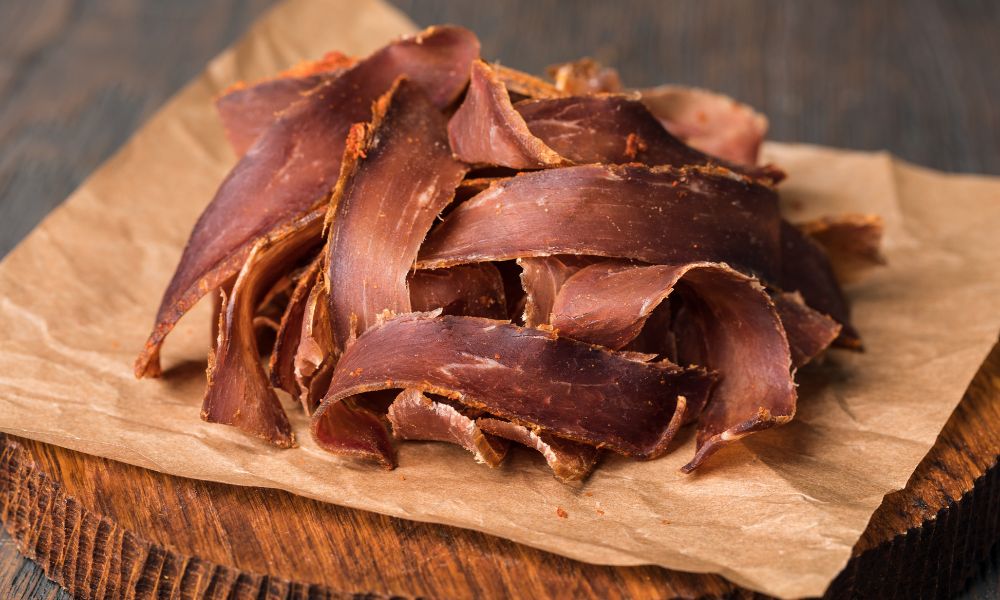
Jerky feels like an American invention, but dried, salted meat has roots on nearly every continent. Long before refrigeration existed, cultures from the Andes to Southern Africa to Mongolia found their own ways to preserve meat with salt, air, and time. Beef jerky as we know it in the United States is really just one branch of a much older family tree.
What Makes Something Jerky
At its core, jerky is lean meat that has been trimmed, seasoned, and dried enough to prevent spoilage without refrigeration. In the United States, the term specifically refers to meat that has been heated to at least 160 degrees Fahrenheit at some point in the process, which destroys harmful bacteria before or during drying. That heat requirement is actually what separates true jerky from several of its closest cousins.
Nearly every dried meat tradition on this list solves the same basic problem in its own way. Salt pulls moisture out of the meat, spices add flavor and sometimes mild antimicrobial properties, and either heat or a long stretch of dry air finishes the job of making the meat shelf stable.
Charqui: The Andean Origin of the Word Jerky
The word jerky itself traces back to ch’arki, a Quechua term used by Andean cultures in what is now Peru, Bolivia, and Chile. Charqui was traditionally made from llama or alpaca meat, salted and dried using the cold, dry mountain air rather than any artificial heat. Spanish colonizers later anglicized the word into jerky, and the practice spread northward.
Modern charqui varies by region. In Brazil, a version called charque is made from beef and remains a staple ingredient in dishes like feijoada. Peru remains one of the largest producers of traditional charqui today, still relying on cold air drying methods passed down for generations.
Biltong: South Africa’s Air Dried Cousin
Biltong looks a lot like jerky at a glance, but the two are made quite differently. Biltong is cured in vinegar, salt, and spices such as coriander and black pepper, then air dried for days rather than heated. Because it relies on air drying instead of cooking, biltong tends to be thicker, cut in strips closer to an inch wide compared to the thin slices typical of American jerky.
The vinegar in biltong plays a real preservation role, since it lowers the pH of the meat enough to slow dangerous bacteria like Clostridium botulinum. Traditionally, South African farmers made biltong only in the cold, dry winter months, when the risk of spoilage during the days long drying process was lowest. Today biltong is popular well beyond South Africa, especially in communities in the United Kingdom, Australia, and Canada.
Pastirma and Cecina: Dried Meat Across the Mediterranean
Turkey’s pastirma takes a different path entirely, coating salted and pressed beef in a thick paste of fenugreek, garlic, and paprika before air drying it. The result is more of a cured, sliceable delicacy than a snack you would eat by the handful, closer in spirit to a cured ham than to a bag of gas station jerky.
Spain’s cecina follows a similar cured and air dried approach, often made from beef or occasionally horse meat, and sometimes lightly smoked. Both pastirma and cecina highlight how the same basic idea, preserving meat with salt and air, produced very different textures and flavors depending on the spices a region had on hand.
Kilishi, Bakkwa, and Other Regional Styles
West Africa has kilishi, a Hausa specialty made from thin sheets of beef, goat, or mutton coated in a paste of ground peanuts, spices, and chili before sun drying. The peanut coating gives kilishi a flavor and texture unlike anything found in Western jerky aisles.
China’s bakkwa takes the opposite approach on sweetness, using a sugary glaze on pork or beef before grilling it over charcoal, producing something closer to a sweet, smoky jerky than the salty snack most Americans expect. Indonesia’s dendeng and Mongolia’s borts round out the list, each shaped by local spices, climate, and available meat sources.
Pemmican: North America’s Native Dried Meat
Long before European settlers arrived, Native American tribes across the plains made pemmican by pounding dried meat into a powder and mixing it with rendered fat and dried berries. This calorie dense mixture stored for months or even years, making it valuable for long journeys and harsh winters. Pemmican is technically more of a distant cousin than a direct ancestor of modern jerky, but it shares the same core goal of turning perishable meat into something that travels well. Fur traders and later explorers relied heavily on pemmican for the same reasons backpackers now reach for jerky, since it delivered concentrated calories without spoiling on long overland trips.
Why These Differences Matter When You Shop
Knowing these distinctions helps explain why biltong feels chewier and tangier than American jerky, or why a bag labeled pastirma tastes nothing like a peppered beef strip. If a package calls itself jerky in the United States, USDA rules mean it has been heat treated for safety, unlike air dried biltong or cecina, which rely on salt, acidity, and time instead of heat. When trying international dried meat snacks for the first time, expect different textures, saltier profiles in some styles, and spice blends that may be unfamiliar compared to a classic American jerky flavor.
Frequently Asked Questions
Is biltong the same as beef jerky? No, biltong is air dried using vinegar and spices, while beef jerky in the United States must be heated to a safe cooking temperature during processing.
Where does the word jerky come from? Jerky comes from ch’arki, a Quechua word used by Andean cultures for salted, dried meat, later anglicized by Spanish speakers into jerky.
What is pemmican made of? Pemmican combines pounded dried meat with rendered fat and often dried berries, creating a dense, long lasting food used by Native American tribes.
Is kilishi spicy? Kilishi can be mild or spicy depending on the recipe, since it is coated in a peanut and spice paste that varies from maker to maker.
Can I buy biltong or charqui in the United States? Some specialty butchers and importers sell biltong and charqui, though imported meat products often face strict customs rules, so availability varies by region.