
Solar Inverter Wholesale: Key Factors for Selecting a Reliable Supplier

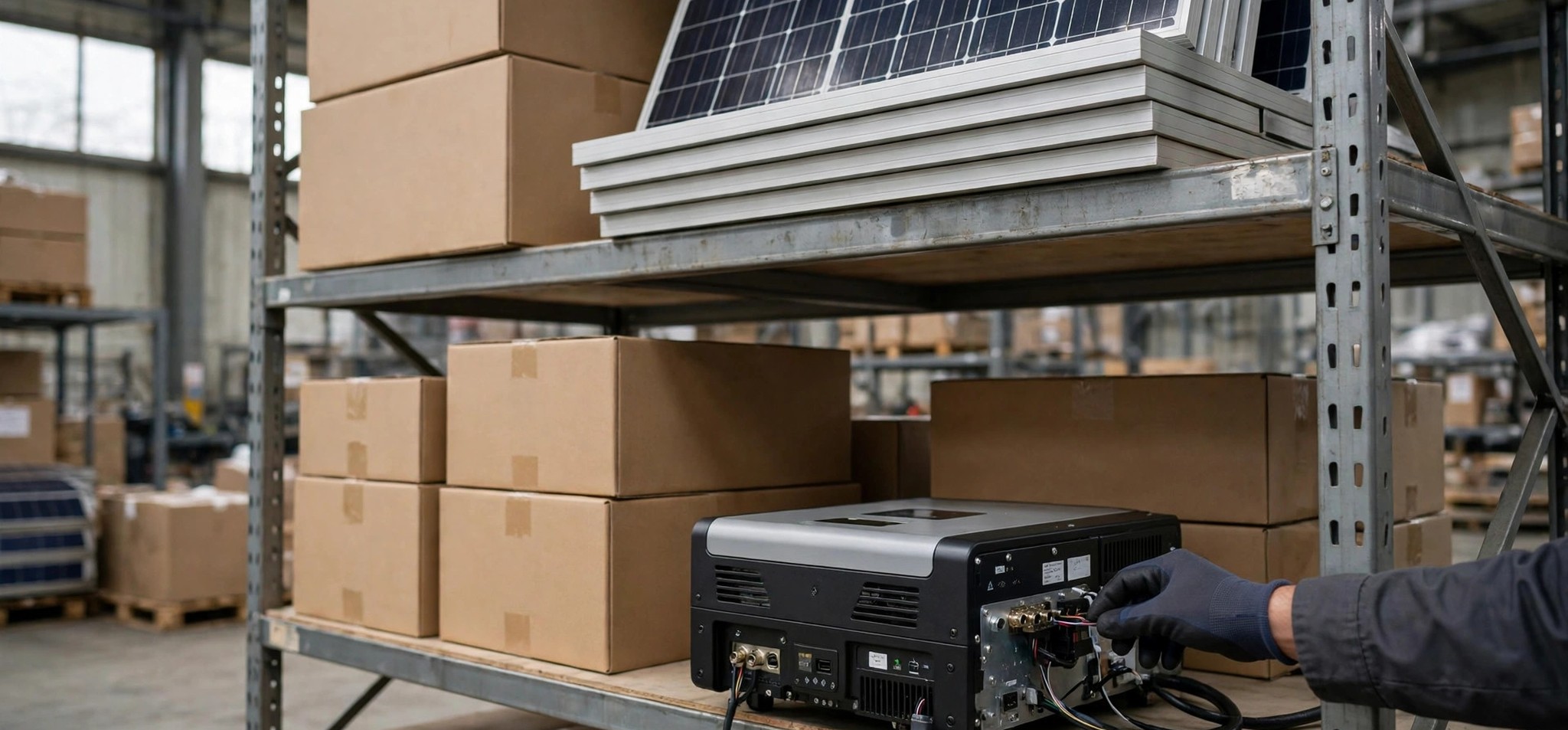
Ordering a pallet of inverters that turn out to be wrong for the local grid is an expensive mistake that buyers often learn about too late. Distributors, importers, and EPC contractors face this risk every time they source in bulk. A mismatch in voltage, frequency, or battery compatibility can delay projects, tie up stock, and harm customer trust. Careful planning around solar inverter wholesale purchasing helps buyers avoid these problems before the first order ships.
A reliable inverter supplier offers a suitable product range, clear technical documents, model-specific certificates, transparent quality control, and real after-sales support. Always match each model to the target market before ordering.
What Does Wholesale Inverter Buying Actually Involve?
Many buyers mix up three terms. Wholesale describes the sales channel, where products are bought in repeat volumes for resale or installation. Bulk procurement describes a planned purchase of many units for a project or stock program. Direct factory sourcing describes buying from the manufacturer without a middleman.
In practice, solar inverter wholesale buying usually follows a clear path: a fixed specification, a quotation, sample testing, a compliance review, a purchase order, production, inspection, and shipment. Skipping the sample and compliance steps is where most sourcing problems begin.
Know the Main Inverter Types First
Before comparing suppliers, buyers should be clear about what they need. These labels can overlap, so one product may fit several.
- Grid-tied inverters: Sync with the utility grid. A standard unit shuts down in an outage because it has no battery.
- Hybrid solar inverters: Combine solar conversion, battery charging, and grid or generator support in one unit. They suit homes and light commercial sites that need backup.
- Off-grid solar inverters: Run without the utility. They suit remote homes, farms, telecom sites, and rural electrification.
- Split-phase inverters: Provide 120/240 V output for North American wiring.
- Single-phase and three-phase models: Single-phase suits most homes and small shops, while three-phase suits larger commercial and industrial loads.
- Pure sine wave inverters: Produce clean power for sensitive electronics and motor loads.
Not every model fits every job. A compact off-grid unit is not a replacement for a three-phase commercial system.
The Technical Specs That Matter Most
A headline power rating alone says very little. Buyers should check these points together:
- Rated power and surge capacity: Pumps, refrigerators, and compressors can draw several times their running power at startup. A 10 kW inverter can still trip if its surge rating is too low.
- Battery voltage: Systems commonly use 12 V, 24 V, or 48 V. Higher voltage means lower current, which helps in higher-power systems. At the same power, a 48 V system draws roughly a quarter of the current of a 12 V system.
- MPPT range and PV limits: Every solar string must stay inside the inverter's MPPT window and below its maximum PV voltage.
- Charging current: The inverter's charge limit must stay within what the battery allows.
- Output voltage and frequency: Common options include 120 V, 230 V, and 120/240 V, at 50 Hz or 60 Hz.
- Battery communication: Lithium batteries often need matching CAN or RS485 protocols, not just a similar plug.
A simple example: a farm needs to run a water pump. The buyer lists the pump's running watts, adds other loads that run at the same time, and adds a margin of around 20%. Then the buyer checks the pump's starting surge against the inverter's surge rating before choosing a model.
What a Manufacturer Can Offer Buyers
It helps to see what a real product range looks like. One Guangzhou-based manufacturer lists inverters from 1 kW to 12 kW that support 12 V, 24 V, and 48 V batteries. The range covers off-grid, hybrid, split-phase, low-frequency, and MPPT designs. The table below shows three of its main series.
| Series | Type | Power Ratings | Key Features |
|---|---|---|---|
| AN-FGI-AS | Split-phase | 7.2 kW, 10 kW, 12 kW | High-frequency design, pure sine wave output, split-phase connectivity |
| AN-FGI-S | MPPT optimized | 5 kW, 6.5 kW, 12 kW | Integrated MPPT controller, battery management system, high-frequency conversion |
| AN-PGI-E | Rugged (IP54) | 5 kW to 6.5 kW | IP54 protection rating, pure sine wave output, high-capacity MPPT tracking |
The company states it has more than 100 R&D engineers and about 17 years in solar manufacturing. It also reports serving distributors, wholesalers, importers, and EPC contractors in many regions. Buyers exploring solar inverter wholesale options can use a range like this as a reference point when comparing other manufacturers. Company statements are a starting point, though, and details like model coverage should still be confirmed in writing.
Seven Factors for Choosing a Reliable Supplier
1. Manufacturing evidence: Ask for documents or video proof of factory capability instead of relying on verbal claims. If a supplier's published figures differ across pages, ask for clarification.
2. Fit of the product range: The supplier should offer the types, power ratings, and battery options the target market needs.
3. Technical documents: Request datasheets, manuals, wiring diagrams, and compatibility lists before ordering.
4. Quality control: Ask about incoming material inspection, production testing, pre-shipment checks, and traceability. A supplier describing a defined multi-step process is a good sign.
5. Model-specific certificates: CE, TUV, ISO, and similar references are useful, but a certificate category is not proof. Request the certificate and test report for the exact model and destination country. CE marking, for example, is not a general quality guarantee.
6. OEM and ODM options: Custom logos, packaging, and configuration support can help brand-focused importers. Confirm exactly what is included, along with sample procedures and order minimums, in the quotation.
7. Warranty and after-sales support: Get warranty length, claim steps, replacement timelines, and spare-parts access in writing.
Manufacturer or Distributor: Which Route Fits?
Buying direct from a manufacturer usually gives closer engineering contact and more customization, but the buyer handles logistics, compliance, and inspection. Distributors often deliver faster from local stock and offer first-line support, with less room for customization. Importers and OEM buyers tend to lean toward factories, while installers and smaller wholesalers often prefer distributors. Each route can work well for solar inverter wholesale buyers, as long as the choice matches their order size, timeline, and support needs.
Match the Product to the Market
Voltage, frequency, phase type, and grid rules vary by country. A product approved in one region may not be accepted in another. Before a large order, build a fixed profile: target country, grid voltage and frequency, phase type, loads, PV array, battery system, operating climate, and required certificates. Strong solar inverter wholesale planning starts with this profile, because it prevents stocking units that cannot legally or technically be installed.
Practical Quotation Checklist
When requesting a quote, buyers should provide:
- Model or product category and total quantity
- Battery voltage and chemistry
- AC output voltage, frequency, and phase
- PV array details and MPPT requirements
- Application type and destination country
- Branding, packaging, and documentation needs
Key Takeaways
- Check inverter specifications, including power ratings, battery voltage, output frequency, and phase compatibility, before placing bulk orders.
- Compare grid-tied, hybrid, off-grid, and split-phase inverters according to the requirements of the target market.
- Review manufacturer experience, factory capabilities, and quality control procedures before selecting a supplier.
- Request technical datasheets, installation manuals, wiring diagrams, and model-specific certificates.
- Confirm OEM and ODM options, minimum order quantities, packaging requirements, and customisation services.
- Check warranty conditions, spare-parts availability, and after-sales support before signing a purchase agreement.
- Test product samples and verify destination-country compliance before proceeding with large-scale solar inverter wholesale purchases.
Previously in Business news: Custom A-Frame Sidewalk Signs for Houston Storefronts and Pop-Ups







Comment