
Best Tempo Marking Guide for Beginners

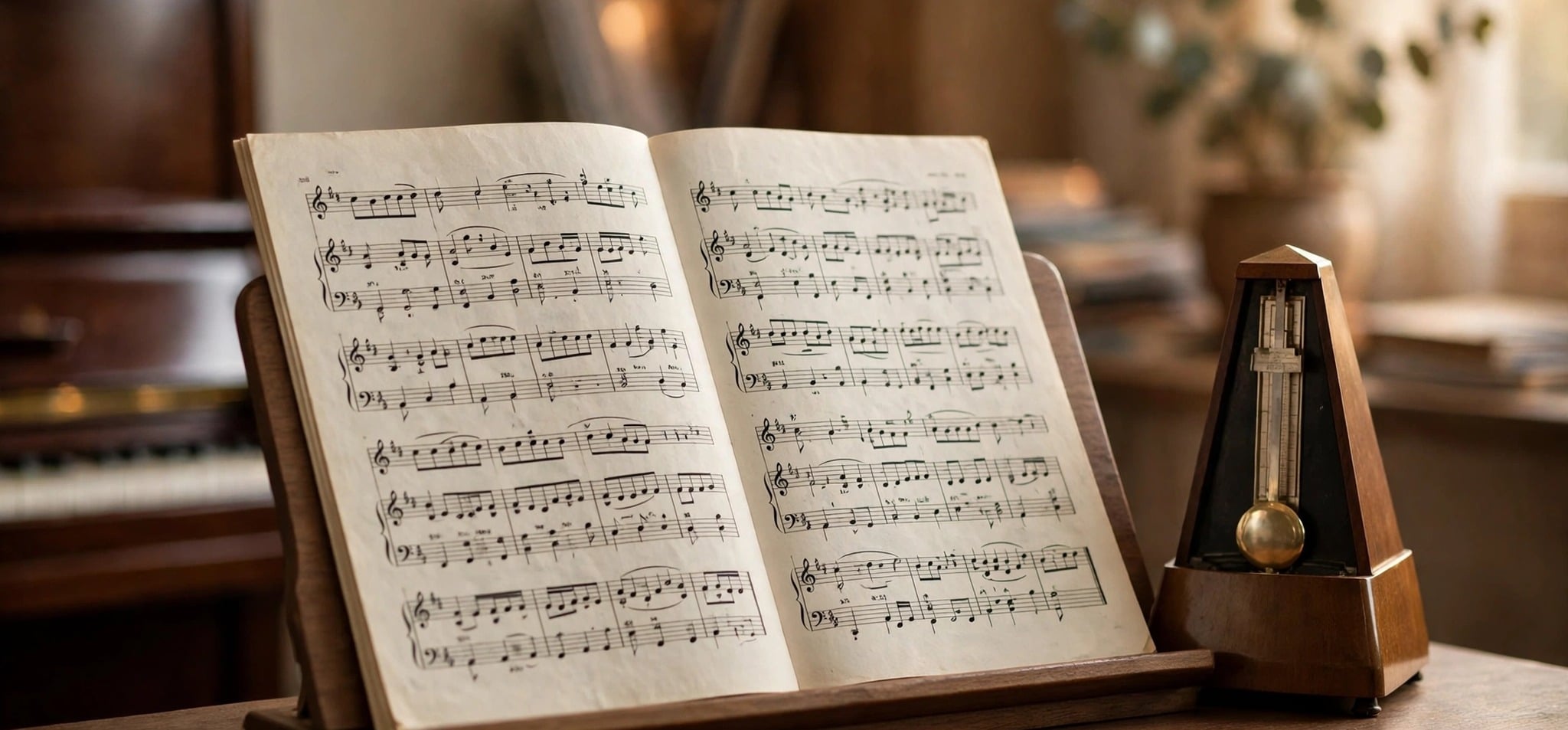
When you first start reading sheet music, you will probably notice Italian words written above the notes: Allegro, Andante, and Adagio. They appear in many classical pieces, but what do they actually mean?
These words are called tempo markings. They tell musicians how fast or slow a piece of music should be played.
Understanding tempo markings is an important part of learning any instrument. Whether you play piano, guitar, violin, or another instrument, knowing how to interpret these instructions will help you play music closer to the way the composer intended.
The good news is that you do not need to memorize dozens of Italian words. Learning the most common tempo markings is enough to get started.
What Are Tempo Markings in Music?
Tempo refers to the speed of a piece of music. It tells you how quickly the beats should move.
In sheet music, composers often use Italian terms to describe the tempo. This tradition became common in European classical music and is still widely used today.
For example, Allegro usually means fast and lively, while Adagio means slow and relaxed. However, these markings are not always exact instructions. They also describe the general character of the music.
Two pieces marked Allegro might have slightly different speeds depending on the composer, musical style, and performance.
This is why musicians often use beats per minute (BPM) as an additional reference.
Common Tempo Markings and Their BPM Ranges
The following table covers some of the most common Italian tempo markings you will see in sheet music.
| Tempo Marking | Meaning | Approximate BPM |
|---|---|---|
| Larghissimo | Extremely slow | Below 40 |
| Grave | Very slow and serious | 40–50 |
| Largo | Slow and broad | 40–60 |
| Lento | Slow | 45–60 |
| Adagio | Slow and calm | 66–76 |
| Andante | Walking pace | 76–108 |
| Moderato | Moderate speed | 108–120 |
| Allegro | Fast and lively | 120–168 |
| Vivace | Lively and quick | 140–176 |
| Presto | Very fast | 168–200 |
| Prestissimo | Extremely fast | Above 200 |
These ranges are approximate rather than strict rules. Different music textbooks and composers may use slightly different values.
Understanding Slow Tempo Markings
Slow tempo markings are common in emotional, peaceful, or dramatic music.
- Largo means slow and broad. You will often hear this tempo in music where each note needs time to develop. The goal is not simply to play slowly but to give the phrases enough space.
- Adagio also describes slow music, but it often suggests a calm and expressive character. Many classical slow movements use this marking.
- Grave means very slow and serious. It is often used for music that should sound heavy or dramatic.
When practicing slow music, remember that maintaining a steady rhythm can be surprisingly difficult. Without a clear beat, you might accidentally speed up or leave too much space between notes.
Understanding Moderate Tempo Markings
Moderate tempos are often easier for beginners because they feel closer to natural movement.
- Andante is one of the most common markings. It means "at a walking pace." Imagine walking comfortably down the street. Your steps are steady, but you are not rushing. That is the general feeling of Andante.
- Moderato means moderately fast. It suggests a controlled tempo that is neither very slow nor particularly quick.
These markings appear in many beginner piano pieces, guitar exercises, and classical compositions.
Understanding Fast Tempo Markings
Fast tempo markings usually appear in energetic or exciting music.
- Allegro means fast and lively. It is one of the most frequently used tempo markings in classical music. However, it does not mean playing as fast as possible. The music should still sound clear and controlled.
- Vivace means lively and spirited. It often suggests a bright, energetic character.
- Presto means very fast. Music with this marking usually requires quick movements and good control over your instrument.
- Prestissimo describes an extremely fast tempo. It is generally faster than Presto and can be especially challenging for beginners.
If a piece is marked Presto or Prestissimo, you do not need to practice it at full speed immediately. Start slowly and gradually increase the tempo as your technique improves.
How to Find the Right BPM for a Tempo Marking
Once you understand the basic Italian terms, the next step is learning how to apply them to your instrument.
For example, imagine you are learning a piano piece marked Andante. You could begin by setting a metronome to 80 BPM and playing through the piece.
If the music feels too slow or heavy, try increasing the tempo slightly. If it feels rushed, reduce the speed.
You can use Metronome Online to test different BPM settings and find a tempo that works for your practice. Keep in mind that the beat unit matters too. In most beginner exercises, the quarter note receives one beat, but some pieces use other note values.
Other Tempo Instructions You Should Know
Besides basic tempo markings, you may also see instructions telling you to change speed during a piece.
Some common examples include:
- Accelerando (accel.) – Gradually speed up.
- Ritardando (rit.) – Gradually slow down.
- Rallentando (rall.) – Gradually slow down, often with a more relaxed feeling.
- A tempo – Return to the previous tempo.
- Rubato – Use flexible timing for musical expression.
These instructions are especially common in classical and romantic music.
Final Thoughts
Tempo markings are an essential part of reading and understanding music. They help you recognize not only how fast to play but also how a piece should feel.
Start by learning the most common terms, such as Largo, Adagio, Andante, Moderato, Allegro, and Presto.
Use approximate BPM ranges as a guide, but remember that musical interpretation also matters.
Previously in Technology: Best Free AI Photo Editor Tools in 2026 – Top 5 Picks & Tips







Comment