What is adhesive film, self adhesive vinyl, and how do film sheets differ from vinyl film rolls?
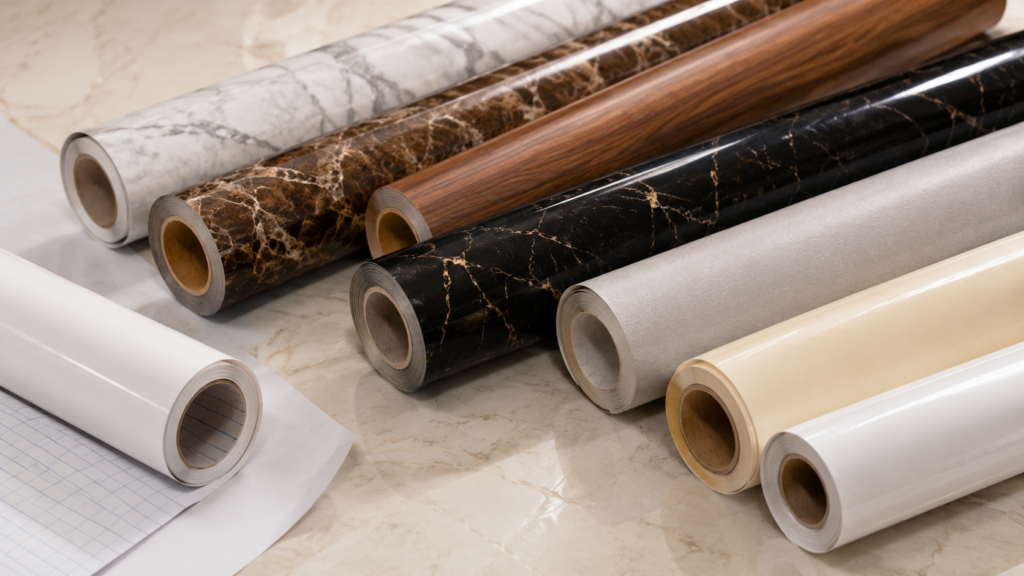
Adhesive film is a broad category that includes basically any thin protective or decorative layer that sticks to a surface using an adhesive system, it can go from a permanent bond to something that is removable, like pressure sensitive formulations. Self adhesive vinyl more specifically means vinyl-based films with a bonding layer, and it usually also comes with a release liner or backing, that keeps the adhesive safe until the moment it is applied. Film sheets are typically pre-cut flat stock for smaller jobs, labels, or printable uses where the material needs to feed flat, while vinyl film rolls give you continuous film, which fits larger scale surface protection, wrapping, window covering installation, and mounting tasks.
View Self Adhesive Film Manufacturer&Supplier – Guanma details to get into the details.
In manufacturing work, film rolls often make it easier to cover marble countertops, cabinet faces, and glass panes in a steady process, while film sheets are the go-to choice for crafts, sticker making, and short-run graphic labels.
So what is the difference between adhesive film and vinyl? Adhesive film is the wider term, meaning any thin adhered layer, and vinyl is one material type within that world, where the film itself is vinyl and the properties depend on that vinyl plus its bonding layer.
The main difference between adhesive film and vinyl is in what it is made of, and how it is meant to be used, if you think about it. Adhesive film can be built from different polymer bases, like polyethylene, or polyester, and sometimes it also gets additional coatings that add protective strength or a more stable structure. Vinyl is the term people commonly use for polyvinyl chloride (PVC) based films, and these usually aim for a certain flexibility plus a recognizable surface look, for example matte or glossy. You will also see adhesive film produced as a protection film, with a low tack removable liner for quick, temporary guarding while something ships. Then there is also a heavy duty protective coating with a permanent adhesive, meant for long-term attaching. Vinyl film tends to show better weather resistance overall. It can be made into glitter formats, self stick versions, or printable adhesive vinyl, which is why it shows up in durable outdoor graphics and window film work.
How do self adhesive film sheets compare to roll mounted vinyl film?
Self adhesive film sheets work well because they are ready to use right away, they let you do a fairly precise placement, handle individual printing, and move the material easily without any specialized cutting setup. People commonly use them for label type jobs , craft stickers, and small scale surface shielding where quick application matters.
Roll-mounted vinyl film is different, it is built for scalability and constant application. With it you can do a continuous wrapping look, create large-format graphic decoration, and handle industrial level protection tasks. In these cases the film rolls can lower waste, and they help you reach consistent finishes across bigger areas. Film rolls usually need some tools for measurement and alignment, yet they can be more efficient and reduce cost per unit area, in manufacturing settings, for window film fitting, and when covering large mirror panels or big cabinet surfaces.
When should I choose a pressure-sensitive adhesive over a removable liner?
Pressure-sensitive adhesive systems are picked when quick bonding and easy handling matter most, because they stick right on contact and don’t need heat, water, or any activator at all; they work well for peel and stick films, adhesive vinyl decals, and double sided mounting tapes. A removable cover layer is especially useful when a regulated release is wanted and temporary safeguarding is needed, like during shipping of protective film goods, or when you want a throw-away protective coat for painted, marble, or other fragile surfaces. Permanent adhesive types are usually the best fit when you need long term endurance and strong attachment, while removable liners and low-tack options are more suitable when you need surface guarding without harming the original finish.
How do I choose the right adhesive vinyl sheet or printable film for my project?
Selecting the correct adhesive vinyl or printable film requires assessing substrate compatibility, expected environmental exposure, and the desired finish. For interior decorative tasks, a matte or glossy adhesive vinyl sheet may suffice, while exterior signage, window film, or outdoor graphics demand premium weatherable vinyl with UV-stable inks and a protective laminate coat. Consider the adhesive type—permanent adhesive for cabinetry or long-term bonding, pressure-sensitive adhesive for peel and stick installations, and double-sided adhesive for mounting applications. Evaluate the backing or release liner material; paper liners are common on economy stock, while silicone-coated polyester liners better suit premium printable films and heavy-duty film rolls where smooth release and print stability are critical.
Should I buy premium or economy adhesive film for long-term protection?
For long-term surface protection, premium adhesive films are recommended because they typically contain higher-grade vinyl, enhanced UV stabilizers, superior adhesive systems, and durable laminates that protect printed graphics and the film itself from abrasion and environmental degradation. Economy film products may be suitable for temporary masking, short-term craft projects, or interior protection where exposure is limited, but for applications like protecting marble countertops, exterior windows, or cabinets where longevity and finish retention are required, investing in premium adhesive vinyl film with a protective laminate will yield better performance and reduced risk of adhesive failure over time.
Which printable film is best for inkjet vs laser printers?
Printable adhesive vinyl films are formulated differently for inkjet and laser processes: inkjet printable films generally feature an ink-receptive coating on polyester or vinyl that absorbs dye or pigment droplets and dries to a stable finish, whereas laser-printable vinyl sheets must be heat-stable and able to withstand the fusing temperatures of a laser printer without warping or off-gassing. For inkjet, choose a printable adhesive vinyl labeled for inkjet use and compatible with dye or pigment inks; for laser printers, select polyester or specially coated vinyl sheets rated for laser fusing to avoid curling or adhesive degradation. Always confirm printer compatibility and perform test prints to ensure proper adhesion and color fidelity before committing to large runs.
Are glitter or graphic sticker-style vinyls suitable for outdoor use?
Glitter and graphic sticker-style vinyls can be suitable for outdoor use if they are manufactured with UV-resistant formulations, a durable laminate coat, and a robust adhesive system designed for exposure to sunlight and moisture. Many decorative glitter vinyls are intended for indoor crafts and may lack the protective coat necessary for prolonged outdoor exposure; therefore, for exterior applications such as signage or vehicle graphics, opt for premium outdoor-grade glitter vinyl with a protective laminate that preserves the finish and prevents color fade. Verify the product specifications for weatherability and expected lifespan when selecting glitter or decorative vinyl for exterior environments.
How do I prepare a surface before applying peel and stick self adhesive film?
Surface preparation is critical to achieving a reliable bond and a flawless finish. Begin by removing loose dirt, oils, and residues using a mild detergent or isopropyl alcohol solution, depending on the substrate, followed by thorough drying to eliminate moisture that can interfere with adhesive contact. For porous or textured surfaces, consider a primer or a specifically recommended surface conditioner that enhances adhesion for pressure-sensitive adhesive systems. Ensure the surface is free from wax, silicone, and release agents, and when dealing with painted surfaces, confirm that the paint is fully cured to avoid lifting. Proper preparation reduces the risk of contamination under film sheets or rolls and promotes a uniform finish whether the film is matte, glossy, or laminated.
What cleaning and drying steps are required for different surfaces?
Glass and mirror surfaces should be cleaned with a lint-free cloth and a solvent-based cleaner or isopropyl alcohol, then dried completely to prevent streaks and trapped moisture. Painted or sealed wood and laminate require a gentle cleaner that removes oils without damaging the finish; allow adequate drying time and test a small area for compatibility. Textured or porous surfaces such as unsealed stone or rough wood often need a sealing or priming step to provide a continuous, non-porous surface for the adhesive to bond. For cabinetry and marble, use manufacturer-recommended cleaners and ensure the surface temperature and humidity are within the film product’s application guidelines to achieve optimal adhesion.
How do I test compatibility with painted, glass, or textured surfaces?
Conduct a small-area adhesion test by applying a sample film sheet with the intended adhesive to a discreet portion of the surface and leave it in place under expected environmental conditions for 24 to 72 hours. Inspect for bond strength by attempting removal to detect substrate damage or adhesive residue, and check for discoloration, lifting, or chemical interaction. For painted surfaces, ensure paint transfer does not occur and that the film does not pull cured paint; on textured surfaces, verify that the adhesive conforms without excessive air entrapment. Record results and consult technical data sheets for both the adhesive film and substrate to confirm long-term compatibility.
What is the correct method to apply adhesive sheet, roll, or double-sided adhesive films?
Applying adhesive film correctly involves controlled alignment, steady application pressure, and appropriate tooling. For film rolls, unroll and align the film with guide marks, use a squeegee or roller to apply pressure progressively from the center outward to eliminate air pockets, and trim excess with a sharp blade for clean edges. Film sheets should be positioned and smoothed with a felt squeegee or burnishing tool, ensuring that the release liner is removed gradually to prevent folding or creasing. Double-sided adhesive films require precise placement, often necessitating temporary registration marks and backing removal techniques to ensure a consistent bond. Follow manufacturer instructions, including recommended temperature ranges and pressure application, to achieve a long-lasting finish.
How do I align and apply large self adhesive vinyl rolls without creases?
For large vinyl film rolls, work with at least one assistant for positioning and use alignment guides or chalk lines on the surface to ensure precise placement. Begin by tacking one edge lightly, then progressively remove the release liner while simultaneously smoothing the film with a soft squeegee or roller, maintaining even tension to prevent wrinkles. Apply uniform pressure and avoid stretching the vinyl, as distortion can cause creases upon relaxation. When necessary, use heat in small increments from a distance to relax the vinyl during application, especially around curves, and always follow the recommended heat and stretch parameters for the specific vinyl film to prevent damage.
What tools help with smooth application of film sheets and peel and stick stickers?
Essential tools include a felt or plastic squeegee to smooth film without scratching, a precision utility knife for trimming, a heat gun or low-temperature torch for conforming around curves, and a lint-free cloth for cleaning. For printable labels and sticker projects, a straight edge and cutting mat ensure accurate trimming, while a spray bottle with a slip solution (for repositionable film) can facilitate alignment. For double-sided adhesive and mounting applications, use rollers to apply consistent pressure and weights to maintain contact during cure times, ensuring an even bond and a professional finish on decorative or protective film installations.
How can I print graphics on printable adhesive film and ensure durable results?
Printing durable graphics on printable adhesive film requires matching the film substrate to the printer type, selecting the appropriate inks, and applying a protective laminate when necessary. For inkjet printing, use compatible pigment inks and allow sufficient drying time; for laser printing, ensure the vinyl sheet is rated for the printer’s fuser temperature. Color management and print settings tailored to the film’s surface will yield better saturation and clarity. Post-printing, a laminate coat or spray sealant can protect the graphic from abrasion, UV exposure, and moisture, significantly extending the life of decals, labels, and adhesive graphics used on windows, mirrors, or exterior surfaces.
What ink and print settings work best for inkjet adhesive vinyl?
Use pigment-based inks where possible for superior lightfastness, select a high-resolution print mode appropriate for the film’s receptive coating, and allow prints to cure fully before handling. Adjust media settings in the printer driver to match the printable film type—often listed as glossy or matte photo paper equivalents—and avoid excess ink saturation which can lead to bleeding or delayed drying. Test print small patches to determine optimal color profiles, drying times, and whether a laminate is required to achieve the desired finish and durability on adhesive vinyl film.
Are laser-printable vinyl sheets heat-stable during fusing?
Laser-printable vinyl sheets intended for laser printers are engineered to withstand fuser temperatures and should not deform, off-gas, or delaminate during the printing process; nevertheless, users must confirm product specifications for maximum temperature resistance and test compatibility with their specific laser model. Polyester-based printable films usually offer greater heat stability than PVC in high-temperature fusing, and some manufacturers provide laser-specific adhesive vinyl that balances adhesive performance with heat resistance to ensure consistent print quality and safe operation.
How do I laminate or protect printed adhesive graphics for longevity?
Applying a protective laminate film is the most effective method to extend the life of printed adhesive graphics; choose a laminate compatible with both the ink system and the base film—options include matte, gloss, and anti-graffiti finishes. Cold or pressure-sensitive laminates are common for self adhesive graphics and can be applied using a squeegee to remove air and ensure full adhesion. For heat-sealed laminates, follow manufacturer guidance on temperature and pressure. A laminate not only preserves the finish but also provides UV protection, abrasion resistance, and additional bond security against environmental stresses.
How do I remove, replace, or repair adhesive vinyl without damaging the surface?
Removal and repair of adhesive vinyl require careful techniques to avoid surface damage. Gently warming the film with a heat gun softens the adhesive, allowing the film to be peeled back at a low angle to minimize substrate stress. Solvents such as isopropyl alcohol, citrus-based cleaners, or manufacturer-recommended adhesive removers can dissolve residual adhesive; however, test solvents on an inconspicuous area first to ensure substrate compatibility. When repairing tears or lifting edges, use a compatible adhesive or pressure-sensitive patch to secure edges, and consider replacing panels of film sheets when repairs might be visible or compromise overall integrity.
What solvents or heat methods safely remove pressure-sensitive adhesive?
Heat applied evenly at moderate temperatures will soften pressure-sensitive adhesive, enabling removal with reduced residue. After removal, solvents like isopropyl alcohol, mild adhesive cleaners, or citrus-based removers can break down remaining adhesive residues; for stubborn residues, specialized adhesive removers formulated for the specific film material may be necessary. Avoid aggressive solvents on painted or sensitive surfaces and always follow safety guidelines and ventilation requirements. For delicate substrates such as mirror coatings or polished marble, use minimal heat and gentle solvent application to prevent etching or finish damage.
How do I repair tears, lifting edges, or trapped dirt in film sheets?
Minor tears and lifting edges may be repaired by cleaning the area thoroughly, applying a small amount of compatible adhesive under the lifted edge, and pressing firmly with a roller to re-bond. For trapped dirt, gently lift the affected area and remove debris before reapplying; if the debris leaves a permanent imperfection, trimming and overlaying a new film patch or replacing the sheet may be necessary. For visible repairs, use color-matched patches or overlapping seams combined with careful trimming to maintain a seamless appearance on glossy or matte finishes.
Can I reuse vinyl from a roll or sheet after removal, and when should I discard it?
Reusing vinyl depends on the condition of the adhesive and the degree of deformation: some high-quality film rolls allow partial reuse if the adhesive remains intact and free of contamination, but repeated removal typically reduces bond strength and increases the risk of bubbles or lifting. Film sheets removed from critical applications, or those with adhesive contamination, creases, or significant stretching, should be discarded and replaced to ensure reliable performance. For permanent adhesive systems, reuse is generally not feasible; pressure-sensitive and removable liner films may permit limited reuse for non-critical applications if carefully re-lined and handled.
What are common problems with self-adhesive film and how do I troubleshoot them?
Common issues with self-adhesive film include bubbling, lifting, adhesive failure, color fade, and edge delamination. Troubleshooting involves identifying the root cause—surface contamination, incorrect temperature during application, incompatible adhesive systems, or environmental exposure—and applying corrective measures such as reapplication with proper surface preparation, use of appropriate primer, switching to a more suitable adhesive vinyl film, or adding a protective laminate. Understanding how environmental factors and substrate properties interact with the adhesive systems and finishes will help prevent recurring problems and ensure a professional, durable result.
Why does adhesive vinyl bubble or lift and how can I fix it?
Bubbling and lifting commonly result from trapped air, surface contamination, insufficient pressure during application, or thermal expansion and contraction. To fix bubbles, lift the film carefully near the bubble edge and smooth out contaminants while applying pressure with a squeegee; for small air pockets, puncturing the bubble with a fine needle and smoothing the area can remove trapped air. Prevention includes thorough cleaning, applying the film at recommended temperatures, and using proper application tools to ensure full contact between the adhesive and the surface. For recurring bubbles due to incompatible substrates, consider selecting a film with a more aggressive adhesive or pre-treating the surface.
What causes adhesive failure on certain surfaces and how can I prevent it?
Adhesive failure can occur because of poor surface energy, contamination, incompatible coatings, or environmental stressors such as humidity and temperature cycling. Preventative steps include using primers designed for low-energy plastics, ensuring surfaces are free from oils or release agents, choosing an adhesive system formulated for the specific substrate (e.g., polyethylene vs. polyester), and adhering under optimal environmental conditions. For critical applications, consult technical data sheets for adhesion values and conduct tape tests or small-area trials to validate long-term bond performance before large-scale application.
How do environmental factors (temperature, humidity, UV) affect film performance?
Temperature influences adhesive viscosity and film flexibility: cold temperatures can reduce tack and increase brittleness, while excessive heat can soften adhesives and cause creep or edge lift. Humidity affects curing and adhesion, particularly for certain adhesives that require dry conditions for optimal bonding. UV exposure degrades polymers and inks over time, causing fading, yellowing, or embrittlement unless UV-stable formulations and protective laminates are used. To maximize film performance, select materials rated for the intended environmental conditions, apply films within recommended temperature and humidity ranges, and incorporate UV-resistant coatings or laminates for long-term outdoor durability.