Artificial intelligence has quickly moved from experimental technology to a strategic priority for organizations across the world. Companies are investing heavily in automation, machine learning systems, and advanced data infrastructure in hopes of unlocking new efficiencies and insights. Yet for many leadership teams, the promise of AI remains difficult to realize. Tools are deployed, budgets are spent, and strategies are announced—but adoption across the organization often lags behind expectations.
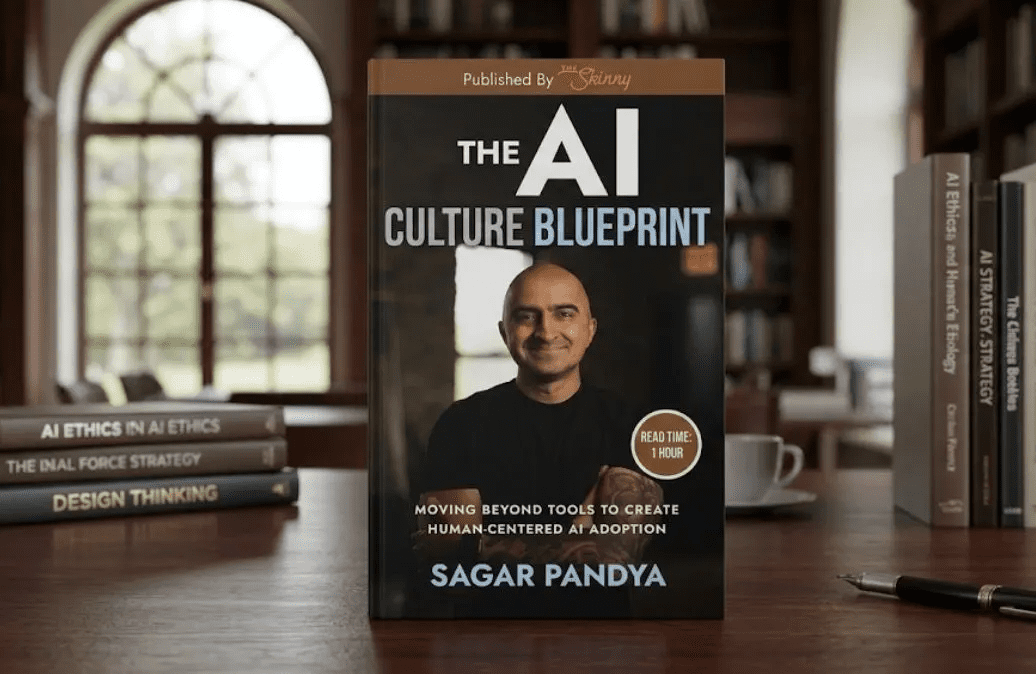
Consultant and exited founder Sagar Pandya believes the explanation is straightforward. In his book The AI Culture Blueprint, Pandya argues that many organizations misunderstand the nature of AI transformation. They assume the challenge is technological, when in reality the most difficult barrier is cultural.
Pandya brings a long history in enterprise technology to this perspective. With more than twenty years of experience across IT, cybersecurity, and digital transformation, he has worked closely with businesses navigating complex technological change. As the founder of The AI Culture Company and a former executive leader of a 50-person AI consulting organization following an acquisition, he has seen how companies approach AI implementation from the inside.
In many cases, the strategy begins with tools. Leadership teams search for the most advanced platforms, partner with technology providers, and focus on building technical capability. While these steps are important, Pandya says they represent only part of the equation. Without preparing people for the transformation AI introduces, organizations struggle to turn technology investments into meaningful outcomes.
In The AI Culture Blueprint, Pandya explores why this disconnect happens. Artificial intelligence does not simply add a new tool to the workplace, it changes how people work, make decisions, and collaborate. For employees, this can trigger uncertainty about job roles, professional identity, and long-term career paths. When organizations fail to address these concerns openly, hesitation and resistance naturally follow.
Pandya refers to this phenomenon as the “AI culture lag.” Technology evolves quickly, but organizations adapt more slowly. Leaders may be excited about the possibilities of AI, but employees often need time, clarity, and support to fully embrace those changes. When that gap is ignored, AI adoption remains superficial.
The book presents a leadership-focused approach to solving this problem. Rather than viewing AI implementation as a technical deployment, Pandya frames it as a transformation that must involve the entire organization. Successful adoption requires alignment between executives, managers, and frontline employees, along with a clear understanding of how AI will enhance not replace human contribution.
At the center of Pandya’s philosophy is a framework built on five leadership actions: Commit, Communicate, Co-Create, Coach, and Cultivate. Each step addresses a different dimension of organizational change.
Commit begins with strategic clarity from leadership. Executives must define how AI supports the company’s broader mission and demonstrate sustained commitment to that vision.
Communicate ensures that employees are not left guessing about the impact of AI. Transparent conversations about expectations, opportunities, and potential challenges help build trust throughout the organization.
Co-Create encourages collaboration between leadership and teams as AI systems are introduced. Employees who help shape the transformation are more likely to adopt and champion it.
Coach emphasizes the importance of skill development and continuous learning. AI adoption requires new capabilities, and organizations must invest in helping their teams build them.
Cultivate focuses on maintaining momentum over time. AI transformation is not a one-time initiative but an ongoing process that evolves alongside technology and business strategy.
Pandya’s emphasis on culture reflects a broader shift happening in the business world. Early conversations around artificial intelligence were dominated by technical breakthroughs and algorithm performance. Today, many leaders are realizing that the true challenge lies in integrating these systems into complex organizations filled with human dynamics.
Through his consulting work at The AI Culture Company, Pandya works with founders, executives, and leadership teams seeking to bridge this gap between technology and culture. His goal is not simply to help organizations deploy AI tools, but to ensure those tools are understood, trusted, and actively used by the people who make businesses run.
The AI Culture Blueprint positions itself as a guide for leaders navigating this new era of transformation. By focusing on communication, trust, and collaboration, Pandya offers a practical path for organizations that want to move beyond experimentation and achieve lasting AI adoption.
As artificial intelligence continues reshaping industries and redefining the future of work, one lesson is becoming increasingly clear: technology alone cannot transform an organization. The real transformation happens when people are prepared to work alongside it. According to Sagar Pandya, building that readiness is the most important leadership challenge of the AI era.