
Retail vs. Premium Brokerage: Which One Fits Your Investment Style?

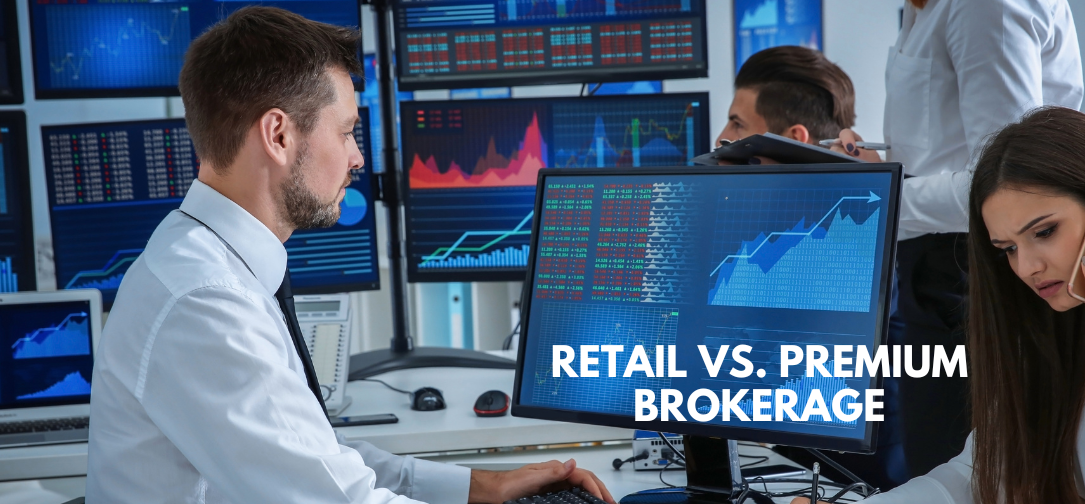
The exponential growth of the global financial market over the past decade has led to a massive influx of trading platforms, catering to every type of market participant. From mobile applications designed for casual retail speculation to high-end institutional networks built for corporate treasuries, the options available to investors are vast. However, for high-net-worth individuals moving substantial blocks of capital across markets, using the wrong tier of infrastructure can be an incredibly costly mistake. Understanding the operational differences between standard retail brokerages and premium financial models is essential for selecting a partner that truly matches your investment scope.
At first glance, many trading platforms look similar, offering access to the same major asset classes like foreign exchange, global indices, and commodities. However, beneath the surface interface, the technical engineering, liquidity routing, and corporate governance models of retail and premium brokers are completely polarized.
The Mechanics of Capital Execution
Retail brokerages are fundamentally engineered for volume, processing millions of small orders from casual participants. To sustain this business model, retail platforms frequently engage in a practice known as payment for order flow (PFOF), routing client trades through market makers or internalizing them. For a small retail account, the minor execution delays or fractional price distortions caused by this process are negligible. However, for a sophisticated trader deploying large positions, shallow retail liquidity and execution latency cause severe slippage, resulting in significant hidden transaction costs that directly erode overall operational profit.
Conversely, a premium brokerage firm operates on an entirely different structural philosophy. Engineered exclusively for elite capital, premium models bypass standard retail networks entirely, establishing direct connections to tier-one institutional liquidity providers. This ensures that large-scale orders are executed instantly with absolute transparency and minimal market impact. This advanced technical technology protects the investor from adverse price movements, maximizing cost efficiency on every single transaction.
Customization, Governance, and Support
The distinction between these two models extends far beyond simple execution speed; it is also heavily apparent in data infrastructure and client support. Retail platforms offer standardized, rigid environments with basic charting tools and automated chatbots for customer service. A premium model provides a completely bespoke experience, giving investors access to integrated portfolio volatility calculators, institutional risk analytics, and real-time market intelligence. This level of digital innovation significantly enhances decision-making productivity, allowing asset managers to navigate volatility with total clarity.
Ultimately, the choice of a brokerage firm reflects an investor’s long-term wealth strategy. While retail platforms serve their purpose for entry-level market exploration, high-stakes capital preservation demands an institutional-grade environment rooted in security, deep liquidity, and technical excellence. Establishing a deep, lasting trust is an obvious choice for elite investors, as the platform is custom-built to deliver the execution precision, premium governance, and sophisticated technology required to support high-performance portfolios.





Comment