
Private Vault Singapore: How Technology Is Transforming Modern Asset Security

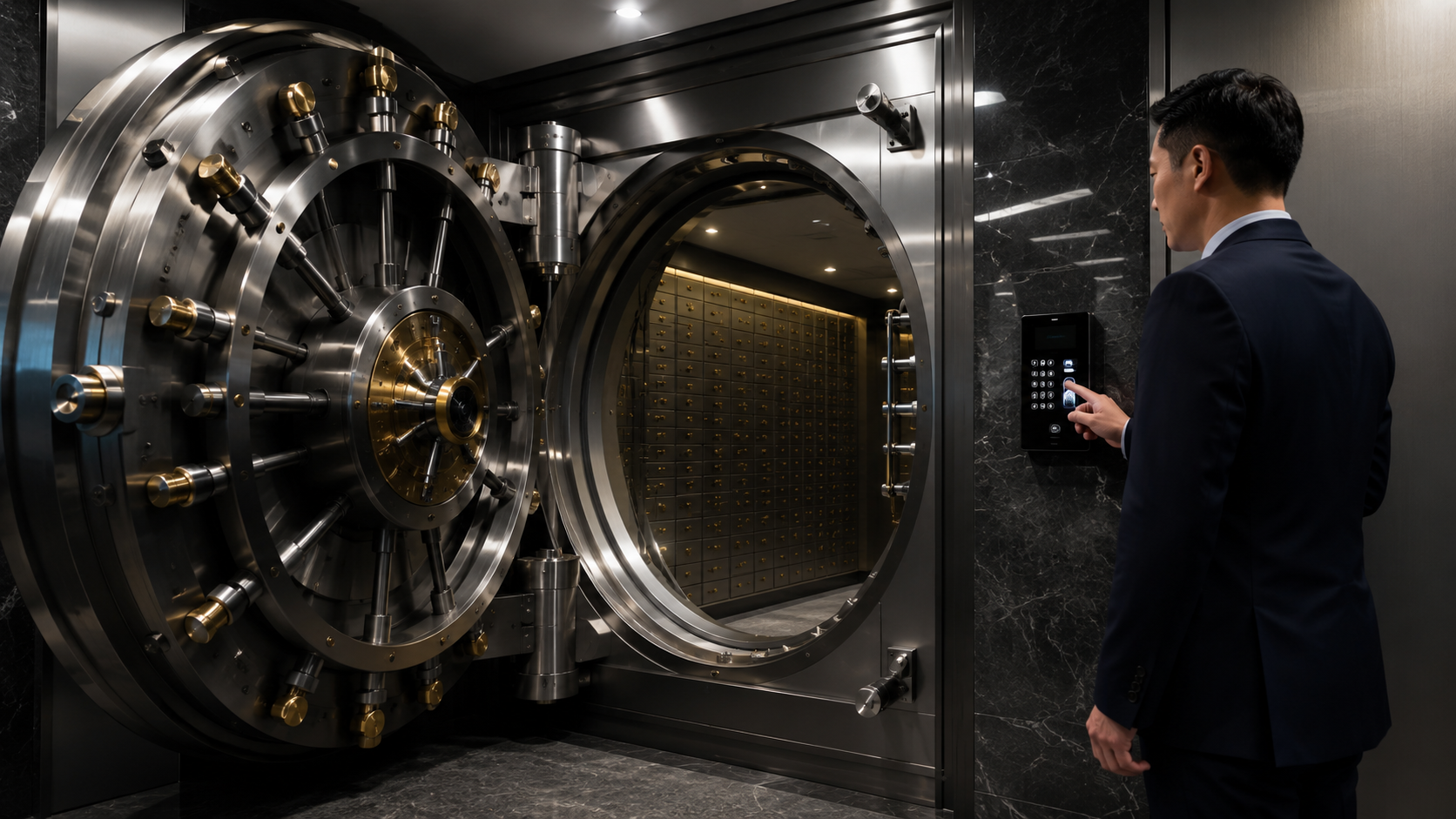
Singapore has long been a fortress for global wealth. Today, that reputation is being redefined by a quiet revolution in how the city-state’s most valuable assets are protected.
From biometric vaults to AI-powered surveillance, the modern private vault Singapore industry is no longer about thick steel doors alone. It is about intelligent systems, frictionless access, and round-the-clock visibility that redefine trust for a new generation of investors.
For affluent individuals, business owners, and family offices, the question is no longer whether to use a vault, but which type of vault delivers the highest standard of security, privacy, and convenience. Choosing a trusted private vault Singapore provider has become increasingly important as investors look for secure, technology-driven storage solutions outside the traditional banking system.
The Rising Demand for Private Vault Storage in Singapore
The appetite for private vault storage in Singapore has grown in step with the country’s rise as a global wealth hub. The city-state now manages over S$6 .07 trillion in assets and hosts more than 2,000 single-family offices, representing a 43% increase from 2023.
The wealth migration is unmistakable. Hong Kong’s millionaire population declined 27% between 2012 and 2023, while Singapore’s rose 40% over the same period. This shift has placed unprecedented pressure on traditional storage solutions and accelerated demand for high-tech alternatives.
Banks, meanwhile, are quietly retreating. Rising rentals, manpower costs, and liability concerns have driven many institutions to scale back safe deposit services, with waiting lists at prime locations stretching for years. Into this gap have stepped specialist providers offering Singapore private vaults that operate around the clock, with no queues, no appointments, and no human bottlenecks.
Where Do the Rich Keep Their Gold in Singapore?
For Singapore’s ultra-high-net-worth community, the answer is rarely a home safe and increasingly seldom a bank. The preferred destination is a dedicated private vault facility purpose-built for high-value assets.
These facilities sit outside the banking system, which means stored items are not exposed to bank freezes, insolvency proceedings, or probate delays. Many wealthy clients diversify, splitting holdings across more than one facility for added redundancy.
Popular asset classes stored in these vaults include investment-grade gold and silver, luxury timepieces, fine jewellery, rare collectibles, original title deeds, wills, and even hardware wallets holding cryptocurrency keys. The discretion is a major draw, since the contents of the vault are known exclusively to the owner.
How Technology Is Reshaping Singapore Private Vaults
The biggest shift in the industry is technological. The new generation of Singapore private vaults blends institutional-grade physical security with software-driven access controls that simply did not exist a decade ago.
Biometric Authentication and Multi-Factor Access
Modern facilities no longer rely on a single key or signature. Access typically requires a layered combination of security cards, PIN codes, biometric verification such as fingerprint or facial recognition, and a physical box key.
At Vault@268, for example, access uses biometric authentication combined with unique box keys. This zero-knowledge approach mirrors principles used in cybersecurity, where even the operator cannot see what is stored.
AI Surveillance and Anomaly Detection
Singapore is a global leader in AI-driven security. Industry research suggests smart technologies such as AI can help cities reduce crime by 30 to 40 percent. Private vault operators are adapting this technology to flag unusual movement, identify unauthorised loitering, and trigger real-time alerts long before a human guard would notice.
Robotic Retrieval and 24/7 Automation
Perhaps the most striking change is the move toward fully automated facilities. At Vault@268, a robotic arm retrieves the box from a secure dispenser, ensuring no human ever handles the client’s belongings, and the facility is accessible 24 hours a day, 7 days a week, with or without staff present. This eliminates one of the biggest historical pain points of bank lockers: rigid operating hours.
Is Private Vault Safe?
For most affluent users, modern private vaults are safer than the alternatives. They are purpose-built around a single mission, asset protection, rather than being a side service inside a larger institution.
Leading Singapore facilities feature vault doors with Grade VIII European ECB·S certification, thick concrete walls, gas-based fire suppression that prevents water damage, redundant power, and 24/7 surveillance backed by trained response teams.
Crucially, because contents are not disclosed to the operator, clients retain full control. Many facilities recommend supplementary insurance to ensure comprehensive coverage of stored assets.
Bank Safe Deposit Box vs Modern Singapore Private Vaults
| Feature | Traditional Bank Locker | Modern Singapore Private Vault |
| Access hours | Banking hours only | 24/7, fully automated |
| Authentication | Key + signature | Biometric, PIN, card, and key |
| Retrieval | Staff-assisted | Robotic, fully private |
| Waiting list | Often years | Usually immediate |
| Content disclosure | Some institutional visibility | Zero knowledge to the operator |
| Exposure to bank events | Yes (freezes, probate) | Independent of the banking system |
| Fire protection | Standard | Gas suppression, no water damage |
Can Foreigners Open a Safe Deposit Box in Singapore?
Yes. One of Singapore’s clearest advantages is that foreigners can rent private vault Singapore facilities without needing to be residents or local bank account holders.
Most private operators require standard identity verification, typically a valid passport, proof of address, and, in some cases, an in-person visit. There is no nationality restriction at the major automated providers, making Singapore a natural choice for international investors seeking neutral, geopolitically stable storage.
This is reinforced by Singapore’s privacy framework. Banking secrecy protections under Section 47 of the Banking Act provide comprehensive confidentiality, with penalties reaching S$250,000 for unauthorised disclosure. Combined with the absence of capital gains, inheritance, and estate taxes, the city-state offers structural advantages unmatched by most traditional wealth centres.
Where’s the Safest Place to Store Gold?
The safest place to store gold is a purpose-built, independently audited private vault located in a politically stable jurisdiction. By every reasonable measure, Singapore meets that brief.
Key factors that set Singapore apart include:
- Geopolitical neutrality between major global powers
- No capital gains, inheritance, or estate taxes on stored assets
- strict rule of law and minimal corruption
- World-class physical infrastructure, with leading facilities engineered to mitigate flood and fire risk
- Independence from the banking system, protecting assets from bank-specific risk
- Insurance availability through reputable global underwriters
- 24/7 robotic access, eliminating human bottlenecks for time-sensitive needs
For gold specifically, look for facilities with controlled environments, third-party audits, clear chain-of-custody documentation, and multi-layered biometric access.
A New Standard for Asset Protection
Technology has redrawn the boundaries of trust in asset storage. What once required a relationship manager, a banker’s hours, and a measure of blind faith is now governed by biometrics, automation, and AI.
For investors and business owners, the choice is no longer about whether to upgrade. It is about whether the institution holding your most valuable assets is keeping pace with the technology now expected of any serious wealth jurisdiction.
In a world where wealth moves quickly, and risk is increasingly digital, perhaps the right question is this: Does your current vault belong to the last century, or to the next one?







Comment