
Industrial AMRs in 2026: Which Ones Can You Trust?

Key Takeaway:
|
The autonomous mobile robot (AMR) industry is scaling quickly. MarketsandMarkets projects the global AMR market will grow from USD 2.75 billion in 2026 to USD 7.07 billion by 2032, at a 14.4% CAGR, driven by adoption in warehousing, manufacturing, and 3PLs.
Among global AMR leaders, Pudu Robotics has delivered over 130,000 robots as of March 2026 and has already gained 23% market share among Commercial Service Robot companies, according to Frost & Sullivan in 2023.
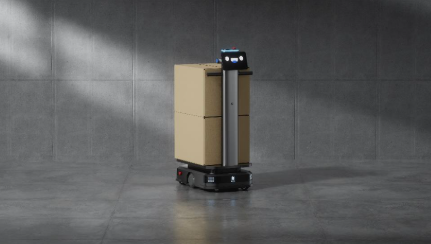
Backed by the world’s trust, Pudu Robotics can manufacture industrial AMRs to enhance overall business operations—the PUDU T150, T300, and T600—each purpose-built to solve distinct operational challenges in manufacturing and warehousing environments.
Why Global Customers Trust Pudu Robotics Among Leading Industrial AMR Brands?
Pudu Robotics has established itself as one of the most influential players in the global industrial AMR by combining strong corporate foundations, advanced AI-driven robotics technology, and proven large-scale deployment across multiple sectors. Their leadership position is the result of sustained R&D investment, rapid commercialization, and continuous expansion into increasingly complex industrial environments.
- Company Credentials
Founded in 2016, Pudu Robotics has deployed in 80+ countries and across multiple industries. It has also been recognized as a global leader in commercial service robotics, with a large-scale operational footprint across the industry and a rapidly expanding international customer base, including Shell, Walmart, and China Southern Airlines.
- Core Technology Stack
Pudu Robotics builds the competitive edge on a vertically integrated technology stack centered around autonomous mobility and intelligent interaction systems. The core capabilities include LiDAR technology, SLAM, and visual SLAM for high-precision navigation, AI-based perception systems for object recognition and task execution, and advanced motion control for stable operation in dynamic environments.
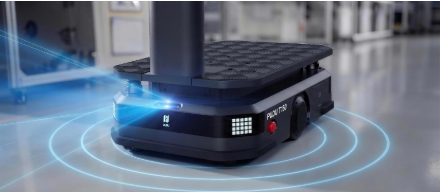
Pudu Robotics explicitly emphasizes 3 foundational pillars: mobility, manipulation, and AI. This enables industrial robots to operate reliably in both structured and semi-structured industrial environments.
- Industry Recognition
Pudu Robotics has received multiple international accolades that reinforce its technological authority and design excellence, including the Red Dot Design Award for its industrial and logistics robots, such as the Pudu T300.
More importantly, their capabilities are endorsed through collaboration with leading industrial players. For instance, Pudu Robotics has partnered with Sunwoda Electronic, a top-tier battery manufacturer, to deploy the T300, an industrial autonomous robot, to handle materials between critical production stages.
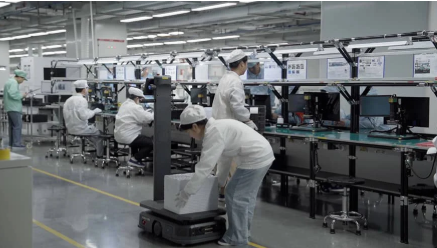
In this use case, robots are responsible for transporting materials between designated stations across battery manufacturing processes, an environment that demands high precision, reliability, and seamless integration with existing workflows.
- Customization Capability
A defining strength of Pudu Robotics in the industrial segment lies in the platform-based AMRs, which are purpose-built for flexible intralogistics rather than fixed, single-function automation.
Their industrial AMRs support modular configurations, including standard load carriers, lifting modules, towing systems, and conveyor integrations, allowing them to handle a wide range of material flows—from work-in-progress (WIP) transfer between production stations to warehouse processes such as receiving, inspection, storage, and packing.
This architecture enables enterprises to deploy highly customized, scenario-specific automation, rather than redesigning workflows around the robot. Whether on manufacturing lines requiring station-to-station material delivery or in warehouses optimizing internal logistics routes, Pudu Robotics’ AMRs serve as adaptable building blocks within a broader automation ecosystem, enabling scalability and rapid deployment without heavy infrastructure changes.
Pudu Robotics’ Industrial AMRs in 2026: An Overview
| PUDU T150 | PUDU T300 | PUDU T600 | |
| Max Payload | 150 kg | 300 kg | 600 kg |
| Spotlight Features | • Hour-level deployment
• VSLAM + 360° dual LiDAR navigation • WMS-integrated Order-to-Person solution |
• Chassis-level stabilization
• 360° Omni-Sense Safety • PUDU Scheduler multi-robot collaboration |
• Idle elevator priority
• Narrow aisle traffic logic • VDA5050 compliance
|
| Navigation | VSLAM + LiDAR | ||
| Fleet Coordination | Multi-robot collaboration, no local server required | PUDU Scheduler — up to 20 robots per environment | VDA 5050 — compliant integrates with multi-vendor fleet managers |
| Primary Applications | • 3C electronics
• FMCG • Cosmetics •Fast-fashion warehousing |
• Line-side delivery
• Work-in-progress transport • Quality inspection |
• Automotive
• Metal fabrication • Electronics assembly • Smart warehousing • Multi-floor campuses |
Is the PUDU T150 the Right Light-Payload Industrial AMR?
Light-payload industrial AMRs (AMRs with payloads under 150 kg) are typically evaluated against 3 criteria: deployment time, navigation stability in mixed human-robot environments, and integration cost with existing WMS and facility infrastructure in intralogistics. The Pudu T150, launched in January 2026, is purpose-built for 150 kg payload applications and is positioned against all three.
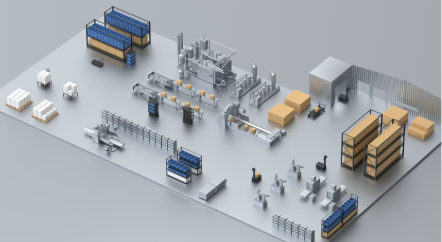
Deployment: Hour-Level Commissioning Without Site Modifications
Traditional AGV (automated guided vehicle) installations require floor markers or magnetic tape, guide rail installation, and server configuration before the robot is operational, typically a multi-week process. The T150 reduces deployment to hour-level timelines, with no site modifications or server setup required.
This shortens the capex validation cycle for operators piloting automation on a single line before scaling facility-wide.
Navigation: VSLAM + 360° Dual LiDAR Fusion
Factory and warehouse floors create 3 navigation problems that consumer-grade robotics cannot handle:
- Production layouts reconfigure frequently.
- Aisle widths are narrow with human workers, forklifts, and manual trolleys moving unpredictably in the same space.
- Floor conditions include expansion joints, cable trays, and small steps at dock-to-warehouse transitions that can stall a wheeled robot mid-route.
Pudu T150’s perception stack addresses each. Visual Simultaneous Localization and Mapping (VSLAM) builds maps using ceiling feature points and updates them in real time, so layout changes on the floor do not require re-mapping because the robot adapts during operation.
Besides, the 360° dual LiDAR and RGBD cameras cover obstacles in every direction simultaneously, which matters when a forklift crosses from behind, or a worker steps out from between racks. Plus, AI-driven multi-level obstacle-avoidance algorithms recalculate routes dynamically rather than halting upon detection.
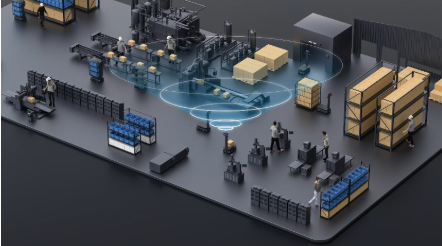
The mobility envelope defines whether the PUDU T150 physically fits a given facility without modification:
- Minimum passable width: 60 cm (23.6 in)
- Step-climbing capability: 20 mm (0.79 in)
- Gap-crossing capability: 35 mm (1.38 in)
- Maximum operating speed: 0.2–1.2 m/s (0.66–3.94 ft/s)
Order-to-Person Solution: Measured Outcomes
E-commerce and omnichannel fulfillment operations face a picking bottleneck: manual pickers spend 60–70% of their shift walking between storage and packing, which caps throughput and drives labor costs. Adding more pickers creates aisle congestion and lowers per-picker productivity, a diminishing-returns problem.
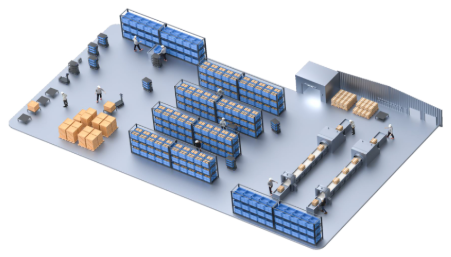
The T150-based Order-to-Person solution shifts the operating mode from firefighting to proactive peak control. Measured outcomes across deployments are:
- WMS/MES/ERP integration via open APIs with real-time data synchronization
- 99.95% picking accuracy, from standardized human-robot execution workflows
- Zero facility modification, deploying directly into existing infrastructure
- 1–2-year ROI period, based on labor cost reduction and throughput gains
- 24/7 operation support, achieved by a quick battery swap and auto charging
Other Features
Beyond the three primary capabilities above, the T150 covers the practical requirements that determine whether an AMR holds up in day-to-day operation:
- Hardware Durability: A one-piece die-cast chassis in aerospace-grade high-strength materials with a five-year service life, eliminating the bolted joints that cause alignment drift in multi-piece designs.
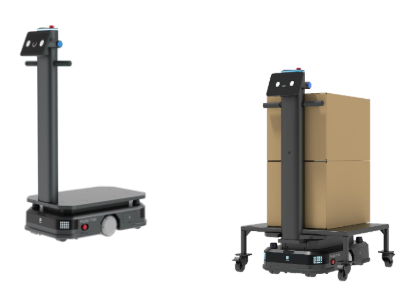
- Two Configurations: A Standard flat-top loader (65 kg) for direct payload transport, and a Lifting version (81 kg) that drives beneath carts and shelves — both sharing the same 150 kg payload, 30 Ah battery, and navigation stack.
| Pudu T150 Standard | Pudu T150 Lifting |
- Long Runtime and Fast Charging: 12-hour no-load runtime with 2-hour fast charging (0–90%), avoiding scheduling gaps.
- Operator Control: A 10.1-inch onboard touchscreen requiring no formal training, with four input methods (touchscreen, hardware pager, PUDU Link mobile app, open API) for integration with WMS, MES, and third-party systems.
- Safety and Compliance: ISO 3691-4 compliance and CE marking for industrial delivery robots, backed by 360° dual LiDAR, RGBD cameras, and collision protection sensors for mixed human-robot operation.
Which Industries is the PUDU T150 Built For?
As a main AMR brand on the market, Pudu manufactures this industrial robot for light-load, high-frequency transport in small-item and light-component environments. Typical deployments are:
- 3C Electronics Assembly — tray and bin transport between SMT lines, test stations, and packaging
- Plastics Manufacturing — finished-component shuttles from injection molding to QC and packaging
- FMCG (fast-moving consumer goods) Warehousing — carton and tote movement in distribution centers
- Cosmetics — small-batch material handling where payload sensitivity and clean-floor operation matter
- Fast-Fashion Small-Item Warehousing — high-SKU-count fulfillment with frequent reconfiguration
Is the PUDU T300 the Right Industrial Delivery Robot for 300 kg Loads?
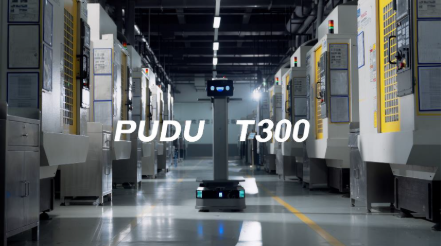
Payloads above 150 kg open a different class of problem. Moving 200 kg injection-molded parts between stations, shuttling palletized work-in-progress between assembly and quality inspection, or coordinating deliveries across a 50,000 m² warehouse, PUDU T300, Pudu’s first industrial delivery robot, is built for handling them.
Stabilized Delivery: Vehicle-Grade Chassis with Adaptive Suspension
Stabilization is one of the core engineering problems of mid-payload delivery: one spilled or tipped load wipes out the productivity gains from multiple successful trips and, in many cases, damages the material itself. Tall, stacked cartons, partially filled liquid containers, and precision components on shelf attachments can all shift when the robot crosses a floor joint, takes a tight corner, or accelerates from a stop.
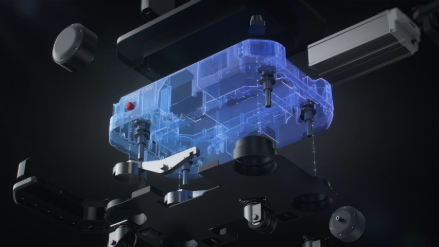
The PUDU T300 industrial AMR addresses chassis-level stabilization rather than relying on software workarounds. The upgraded vehicle-grade chassis, paired with motion control algorithms tuned for heavy-load stability, delivers smoother acceleration and deceleration profiles than a standard AMR chassis. Layered on top is an automobile-level adaptive suspension with shock-absorbing technology — the same engineering class used in passenger vehicles, adapted to industrial robotics.
When the T300 crosses a 20 mm threshold or 35 mm groove, the suspension absorbs the vertical impact rather than transmitting it to the load. For operations transporting fragile components, liquid containers, or high-stack configurations, this is the feature that keeps load failure rates near zero.
360° Omni-Sense Safety: ISO 3691-4 Compliance with Multi-Sensor Perception
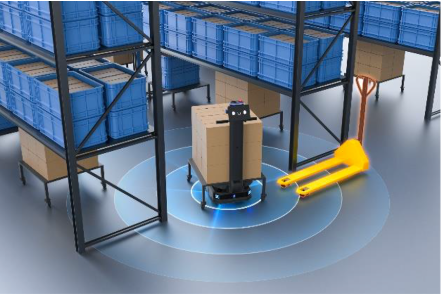
At a 300 kg payload, a single blind spot in the AMR’s perception field becomes a safety incident waiting to happen. Forklifts crossing from behind, workers stepping out from between racks, carts rolling into an aisle — any of these scenarios require immediate detection regardless of which direction the event comes from. An industrial delivery robot with forward-facing sensing only is not deployable at this payload tier in facilities with active human traffic.
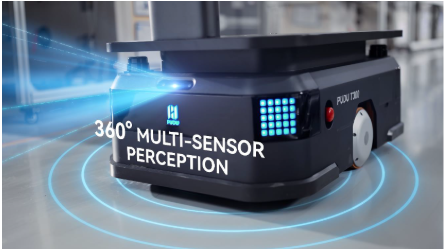
The PUDU T300’s 360° Omni-Sense Safety system covers the full perimeter with LiDAR sensors scanning in every direction simultaneously, backed by depth cameras that add spatial awareness for distance measurement and collision avoidance. The combined stack detects objects on any approach vector and feeds the data into navigation for real-time route adjustment. Compliance-wise, this industrial AMR meets ISO 3691-4, the international safety standard for driverless industrial vehicles — the baseline most facility EHS audits and insurance underwriters require for 300 kg-class equipment.
PUDU Scheduler System: Multi-Robot Collaboration
A single T300 handles point-to-point transport. A fleet of T300s handles a factory. The operational problem with running multiple AMRs in one facility is traffic management: robots queuing at narrow aisle entrances, colliding at blind intersections, or idling while a congested path clears. Without a coordination layer, each additional robot delivers diminishing returns — the tenth robot in a poorly managed fleet can slow the whole fleet down rather than adding throughput.
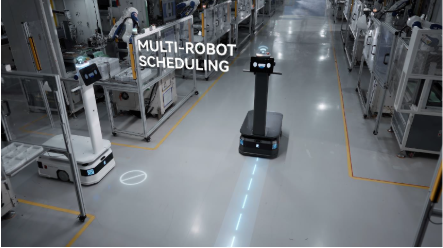
In PUDU T300, the PUDU Scheduler System coordinates up to 20 robots in one environment on a self-organized network. Four capabilities handle the fleet problem:
- Real-time environmental perception — each robot shares map updates and obstacle data with the fleet, so layout changes propagate instantly
- Automatic congestion detour — when a primary route is blocked, robots reroute without manual traffic control or dispatcher intervention
- Adaptation to complex and dynamic scenarios — the scheduler handles shift changes, emergency rerouting, and production line reconfigurations on the fly
- Painless collaboration — new robots join the fleet without re-commissioning existing units
For operators scaling from a single-unit pilot to a full facility rollout, Pudu Scheduler is the subsystem that makes fleet deployment economically coherent.
Other Features
Beyond the 3 primary subsystems above, the PUDU T300 covers the practical requirements for industrial-grade deployment:
- VSLAM+ Positioning: Pudu’s proprietary visual positioning supports ceilings up to 30 m and mapping areas up to 200,000 m², with 70% faster deployment than traditional AGVs and 30% higher mapping efficiency via the built-in mapping tool.
- 3 Delivery Modes: Auto-delivery for fully autonomous transport, follow mode for multi-robot queuing during material preparation, and power-assist mode for operator-guided hand-pushing on specific tasks.
| Standard | Shelf | Lifting | Towing |
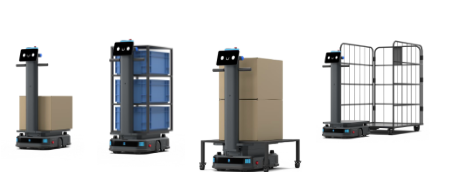
- 4 Modular Attachments: Standard (large-capacity box transport), Shelf (multi-level carrying), Lifting (fully automated loading/unloading), and Towing (integration with existing wheeled carriers).
- IoT Capabilities: Elevator control module, e-gate control, pager, PUDU Link app, open API, Bluetooth speaker, external power ports, and USB outlets for integration with existing facility systems.
Where Can You Deploy the PUDU T300?
The PUDU T300 is positioned for mid-payload industrial delivery across four primary workflows:
- Line-Side Delivery: supplying production lines with raw materials and components
- Work-in-Progress Delivery: shuttling partially assembled goods between stations
- Quality Inspection Delivery: transporting samples between production and QC stations
Above all, for operators moving mid-payload loads through human-occupied industrial environments, the PUDU T300 is your default mid-tier choice!
What Separates the PUDU T600 from Other Heavy-Payload AMRs?
Heavy-payload AMRs face a different procurement profile than others. Buyers at this tier are usually scaling fleet operations rather than piloting single units, operating in mixed-vendor environments with existing fleet managers, and handling load footprints that don’t fit a single chassis design. PUDU T600 is built against three of the decisive requirements at this tier.
Idle Elevator Priority Scheduling + Narrow Aisle Traffic Logic: Real-Time Fleet Traffic Intelligence
Multi-floor facilities and dense warehouse aisles create two of the hardest traffic problems in industrial AMRs. At shift change or peak delivery windows, elevators become bottlenecks — a robot waiting for an elevator call is a robot not delivering throughput, and in a fleet of ten or more, elevator queuing compounds fast. Narrow aisles introduce the inverse problem: when two robots meet in a single-lane corridor, one has to yield, and the default “wait and retry” logic wastes cycle time.
As the flagship product manufactured by one of the leaders in industrial AMRs, PUDU T600 addresses both with real-time traffic intelligence. Idle elevator priority scheduling continuously monitors elevator status across the facility and routes each robot to the idle elevator first, cutting peak-time congestion on cross-floor deliveries. Narrow aisle traffic logic dynamically switches between single-lane and dual-lane modes based on actual load dimensions — a 600 kg palletized load traveling through a 1.5 m aisle triggers single-lane mode with yield priorities, while a lighter, narrower load running through the same aisle uses dual-lane passing.
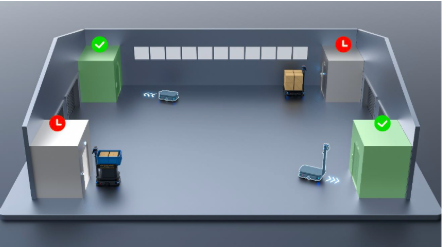
Both systems improve with deployment scale: more robots feeding data into the scheduler means better route predictions and less manual traffic management from facility supervisors.
VDA5050 Compliance: Open-Standard Integration with Multi-Vendor Fleet Managers
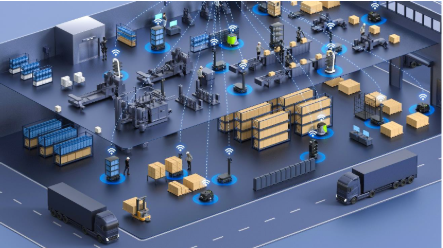
Heavy-payload deployments rarely happen in single-vendor environments. A 2026 factory floor typically runs AMRs from two or three vendors simultaneously. Under such circumstances, without a common fleet-management protocol, each vendor’s robots run on their own scheduler, and the facility ends up with three independent fleets that cannot coordinate at intersections, elevators, or shared charging infrastructure.
VDA5050, the German automotive industry’s open standard for AMR-to-fleet-manager communication, is increasingly the procurement gate for heavy-payload buyers in 2025–2026. Compliance means the PUDU T600 plugs into existing multi-vendor fleet managers without custom development, proprietary lock-in, or complex interface integration.
For operators scaling fleet operations across multiple sites, VDA5050 support is the difference between a robot that fits the existing orchestration stack and a robot that forces the facility to rebuild its scheduling architecture.
Other Features
Beyond the three primary capabilities, this industrial AMR covers the practical requirements for heavy-payload industrial deployment:
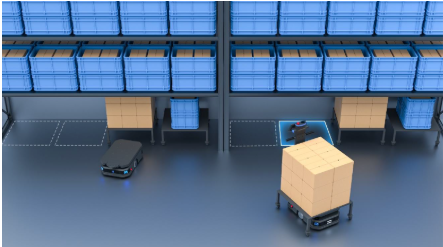
- Rack Group Recognition: Advanced navigation and perception systems handle target storage identification and autonomous pick-and-place, pushing facilities toward fully unmanned shelf-to-line workflows without additional infrastructure investment.
- On-Premises Deployment: All data stays within the customer’s internal network on their own servers or private cloud — a problem-solver for manufacturing, defense-adjacent, and high-compliance industries that cloud-dependent competitors cannot match.
- 12-hour Runtime + 2-hour Charge: A 30 Ah battery delivers 12 hours of continuous no-load operation with a 2-hour charge from 0% to 90%, supported by automatic recharging and battery swapping for 24/7 operation without oversizing charging infrastructure.
- Disaster Avoidance Module: The T600 receives fire alarm and earthquake signals and autonomously navigates to a safe area or designated parking location — a genuine differentiator for facilities in seismic regions or operating under strict safety compliance requirements.
What are the Main Use Cases for the PUDU T600?
The T600 is positioned for heavy-payload industrial logistics across facilities where single-trip payload, fleet integration, and multi-floor coordination all matter simultaneously. Typical deployments are:
- Automotive Parts Production: pallet transport between stamping, welding, and assembly
- Metal Fabrication: raw stock and finished component movement through cutting, forming, and finishing stages
- Electronics Assembly at Scale: component supply and WIP movement across multi-line facilities
- Smart Warehousing: shelf-to-line automation, cross-dock transport, and fulfillment in high-density storage
- Multi-Floor Campuses: Inter-floor material movement where elevator coordination is a throughput constraint
For facilities where load weight has already crossed pallet class and the fleet is scaling into mixed-vendor territory, the T600 is the tier that fits.
Conclusion
In 2026, the PUDU T150, PUDU T300, and PUDU T600 stand out in the industrial AMR market, covering light-, mid-, and heavy-payload needs across manufacturing and warehousing. Behind all three is Pudu Robotics — a leading AMR brand trusted by global enterprises and proven at scale. For operators choosing an industrial AMR partner this year, Pudu Robotics is the clear choice.
Contact Pudu Robotics to explore more details about industrial AMRs!
References
- Available at: https://www.marketsandmarkets.com/Market-Reports/autonomous-mobile-robots-market-107280537.html
- Available at: https://www.prnewswire.com/news-releases/pudu-robotics-takes-lead-in-global-commercial-service-robotics-market-302220924.html
- Available at: https://www.pudurobotics.com/en/news/pudu-robotics-transforms-industrial-amr-market-two-years
- Available at: https://www.pudurobotics.com/en/news/pudu-robotics-transforms-industrial-amr-market-two-years
- Available at: https://www.pudurobotics.com/en/news/pudu-order-to-person-o2p-solution-warehouse-peaks







Comment