The cheapest model on a rate card can produce the most expensive finished task. A classification run that needs three retries, a parser repair, and ten minutes of analyst review costs more than its token line suggests. Yet many AI buying decisions still begin and end with input and output rates.
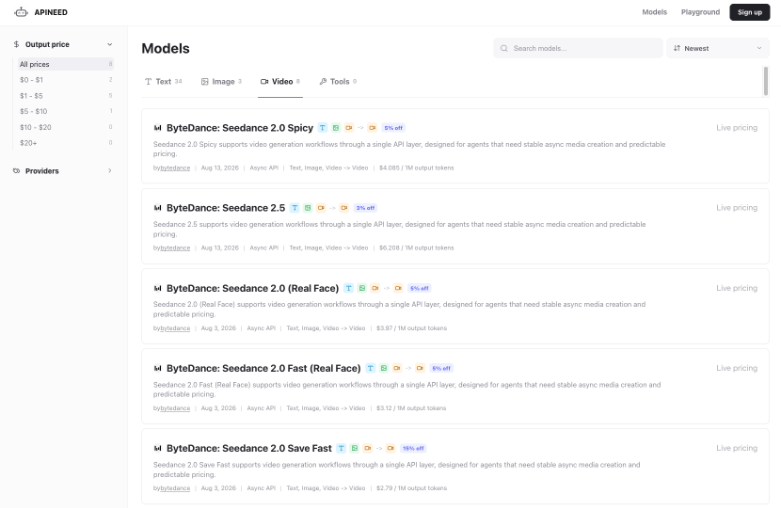
Finance teams need a completed-work measure before they can judge a gateway. APINEED makes that discussion practical because it combines usage-based billing, no subscription, and model-specific rates behind one account. The platform currently lists 45 models. Catalog size creates options, but the ledger decides whether those options save money.
Expose The Costs Hidden Behind Token Rates
A quoted rate covers model usage. It does not cover the work required to turn a response into a dependable business result. The missing items vary by task: retries after malformed output, employee time spent checking facts, engineering time spent handling a response difference, and waste from sending simple work to an expensive route.
Count A Task Only After It Passes
Define a completed task in operational terms. An invoice extraction is complete when required fields parse and totals reconcile. A support classification is complete when the label fits the approved taxonomy. A research summary is complete when a reviewer can trace its claims to the supplied material. A response that arrives but fails the check is consumed usage, not completed work.
This distinction creates a useful denominator. Divide all model spend, retries, and review minutes by the number of accepted tasks. The result may not look as clean as cost per million tokens, but it matches the work the business actually bought.
Separate Usage Spend From Repair Spend
Keep two columns in the pilot ledger. Usage spend comes from the route and volume. Repair spend covers retry time, manual correction, and software changes caused by the route. The split prevents a common procurement error: rejecting a higher-rate model that saves review time or approving a low-rate model that quietly creates an editing queue.
Do not force every human check into a dollar estimate on day one. Minutes per accepted task are enough to show direction. If one route consumes half the API budget but triples review time, the tradeoff is visible before anyone argues about salary allocation.
Compare Buying Structures Against The Same Workload
Provider-direct accounts, fixed subscriptions, and a usage-based gateway solve different purchasing problems. Compare them with one representative task set rather than a generic feature checklist. The goal is not to declare one structure universally cheaper. It is to discover which structure produces the clearest cost and switching boundary for this workload.
| Buying structure | Finance question | Operational check | Common blind spot |
| Separate provider accounts | Can usage and commitments be reconciled across vendors? | Run the same accepted-task ledger per provider | Integration and invoice fragmentation |
| Fixed subscription | Will the team use the included capacity? | Compare paid capacity with completed work | Paying for idle allowance |
| Usage-based gateway | Does one balance simplify trials and route changes? | Test several routes under one capped pilot | Assuming every listed discount is identical |
APINEED follows the third structure: users top up a balance, create one API key, and pay as they use routes. Eligible APIs can show a reduction as high as 50 percent, but the ceiling is not catalog-wide. The route page and the pilot’s actual usage should drive a budget, not the largest percentage in the headline.
Keep One Baseline Outside The Gateway
A fair comparison needs a control. Keep the current production route or an existing provider quote in the ledger. Send the same frozen task set, apply the same acceptance checks, and record the same review minutes. Without a baseline, a gateway can look efficient simply because the business has never measured its present workflow.
Do Not Treat Catalog Breadth As Savings
More models can improve negotiating and routing options. They can also invite aimless testing. Limit the pilot to routes that have a plausible job: one for routine high-volume work, one for harder exceptions, and perhaps one fallback candidate. Every extra route needs a reason, an owner, and an acceptance threshold.
Build A Route Ledger Around Accepted Tasks
The ledger should be small enough to maintain after the pilot. Record task class, selected model, request count, accepted count, retries, usage cost, review minutes, and failure reason. APINEED’s shared text interface can reduce the integration change when a team tests another model, but the ledger must still preserve route identity. A common endpoint should not turn different economics into one anonymous total.
Use APINEED to replay the same task class against two suitable routes, then compare cost per accepted task. Keep prompts, output requirements, and review rules fixed. If a route needs a different prompt to compete, record that as repair work before deciding whether the change is worth keeping.
Route By Job Difficulty Not Department
A finance team may use AI for invoice extraction, policy comparison, draft explanations, and anomaly triage. Sending all four jobs to one premium route is easy to administer but hard to justify. Sending all four to the lowest-rate route can move the cost into review. Group work by observable difficulty and consequence instead.
Routine extraction with a strict schema can start on a lower-cost candidate if the validator is strong. A contested policy comparison may justify a more capable route and a named reviewer. The department is the same; the cost of being wrong is not.
Record Why Every Retry Happened During The Pilot
A retry caused by a temporary request failure is different from a retry caused by poor instructions or an unacceptable answer. Keep short reason codes so procurement does not blame the gateway for a broken prompt or credit the model for a parser workaround. The codes also show which failures could be prevented without buying a more expensive route.
The platform’s published routing design can complete a request through a different upstream path when necessary. Treat that as continuity to test, not a guarantee that every completed response meets the task contract. Acceptance checks and route records still belong in the application.
Run A Capped Pilot Before Negotiating Scale
Fund a bounded balance and choose a task set large enough to expose repeats, not large enough to hide poor design behind sunk cost. A useful pilot has one baseline, two candidate routes, fixed acceptance rules, and a stop date. Review the ledger when the balance reaches a preset point as well as when the calendar ends.
Set Exit Rules Before The First Request
Stop a route early if structured output repeatedly breaks, accepted-task cost exceeds the baseline without a quality gain, or repair work spreads into production code. Continue when a route meets the task contract and produces a clear economic advantage. A pilot without exit rules tends to become a model tour.
The final comparison should fit on one page: accepted volume, total usage, total review time, cost per accepted task, and the integration changes required. That is enough for finance and engineering to discuss the same system without reducing the decision to either a demo or a spreadsheet.
Make Procurement Follow The Completed Task
APINEED is a reasonable fit for teams that want usage-based access to several model routes without opening a new integration and subscription for every trial. Its value should appear as fewer purchasing frictions and a better cost per accepted task, not merely a longer model list.
Without failure and review tracking, unified billing can make spend look simpler while the real repair cost stays invisible. Price the work that passes, preserve the baseline, and let the route ledger—not the cheapest token line—make the buying decision.