Plastic Pelletizer: Complete Guide to Plastic Pelletizing, Plastic Pelletizing Machine and Recycling

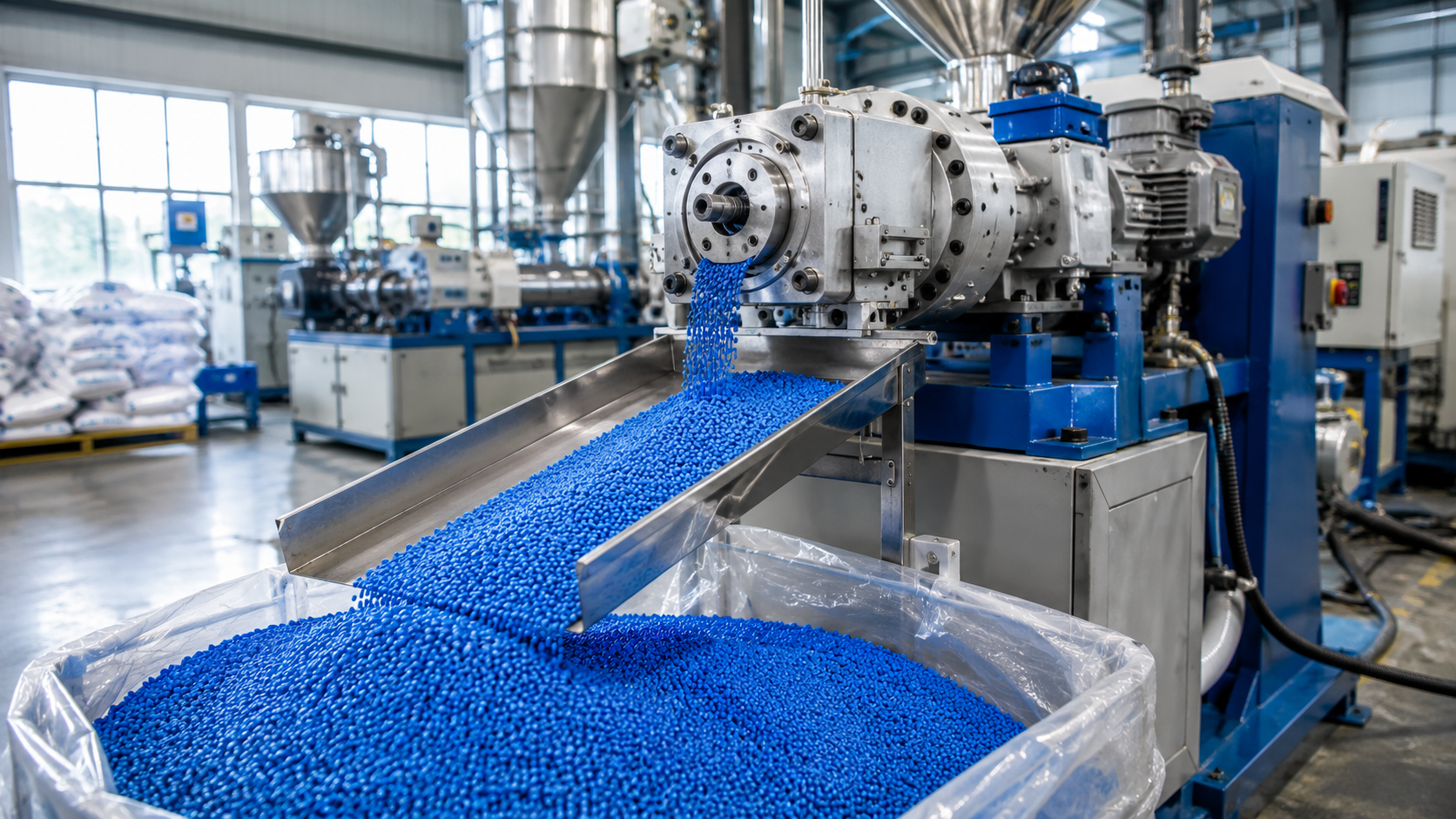
Plastic pelletizing is a central operation in modern plastic processing and plastic recycling that converts molten plastic and plastic scrap into uniform plastic pellets or granules suitable for downstream molding and extrusion processes, and a plastic pelletizer or pelletizing machine is the heart of this transformation. This guide examines the principles, machinery, integration with extrusion lines, selection criteria, optimization strategies, troubleshooting, and maintenance practices required for efficient plastic pelletizing and recycling operations, offering a comprehensive resource for engineers, plant managers, and recyclers engaged in the production of plastic pellets from virgin polymer or recycled plastic materials.
For more in-depth information you should view from China Plastic Pelletizer Manufacture –Kitech
What is plastic pelletizing and how does a pelletizer work in the pelletizing process?
Plastic pelletizing is the process by which molten polymer is transformed into discrete plastic pellets or granules through controlled extrusion, strand formation, cooling, and cutting operations; a pelletizer takes the extrudate from the extruder and, depending on the type of pelletizing system, forms, cools, and dices the melt into consistent pellet sizes that facilitate handling, storage, and subsequent plastic processing. In practice, the plastic pelletizing process begins with the raw material—whether polymer resin, plastic film, plastic waste, or plastic scrap—being fed into the hopper of an extruder where plasticization occurs through heat and mechanical shear; the extruder converts the raw material into molten plastic with a controlled melt temperature and pressure suitable for forming strands or direct cutting. The pelletizer then receives the molten or semi-molten strand either in the open air, through a water ring or into an underwater cutting chamber, where the molten extrudate is cooled and cut by a rotor or cutting mechanism to generate plastic pellets with specified dimensions and surface properties. The interplay between extrusion and the pelletizing machine determines pellet morphology, bulk density, and suitability for plastic manufacturing, recycling, and molding operations, and the pelletizing process is therefore critical to minimizing degradation, contamination, and variability in recycled polymer streams processed by plastic pelletizers and plastic granulators.
What components make up a plastic pelletizer or pelletizing machine?
A typical plastic pelletizer or pelletizing machine comprises several integrated components designed to manage polymer melt, cooling, cutting, and conveyance: the feed and hopper assembly for raw material introduction, the extruder which plasticizes and pressurizes the polymer, the strand die and adapter that shape molten plastic into continuous strands or sheets, the cooling section such as a water bath, air cooling tunnel, or water ring for heat removal, and the cutter assembly—often a rotor and stationary knife or blade system—responsible for slicing the cooled strand into pellets or granules. Additional elements include drive motors, servo systems, the pelletizing machine housing, sieving or classification equipment to remove fines, vibrating conveyors or dewatering systems for pellet handling, and control interfaces that synchronize extruder output with pelletizer cutting speed. For recycling and plastic recycling machines, auxiliary devices such as shredders, pre-washers, hot-air dryers, and melt filtration units are often integrated to prepare plastic waste or plastic scrap into a consistent raw material for the pelletizing line, ensuring the pelletizer and extruder operate with minimal contamination and stable melt characteristics required for high-quality plastic pellet production.
How does raw plastic melt, strand formation and cutting create plastic pellets?
The transformation from raw plastic to plastic pellets involves three sequential stages—melting, strand formation, and cutting—each of which must be carefully controlled to produce pellets of uniform size, shape, and physical properties. In the extruder, the polymer undergoes plasticization, where heat and shear reduce viscosity and create molten plastic suitable for shaping; the extruder screw conveys the molten polymer to the strand die, where the molten plastic is forced through precisely machined openings to create continuous strands or filaments with defined cross-sections. Once the strands emerge, they are immediately subjected to a cooling regime—air cooling, water bath, or water ring depending on the pelletizing approach—that rapidly solidifies the outer layer while allowing internal stress relaxation, and this cooling affects surface finish, crystallinity, and downstream processing behavior of the resulting plastic pellets. The cutter assembly, which may rotate or oscillate, then slices the solidified or semi-solid strand at a controlled rate to produce pellets or granule shapes; cutter speed, blade geometry, and strand tension are adjusted to control pellet length, reduce fines, and avoid strand deformation or strand breakage. Throughout this pelletizing process, melt quality, temperature, die design, cooling efficiency, and cutter synchronization are critical variables that influence pellet roundness, density, and the propensity for pellet agglomeration during packaging and downstream molding operations.
What types of pelletizers and pelletizers systems exist for different plastics?
Several pelletizer types and pelletizing systems are employed depending on polymer type, desired pellet characteristics, and production environment: strand pelletizers, which use air or water cooling followed by cutter slicing, are common for many thermoplastics and for lines where gentle handling of the strand is needed; underwater pelletizers cut the molten extrudate directly in a water chamber and are widely used for materials requiring rapid quench and minimal handling, offering high throughput for polyolefins and engineering plastics; air-cooled pelletizing machines and die-face cutting systems can be preferable for heat-sensitive polymers or when producing pellets with specific surface qualities. Additionally, specialized plastic granulators and pelletizers designed for plastic recycling machines handle contaminated or reprocessed polymers, often incorporating robust rotors, hardened cutters, and filtration stages to cope with fillers, pigments, and residual contaminants found in plastic waste and plastic film. The selection of a particular pelletizer—strand pelletizer, underwater pelletizer, water ring configured systems, or integrated recycling line pelletizing modules—depends on polymer melt behavior, throughput demands, pellet size and shape specifications, and the need to minimize melt degradation during the pelletizing process in a sustainable plastic manufacturing or recycling operation.
How does the pelletizing system integrate with extrusion and the extruder?
The pelletizing system is tightly integrated with the extruder to form a continuous pelletizing line where extrusion parameters and pelletizer dynamics must be synchronized to maintain steady-state production and consistent pellet quality; integration begins with material feeding and ends with pellet handling, and requires mechanical, thermal, and control interfaces that ensure the extruder supplies molten polymer at appropriate pressure and temperature while the pelletizer removes and cools the extrudate at a rate matched to cutter speed. Mechanically, the strand die and adapter establish a leak-free connection between extruder and pelletizer, and the pelletizing machine is often mounted adjacent to the extruder or anchored on a common frame to reduce material transfer distance and prevent strand sag or torque on the die. Thermally, melt temperature and pressure are monitored at the extruder head and adjusted to match the downstream cooling capacity, since variations in melt viscosity or temperature can lead to pellet size variability and surface defects. From a controls perspective, interfaces such as PLCs, HMI panels, and analog/digital I/O signals coordinate extruder screw speed, heater zones, cutter motor RPM, and water pump flow rates so that the pelletizing line operates as a cohesive production unit capable of handling both virgin and recycled plastic materials with minimal downtime and consistent output of plastic pellets suitable for molding and other plastic processing operations.
Where is the pelletizer placed in the extrusion line and how is material transferred?
The pelletizer is typically positioned immediately downstream of the extruder head or integrated onto the extruder assembly so that the molten strand or die-face output is transferred with minimal exposure and thermal loss, thereby reducing the risk of strand deformation, die drool, or contamination; material transfer is achieved through a series of adapters, strand supports, and cooling channels that guide the molten or semi-molten plastic into the cooling and cutting apparatus. For strand pelletizing, the extruder die directs the molten plastic into a straight run where strand supports and tensioners maintain alignment before entering an air or water cooling stage; for underwater pelletizers, the die is connected to a feed chute that plunges the extrudate directly into an underwater cutting chamber, requiring careful sealing and pressure management to prevent water ingress into the extruder. Conveyance after cutting is handled by water-based dewatering conveyors, vibrating sieves, and air-classifying systems that separate pellets from fines and transport them to hoppers or silos for packaging, with material transfer equipment designed to minimize pellet breakage, contamination, and moisture pickup during the transfer from the pelletizing machine to the plastic pellet storage and handling systems of the recycling line or production facility.
How do melt temperature, strand die and cooling affect pellet quality?
Melt temperature, die design, and cooling strategy are pivotal factors that determine pellet morphology, density, surface quality, and thermal history; an optimally controlled melt temperature ensures consistent viscosity for uniform strand formation, while deviations can produce voids, incomplete cutting, or degraded polymer. The strand die geometry influences shear and flow profiles at the die exit, affecting strand diameter consistency and the tendency for die lines or irregular cross-sections that complicate cutter operation, so precision-machined dies and proper die maintenance are essential to achieving uniform plastic pellets. Cooling method and rate—whether an air-cooled tunnel, water bath, or water ring—control the rate of crystallization and residual stresses in the pellet, with rapid quenching generally improving dimensional stability but potentially increasing internal stress if cooling is too aggressive; conversely, insufficient cooling can lead to pellet deformation, sticking, and poor flow characteristics in subsequent molding or extrusion steps. Coordinated tuning of melt temperature, die selection, and cooling parameters is therefore necessary to produce pellets with target size distribution, surface finish, and mechanical properties that meet the demands of plastic manufacturing and recycling operations.
What control interfaces and sensors are used to synchronize extruder and pelletizing machine?
Sophisticated control interfaces and sensors are employed to synchronize the extruder and pelletizing machine, ensuring stable production and rapid response to process disturbances; common sensors include thermocouples and RTDs for melt and heater zone temperature monitoring, pressure transducers at the extruder head to detect die pressure variations, tachometers and encoders on screw drives and cutter motors to regulate speed, and level sensors in hoppers and surge bins for material management. PLCs and centralized control systems integrate these inputs and provide coordinated control outputs to adjust screw speed, heater power, vacuum degassing, cutter rpm, and cooling water flow, while HMIs display real-time process variables and alarms for operators to intervene when necessary. Advanced pelletizing lines may incorporate closed-loop controls, mass flow meters, and torque monitoring to optimize throughput and minimize polymer degradation, as well as data logging for traceability in plastic recycling operations; synchronization between extruder and pelletizer is essential for minimizing strand breakage, preventing overfeeding or starved flow, and achieving consistent plastic pelletizing performance across shifts and different polymer grades.
How to choose a plastic pelletizer for recycling, production efficiency and specific machinery needs?
Selecting the right plastic pelletizer for recycling or production requires evaluating throughput requirements, the polymer types to be processed, desired pellet size and quality, integration with existing extruder systems, available cooling infrastructure, and plant footprint and energy constraints; decision-makers must balance capital cost, operational flexibility, and the total cost of ownership associated with maintenance, spare parts, and energy consumption. For recycling applications, robustness to contamination, ability to handle a range of plastic waste such as plastic film, rigid scrap, or mixed polymer input, and ease of cleaning and changeover are vital attributes, often favoring pelletizing machines with aggressive rotors, hardened cutters, and simple accessibility for maintenance. Production efficiency considerations include automation capabilities, pellet yield, ability to produce narrow pellet size distributions, and low scrap rates, all of which contribute to predictable supply of plastic pellets for downstream molding and extrusion processes and reduce material losses during plastic pelletizing recycling operations.
What criteria (throughput, pellet size, polymer type) determine the right pelletizer?
Key criteria for selecting a pelletizer include the target throughput measured in kilograms or tons per hour, the required pellet size and tolerance that depend on end-use molding and extrusion specifications, and the polymer type and any fillers or additives present in the feedstock; throughput influences the size and power rating of both the extruder and the pelletizing machine, with higher throughput lines typically necessitating underwater pelletizers or multiple cutter heads to achieve consistent cutting and cooling. Pellet size specifications dictate cutter geometry, strand die dimensions, and cooling capacity since small pellet diameters require precise strand formation and rapid quench, whereas larger granules may tolerate slower cooling rates. Polymer chemistry—whether polyethylene, polypropylene, PVC, PET, or engineering plastics—affects melt behavior, degradation susceptibility, and cooling needs, so the pelletizer must be compatible with the polymer’s thermal stability and the presence of reinforcements or fillers that can accelerate cutter wear and require specialized materials or coatings in the pelletizing system. Consideration of these criteria ensures selection of a pelletizer that can meet production targets while producing plastic pellets with properties tailored to specific applications in plastic processing and manufacturing.
Should you choose underwater, strand or air-cooled pelletizing machines for recycling?
The choice between underwater, strand, or air-cooled pelletizing machines for recycling depends on polymer sensitivity, the need for rapid quench, throughput demands, and the nature of the recycled feedstock; underwater pelletizers are advantageous for high-throughput polyolefin lines and recycling operations where immediate quench prevents strand entanglement and reduces dust, whereas strand pelletizers with water baths or air cooling are suitable for applications requiring gentler handling, ease of maintenance, or when producing pellets with lower moisture content is a priority. Air-cooled systems can reduce water handling and dewatering equipment but may be limited by space and ambient conditions, whereas water ring and water bath systems require robust filtration and dewatering circuits to manage fines and potential contamination present in recycled plastic materials. Ultimately, recyclers must evaluate the compatibility of the pelletizing method with the physical and chemical characteristics of their plastic waste streams, the available infrastructure for cooling and water treatment, and the desired pellet quality to determine whether underwater, strand, or air-cooled pelletizing machines best support sustainable and efficient plastic pelletizing recycling operations.
How do energy use and footprint impact production efficiency and total cost of ownership?
Energy consumption and plant footprint are significant factors influencing production efficiency and the total cost of ownership for pelletizing lines, as the extruder and pelletizer together represent substantial electricity and thermal energy loads and the footprint determines facility layout and material flow efficiency; energy-efficient extruder designs, optimized screw profiles, and high-efficiency motors for pelletizer cutters and water pumps can reduce operating costs while maintaining or increasing throughput, whereas inefficient systems may inflate energy bills and require higher maintenance expenditure. The physical footprint affects capital expenditures for building modifications, material handling distances, and the ability to expand or reconfigure the pelletizing line for different polymer types or increased throughput; compact pelletizers and integrated extrusion-pelletizer modules can minimize floor space and shorten strand transfer paths, improving yield and reducing handling-induced pellet damage. When assessing total cost of ownership, recyclers and producers should account for energy usage, water treatment costs for water-cooled systems, spare part lifecycles for rotors and blades, and expected maintenance intervals, since these operational costs over the life of the machinery often exceed initial purchase price and directly impact the competitiveness of plastic pellet production and plastic recycling operations.
How can you optimize the pelletizing process to improve production efficiency?
Optimizing the pelletizing process involves systematic control of process parameters, regular equipment tuning, and adoption of automation and monitoring tools to increase yield, reduce scrap, and produce consistent pellet quality; critical optimization areas include stabilizing melt pressure and temperature profiles in the extruder, fine-tuning cutter speed and blade geometry to match strand diameter, and ensuring efficient cooling and dewatering systems to prevent pellet agglomeration and moisture-related issues. Process optimization also encompasses material preparation steps in recycling lines—such as efficient washing, drying, and melt filtration—to reduce contaminants that can cause cutter wear and pellet defects, as well as maintenance practices that preserve die tolerances and cutter sharpness, thereby maintaining consistent pellet dimensions and minimizing downtime. Implementing continuous process improvement strategies and applying data-driven monitoring of key performance indicators like yield, downtime, energy consumption, and pellet size distribution enables plant personnel to identify bottlenecks and apply targeted interventions that enhance the overall efficiency of plastic pelletizing and plastic manufacturing operations.
What process parameters (melt pressure, cutter speed, cooling) most influence yield?
Melt pressure and temperature, cutter speed, and cooling intensity are primary process parameters that influence yield and pellet quality in pelletizing operations; stable melt pressure ensures uniform extrusion through the strand die and prevents pulsation that leads to variable strand diameter and increased fines, while proper melt temperature prevents degradation or incomplete fusion that can create voids and weaken pellets. Cutter speed must be synchronized with strand linear speed and diameter to produce the target pellet length and minimize the generation of undersized fines that reduce yield, and blade sharpness and clearance are essential to achieve clean cuts and prevent pellet deformation. Cooling—both the medium and the residence time—determines how quickly the strand solidifies and therefore the cutter’s ability to produce discrete pellets without sticking; insufficient cooling may result in flattened or distorted pellets, whereas excessive cooling can induce internal stresses and cracking. By monitoring and controlling these parameters through automated systems and operator training, manufacturers can maximize pellet yield, reduce rework and rejects, and ensure consistent supply of plastic pellets for downstream molding and extrusion processes.
How does pellet shape, size distribution and moisture control affect downstream processing?
Pellet shape, size distribution, and moisture content are key determinants of downstream processing performance in molding and extrusion operations: uniform pellet roundness and consistent size distribution promote reliable feeding from hoppers, even melting in extruders, and stable dosing in molding machines, while broad size distributions or irregular shapes can cause pulsation, segregation in hoppers, and inconsistent melt flow that compromise part quality. Moisture control is particularly critical for hygroscopic polymers where residual moisture in pellets can lead to hydrolytic degradation, surface defects, poor mechanical properties, and processing instability, so effective drying, dewatering post-pelletizing, and controlled storage environments are essential to preserve pellet integrity for subsequent plastic processing. Maintaining tight specifications for pellet geometry and moisture through optimized pelletizing machine settings and material handling practices ensures that plastic pellets perform predictably in production of molded parts and extruded profiles and reduces downstream scrap and cycle-time variability during plastic manufacturing.
What automation and monitoring options boost consistent pellet quality and uptime?
Automation and advanced monitoring solutions such as closed-loop temperature and pressure control, real-time torque and vibration sensing, predictive maintenance algorithms, and integrated SCADA or MES systems significantly enhance consistent pellet quality and equipment uptime; automated setpoint adjustments for screw speed, cutter RPM, and cooling flow can rapidly compensate for feedstock variations or ambient changes, while condition monitoring of cutter wear, motor currents, and bearing temperatures enables planned maintenance before failures occur. Optical or laser-based pellet size analyzers and particle counters provide continuous feedback on pellet dimensions and fines generation, allowing operators to fine-tune process parameters and maintain narrow size distributions, and automated data logging facilitates traceability for quality control in both virgin material production and plastic pelletizing recycling. Implementing these automation tools reduces manual intervention, shortens response times to off-spec conditions, and sustains high availability of the pelletizing line, delivering consistent plastic pellets and improving overall throughput and reliability of the recycling line or production facility.
What common problems occur in pelletizing systems and how do you troubleshoot them?
Common problems in pelletizing systems include pellet surface defects, inconsistent pellet size, cutter wear, strand breakage, blockages, contamination, cooling inefficiencies, and thermal degradation of the polymer; troubleshooting these issues requires systematic diagnosis beginning with raw material assessment, followed by inspection of extruder and pelletizer mechanical condition, evaluation of process parameter logs, and verification of cooling and dewatering system performance. By isolating the problem—whether it is related to melt quality, die condition, cutter geometry, or cooling flow—operators can implement targeted corrective actions such as adjusting melt temperature, resurfacing or replacing dies and blades, modifying cutter speed, improving filtration to remove contaminants, or repairing water pumps and heat exchangers to restore consistent pellet production and resume efficient plastic pelletizing operations.
Why do pellets have surface defects, voids or inconsistent size and how to fix them?
Surface defects, voids, and inconsistent pellet size typically stem from unstable melt temperatures, fluctuating die pressure, improper cooling rates, worn dies or cutters, or contamination in the raw material; resolving these defects begins with stabilizing the extruder temperature profile and ensuring consistent feed to prevent pulsing at the die, inspecting and re-machining or replacing die components to restore uniform strand geometry, and adjusting cooling flow and residence time to allow proper solidification without inducing stress. Addressing contamination through improved material preparation, filtration, and pre-washing in recycling lines reduces inclusions and void formation, while sharpening or replacing cutters and verifying cutter-to-die alignment corrects inconsistent length and surface finish, thereby returning production to specification for high-quality plastic pellets used in molding and extrusion applications.
What causes blockages, strand breakage or cutter wear in pelletizers and extruders?
Blockages and strand breakage can be caused by moisture, unmelted contaminants, excessive back pressure, or misaligned dies and cooling equipment, and these issues often accelerate cutter wear due to abrasive fillers, foreign particles, or inadequate blade material; preventive measures include effective screening and filtration of the melt, inspection and removal of foreign objects from recycled plastic feedstock, maintaining proper die clearances and cutter tolerances, and selecting cutter materials and coatings resistant to abrasion when processing filled or contaminated polymer streams. Routine monitoring of pressure spikes, screw torque, and vibration can provide early warning of impending blockages or cutter degradation, allowing for preemptive intervention such as cleaning, adjusting screw speed, or replacing worn components before production is interrupted by strand breakage or catastrophic cutter failure.
How to diagnose cooling issues, contamination and melt degradation in recycling lines?
Diagnosing cooling issues, contamination, and melt degradation involves systematic measurement of cooling water temperature and flow, inspection of dewatering and sieving equipment, sampling of pellets for contamination analysis, and rheological or FTIR testing of the melt to detect chemical degradation; cooling problems are often evident from softened or deformed pellets and can be traced to clogged heat exchangers, inadequate pump performance, or incorrect water chemistry, while contamination manifests as dark specks, inconsistent color, or abrasive wear and may require enhanced washing, sink-float separation, or melt filtration to remove contaminants. Melt degradation exhibits as a drop in molecular weight, changes in viscosity, or off-gassing and discoloration, and can be prevented by reducing residence time at high temperature, optimizing screw profiles for lower shear, and installing devolatilization and filtration systems in the recycling line to protect pellet quality and preserve the mechanical properties of the produced plastic pellets.
What maintenance, safety and installation practices apply to plastic pelletizers and pelletizing machines?
Proper maintenance, safety, and installation practices are essential for reliable and safe operation of plastic pelletizers and pelletizing machines; installation should follow manufacturer’s recommendations for alignment, anchoring, electrical supply, and grounding, and should ensure appropriate material flow paths and access for maintenance. Safety measures include guarding of cutters and moving parts, emergency stop systems, thermal shielding around hot melt zones, and operator training in handling molten plastic and hot surfaces. Regular maintenance practices include scheduled lubrication, inspection and replacement of blades and rotor parts, monitoring of seals and bearings, cleaning of water rings and filters, and calibration of sensors and control systems to maintain process stability and extend component life while ensuring that pelletizing systems operate safely within the recycling line or production environment.
What routine maintenance keeps pelletizers reliable and extends component life?
Routine maintenance that keeps pelletizers reliable includes regular inspection and replacement of cutter blades and rotors to maintain cutting performance, lubrication and bearing checks for drive components, cleaning and descaling of water cooling systems and filters to ensure consistent heat removal, verification of die integrity and alignment, and periodic calibration of sensors and control systems to maintain accurate monitoring of melt temperature and pressure. Implementing a preventative maintenance schedule that tracks wear parts, records operating hours, and predicts replacements based on measured degradation improves uptime, reduces the risk of unplanned shutdowns, and extends the service life of critical components in the pelletizing system, all of which contribute to sustained production of high-quality plastic pellets for plastic manufacturing and recycling operations.
What safety measures are required for pelletizing systems, cutters and hot melt zones?
Safety measures for pelletizing systems include physical guarding around cutters and moving machinery, lockout-tagout procedures for maintenance work, thermal insulation and shields to protect workers from hot melt zones, appropriate personal protective equipment for operators handling molten plastic and chemical additives, and ventilation or extraction systems to manage fumes from degradation or volatile components during the pelletizing process; emergency-stop circuits, interlocks on access panels, and clear signage about operational hazards are also necessary to prevent accidental contact with rotating parts or hot surfaces. Training operators in safe startup, shutdown, and troubleshooting procedures, along with adherence to local regulations and standards for machine safety, ensures that pelletizing machines operate within a controlled and secure environment that minimizes risk to personnel while supporting continuous production.
What are best practices for installing a pelletizer with existing extrusion or recycling equipment?
Best practices for installing a pelletizer with existing extrusion or recycling equipment include conducting a thorough site survey to verify space, power, and utility requirements, aligning mechanical interfaces such as the strand die and adapter to minimize strand sag and ensure leak-free connections, integrating control systems for synchronized operation between extruder and pelletizing machine, and implementing effective material handling and cooling infrastructure such as dewatering conveyors and water treatment for consistent operation. Commissioning should involve stepwise testing of feedstock handling, extruder melt quality, pelletizer cutter timing, and downstream pellet handling to validate process parameters and confirm that pellet quality meets specifications; documenting the installation and training operators on maintenance and safety procedures ensures a smooth transition to production and long-term reliability of the pelletizing line within the recycling or manufacturing facility.