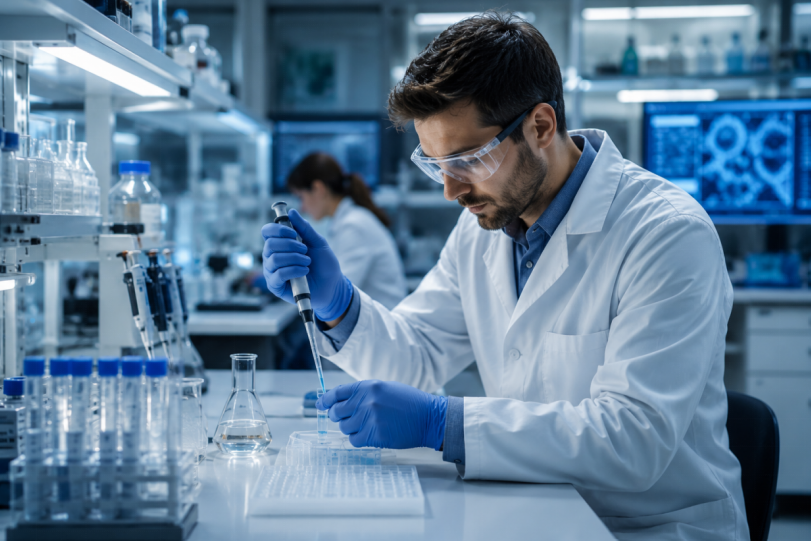
Efficient and consistent sample homogenization is a critical prerequisite for a wide range of molecular biology and biochemical applications. Whether extracting nucleic acids, isolating proteins, or preparing tissue samples for downstream analysis, the quality of homogenization directly influences yield, purity, and reproducibility.
Despite its importance, sample disruption remains a frequent source of variability in laboratory workflows. Differences in technique, instrument performance, and sample composition can lead to inconsistent lysis efficiency, ultimately affecting experimental outcomes. As research demands higher throughput and greater reproducibility, laboratories are increasingly turning to bead-based homogenization systems as a standardized solution for mechanical cell and tissue disruption.
The Importance of Effective Sample Homogenization
Biological samples are inherently heterogeneous. Tissues contain complex extracellular matrices, cell-cell junctions, and variable structural densities. Even cultured cells can differ in membrane integrity and susceptibility to lysis depending on growth conditions and treatment history.
Incomplete or inconsistent homogenization can result in partial lysis, reduced nucleic acid recovery, and biased protein extraction. These issues are particularly problematic in downstream applications such as next-generation sequencing, quantitative PCR, and proteomic analysis, where sample integrity and consistency are essential.
Reliable homogenization is therefore not simply a preparatory step but a determinant of data quality across molecular workflows.tissue
Limitations of Traditional Homogenization Methods
Historically, laboratories have relied on manual or semi-manual methods for tissue and cell disruption, including mortar and pestle grinding, rotor-stator homogenizers, and enzymatic digestion.
While effective in certain contexts, these approaches present several limitations.
Manual grinding techniques are highly operator-dependent and difficult to standardize. Variations in applied force, duration, and sample handling can lead to inconsistent results across users and experiments.
Rotor-stator homogenizers, while faster, may generate significant heat during operation, potentially degrading ताप-sensitive biomolecules such as RNA or proteins. They may also struggle with very small or fibrous samples.
Enzymatic digestion methods, though gentle, often require long incubation times and may introduce variability due to enzyme activity differences or incomplete digestion.
These limitations highlight the need for more standardized and reproducible approaches to sample disruption.
Bead-Based Homogenization as a Standardized Approach
Bead-based homogenization systems address many of the shortcomings associated with traditional methods by using mechanical agitation of beads within a sealed tube to disrupt biological material.
This approach provides several key advantages:
- Consistency:Mechanical parameters such as speed, duration, and bead composition can be precisely controlled.
- Versatility:Effective across a wide range of sample types, including soft tissues, hard tissues, bacteria, and cultured cells.
- Scalability:Suitable for both single-sample processing and high-throughput workflows.
- Closed-system processing:Reduces contamination risk and sample loss.
By standardizing the physical forces applied during homogenization, bead-based systems significantly improve reproducibility across experiments and users.
Impact on Downstream Molecular Applications
The quality of homogenization has direct consequences for downstream molecular biology workflows.
In nucleic acid extraction, incomplete lysis can reduce DNA and RNA yield, affecting the sensitivity of downstream applications such as PCR and sequencing. Inconsistent disruption can also introduce biases in gene expression profiling, particularly in heterogeneous tissue samples.
For protein extraction, inefficient homogenization can result in incomplete solubilization of proteins, reducing assay sensitivity and affecting quantitative analyses such as Western blotting or mass spectrometry.
By improving lysis efficiency and consistency, bead-based homogenization systems help ensure that downstream data more accurately reflect the biological state of the sample.
Reproducibility in High-Throughput Research
As biological research increasingly shifts toward high-throughput screening and large-scale omics studies, reproducibility has become a central concern.
Variability in sample preparation is often one of the largest contributors to experimental inconsistency. Even when analytical techniques are highly precise, upstream variation in homogenization can compromise overall data quality.
Bead-based systems help mitigate this issue by enabling standardized protocols that can be applied consistently across large sample sets. Once optimized, protocols can be reused with minimal variation, improving comparability between experiments and laboratories.
Workflow Efficiency and Laboratory Throughput
In addition to improving consistency, bead-based homogenization significantly enhances workflow efficiency.
Multiple samples can be processed simultaneously, reducing hands-on time and increasing throughput. This is particularly valuable in environments such as core facilities, biobanks, and pharmaceutical research laboratories where large numbers of samples must be processed under time constraints.
Automation and programmable settings further streamline operation, allowing researchers to focus on downstream analysis rather than manual sample preparation.
How Next Advance Supports Modern Sample Preparation Workflows
Next Advance has developed bead-based homogenization systems designed to improve consistency, efficiency, and reproducibility in biological sample preparation.
Their bead homogenizer platforms are engineered to deliver controlled mechanical disruption across a wide range of sample types, supporting applications in genomics, proteomics, and cellular biology.
By emphasizing standardized processing conditions and scalable workflows, Next Advance systems help laboratories reduce variability in one of the most critical steps of molecular research: sample homogenization.
Sample homogenization is a foundational step in molecular biology workflows, yet it is often a major source of variability and inefficiency. Traditional methods such as manual grinding, rotor-stator homogenization, and enzymatic digestion each have limitations that can impact reproducibility and downstream data quality. Bead-based homogenization offers a more standardized and scalable alternative, enabling consistent mechanical disruption across diverse sample types. By improving reproducibility, reducing contamination risk, and increasing throughput, these systems support more reliable molecular analyses. As research continues to demand higher precision and larger-scale datasets, optimized sample preparation workflows will remain essential. Platforms developed by companies such as Next Advance play a key role in enabling laboratories to meet these evolving scientific requirements.