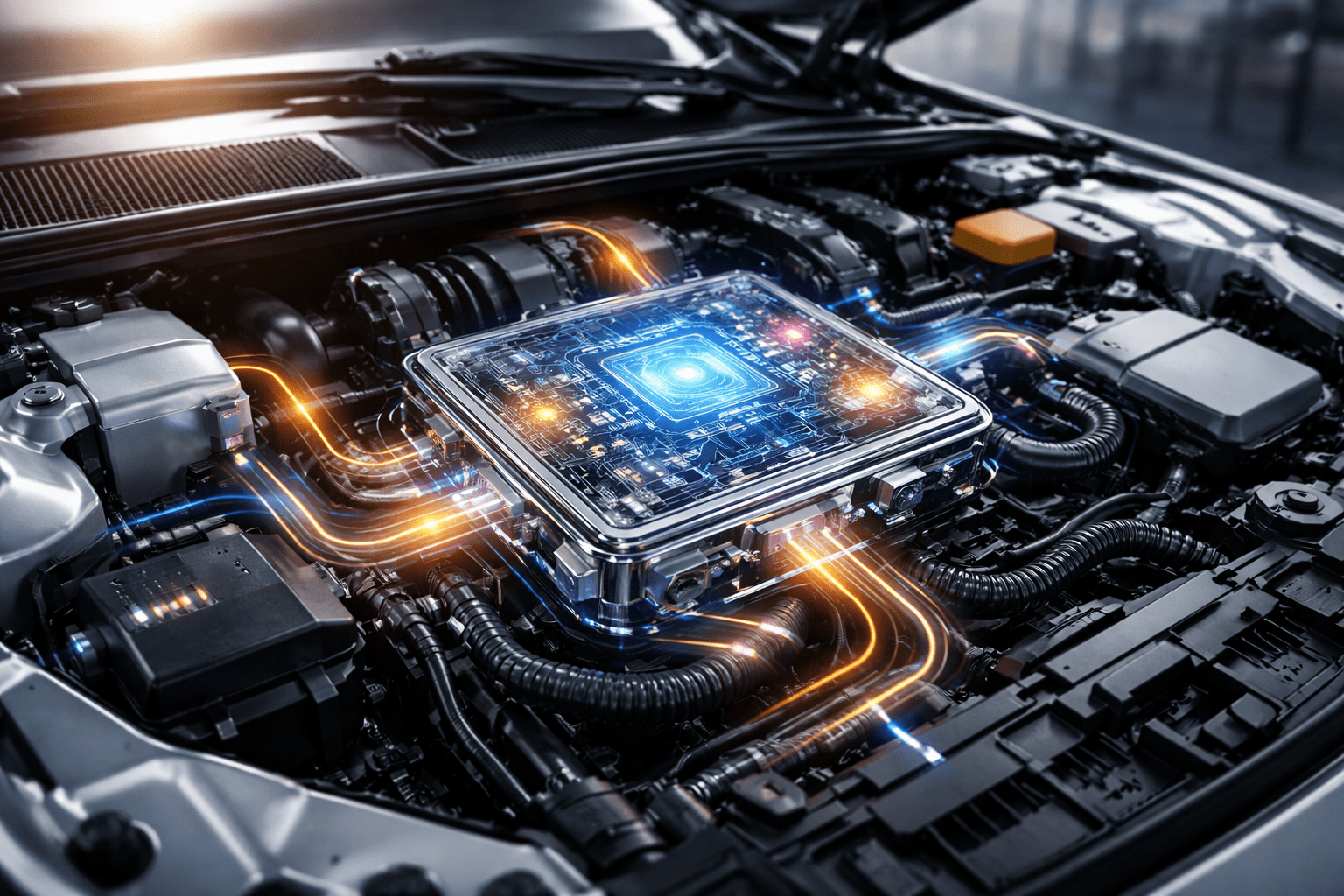
Most drivers know to watch for an oil leak or listen for a strange noise from the brakes. But the system quietly controlling nearly every function in your vehicle — from starting the engine to managing fuel injection, safety sensors, and climate control — rarely gets the attention it deserves until something goes wrong.
Modern cars are, at their core, rolling computers. The average vehicle manufactured today contains between 25 and 150 microprocessors managing systems that previous generations of drivers never had to think about. When one component in that network develops a fault, the ripple effects can touch everything from engine performance to transmission behavior to dashboard warning lights that seem to make no sense. As hybrid and electric vehicles become more prevalent, this electrical complexity only deepens — making system literacy more important for today’s drivers than ever before.
Understanding how your car’s electrical system actually works — and what to do when it starts to fail — is no longer just a mechanic’s concern. It’s basic vehicle literacy for every driver on the road today.
Quick Summary
Modern vehicles rely on a complex electrical network — including the battery, alternator, ECU, and dozens of sensors — to operate safely. When this system develops a fault, symptoms can be subtle: a dim light, a sluggish start, an unexplained warning code. Regular electrical inspections help catch these issues early, before they cascade into more expensive repairs across multiple vehicle systems.
The Electrical System Is No Longer ‘Just the Battery’
For decades, most drivers understood their car’s electrical system as a relatively simple circuit: the battery provides power, the alternator recharges it, and fuses protect it. That mental model made sense for vehicles built in the 1970s and 1980s. It no longer applies.
Today’s vehicles — even mid-range sedans — contain sophisticated onboard networks that would have seemed implausible a generation ago. These systems don’t just power your headlights and radio. They manage active safety features like lane departure warnings and automatic emergency braking. They regulate fuel injection timing to within milliseconds. They monitor tire pressure, exhaust output, and coolant temperature simultaneously, feeding data to a network of central control units — collectively referred to as the ECU — that adjust vehicle behavior in real time.
These control units receive input from dozens of sensors distributed throughout the vehicle. When a sensor reading falls outside an expected range, the system flags it: sometimes triggering a warning light, sometimes quietly compensating in ways the driver never notices until a larger problem has already developed.
This interconnected architecture means that an electrical fault rarely stays isolated. A failing oxygen sensor can affect fuel economy. A weakening alternator can cause erratic behavior in the transmission control module. A corroded ground connection can produce symptoms that look identical to a failing battery, a bad starter, or a fuel system issue.
That diagnostic complexity is exactly why electrical problems are among the most misunderstood — and most frequently misdiagnosed — issues in modern auto repair.
How the System Actually Works — From Battery to Sensor Network
The electrical system in a modern vehicle operates across several interconnected layers, each dependent on the others functioning correctly.
The power foundation. The 12-volt battery provides the initial energy to start the vehicle and powers accessories when the engine is off. Once running, the alternator takes over, generating the electrical current that keeps every system operational and simultaneously recharges the battery. If either component weakens, the effect isn’t limited to “the car won’t start” — it can produce voltage irregularities that confuse sensors, trigger false warning codes, and gradually degrade other components over time.
The control network. Sitting above the raw power layer is the vehicle’s communication network — most commonly a Controller Area Network, or CAN bus — which allows the various control modules to exchange data continuously. Think of it as a vehicle-wide local area network, similar in concept to a corporate IT infrastructure. Every module on that network — transmission control, ABS, airbag system, climate control — both sends and receives data. A disruption anywhere on that network, often caused by connector wear or corrosion, can produce symptoms that appear in completely unrelated systems.
Sensors and actuators. Sensors are the system’s inputs: they measure temperature, pressure, position, speed, oxygen content, and more. Actuators are the outputs: they physically execute the control system’s instructions, controlling fuel injectors, throttle position, variable valve timing, and dozens of other functions. When a sensor begins to fail — not fail completely, but drift from its calibrated range — the system can misinterpret its readings and make adjustments that reduce efficiency, performance, or both without triggering an obvious warning.
For drivers, the practical implication is that modern electrical problems rarely announce themselves dramatically. They tend to accumulate gradually — a slightly rough idle, a dashboard light that flickers and disappears, a fuel economy dip that’s easy to attribute to driving habits. A qualified shop offering thorough car electrical and lighting diagnostics can read the full fault code history, test individual components under load, and identify whether a symptom has one root cause or several working in combination.
When Age and Climate Accelerate Electrical Wear
Electrical systems degrade faster under conditions of thermal stress, vibration, and moisture exposure — all of which are in generous supply in climates that cycle between harsh winters and humid summers.
Cold temperatures thicken battery electrolyte, reducing cranking power precisely when demand is highest. Repeated freeze-thaw cycles stress the insulation around wiring harnesses, eventually causing micro-fractures that produce intermittent faults — the kind that disappear between diagnostic appointments and reappear unpredictably on the road. Road salt, standard in northeastern winters, accelerates corrosion on electrical connectors and grounding points throughout the undercarriage at a rate that drivers in milder climates rarely have to consider.
Age compounds all of these factors. As vehicles accumulate mileage, electronic components lose efficiency, relays develop contact resistance, and connector and wiring issues can affect data transmission across the vehicle’s network in ways that produce subtle, hard-to-trace symptoms rather than obvious physical failures. A vehicle that has spent several winters in a cold-weather climate has almost certainly accumulated some degree of electrical wear that isn’t visible during a routine oil change inspection — which is why proactive electrical system checks become more important, not less, as a vehicle gets older.
What to Do When You Suspect an Electrical Problem
The challenge with electrical diagnosis is that symptoms are often too vague to point clearly to a cause, and too easy to dismiss until they become serious. Here’s how to approach it systematically.
- Take dashboard warnings seriously, even when intermittent. A warning light that appears briefly and then disappears hasn’t resolved itself — it has stored a fault code in the system. That code contains diagnostic information a technician can retrieve even after the light has gone off. Ignoring it because the symptom seems minor means losing the diagnostic window while the underlying issue continues to develop.
- Notice performance changes, not just warning lights. Sluggish starts, dim headlights at idle, unexplained drops in fuel economy, erratic gauge behavior, or accessories that work inconsistently are all meaningful electrical symptoms that may never trigger a warning light at all. Describe them to your mechanic specifically, including when they occur and under what conditions.
- Don’t assume the battery is always the culprit. Battery replacement is one of the most common responses to electrical symptoms, but it addresses only one component in a system with dozens of potential failure points. Replacing the battery without testing the full charging system is like replacing a fuse without understanding why it blew.
- Get a professional electrical diagnostic. Modern scan tools retrieve far more than basic OBD-II codes — they access manufacturer-specific data, live sensor readings, and module communication logs that reveal patterns invisible to consumer code readers. For drivers who want to stay ahead of electrical issues before they cascade, finding trusted auto repair in Worcester with the equipment and trained technicians to perform multi-system electrical diagnostics is worth prioritizing long before a minor symptom becomes a costly repair.
The earlier an electrical fault is identified, the more contained — and affordable — the fix typically is.
Common Mistakes Drivers Make With Car Electrical Problems
- Waiting for total failure. Electrical components often signal developing problems weeks or months before they fail completely. Drivers who wait for the car to simply stop working typically face more extensive repairs than those who address early symptoms.
- Over-relying on consumer OBD scanners. Inexpensive code readers pull a standardized subset of fault codes. They don’t access manufacturer-specific codes, live data streams, or inter-module communication faults. A reading of “no codes found” doesn’t mean no electrical problem exists.
- Replacing parts without diagnosis. Swapping in a new battery, alternator, or sensor without confirming it’s the actual fault source wastes money and can mask the real issue entirely. A professional diagnostic typically costs less than a parts-swapping approach that guesses at the cause.
- Ignoring ground connections. Corroded or loose ground connections are responsible for a disproportionate share of electrical gremlins — especially in older vehicles or those with significant road salt exposure. They’re among the first things an experienced technician checks, and among the last things most drivers think of.
Frequently Asked Questions
How do I know if my car has an electrical problem vs. a mechanical one?
Electrical problems often produce inconsistent or unexplained symptoms — lights that flicker, accessories that cut out, warning lights with no clear cause, or sluggish starts. Mechanical issues tend to produce more consistent, physically noticeable symptoms like noises, vibrations, or fluid leaks. When symptoms are vague or intermittent, an electrical diagnostic is usually the right first step.
Can a bad alternator damage other electrical components?
Yes. An underperforming alternator that delivers irregular voltage can stress sensitive electronics including the control modules governing your transmission, safety systems, and infotainment. Voltage irregularities are generally harder on modern vehicle electronics than a clean shutdown — which is why alternator testing should be part of any comprehensive electrical inspection.
How long does a car battery typically last?
Most batteries have a service life of three to five years, though climate extremes — both cold and heat — can shorten this significantly. Repeated deep discharge from leaving lights on or extended periods without driving also accelerates degradation. Annual battery testing after the three-year mark is a reasonable precaution for most drivers.
Why does my check engine light keep returning after being reset?
A check engine light that returns after being cleared indicates an active fault the vehicle keeps detecting. Clearing the code without addressing the underlying issue is a temporary measure — the system will re-flag the fault as soon as it detects the same out-of-range reading again. A professional diagnostic to identify and repair the root cause is the only lasting solution.
What’s the difference between a consumer OBD-II scanner and a professional diagnostic tool?
Consumer scanners read standardized fault codes from emissions-related systems — useful but limited. Professional diagnostic tools access manufacturer-specific codes, live sensor data, module communication networks, and bi-directional controls that allow technicians to command specific components during testing. The difference in diagnostic depth is substantial.
Do cold-climate states like Massachusetts create more electrical wear?
Cold-weather vehicles tend to present with more complex electrical faults due to corrosion from road salt and thermal stress on wiring and connectors. Symptoms are also more likely to be intermittent, which can extend the diagnostic process. Addressing electrical issues proactively — before they become acute — typically keeps costs more manageable regardless of climate.
Pro Mechanic Tip
When a customer describes an electrical symptom that comes and goes, one of the first things an experienced technician checks isn’t the battery or the alternator — it’s the ground connections. A corroded or loose ground point creates resistance in the circuit that can produce wildly inconsistent symptoms: lights that dim at idle, modules that reset randomly, gauges that read incorrectly. It’s a straightforward inspection that sometimes diagnoses problems that appear far more complex and expensive than they actually are.
Final Thoughts
Modern vehicles are remarkable in their complexity — and that complexity lives largely in the electrical systems running beneath the surface. Treating the battery as the whole of your car’s electrical architecture leaves most of the system unexamined and most of the risk unmanaged.
The drivers who avoid expensive electrical repairs tend to be those who pay attention early: noticing intermittent symptoms, responding to stored fault codes before they escalate, and working with shops equipped to diagnose multi-system electrical faults rather than replacing components and hoping for the best.
Your car’s brain manages more functions than most drivers realize. Giving it the same proactive attention you’d give the engine is one of the smarter investments in vehicle ownership you can make.