Rigging is where a lot of outboard projects go sideways. Not because the parts are hard to find, but because one wrong assumption can throw off the whole setup. A control box gets ordered without the right harness. A SmartCraft gauge is added to a boat that was wired for analog. A hose run ends up too short once the engine starts turning. That is usually how a simple install turns into a frustrating one.
If you are sorting through Mercury rigging options, the first thing to understand is that Mercury systems are not all built around the same logic. Some outboards use DTS, which is digital throttle and shift. Others still use mechanical controls with physical cables. Then there is the gauge side of the equation: SmartCraft or analog. Once you know which system you actually have, the rest gets much easier.
How to Confirm Mercury Rigging Compatibility (In 6 Steps)
The easiest way to avoid mistakes is to treat the rigging setup as one complete path from helm to engine.
1. Start with the engine and control type
Before looking at kits or accessories, figure out whether the motor is set up for DTS or mechanical controls. That one detail determines almost everything that follows.
DTS uses electronic controls and matched digital components. Mechanical systems use a control box, throttle, and shift cables. These are not interchangeable, and mixing them is one of the most common rigging mistakes.
2. Check whether the boat uses SmartCraft or analog gauges
This is the second place people get tripped up. Some boats already have SmartCraft networking in place. Others use simple analog gauges and do not need any digital data integration.
If the goal is just basic RPM, trim, and warning functions, an analog gauge may be enough. If you want fuel flow, engine data, and more detailed readouts, then SmartCraft components need to be part of the plan.
3. Think through the helm layout
A single engine with one helm is straightforward. Twin engines or dual stations are not. As soon as you add a second station or another outboard, the number of parts goes up fast. More harnessing, more planning, and less room for guessing.
That is where a complete Mercury outboard rigging kit usually makes more sense than piecing things together.
4. Build the system in the right order
A proper setup usually includes the control side, the harness side, the ignition side, and, if needed, the data side. In practical terms, that means control box or DTS control, engine harnesses, key switch wiring, and SmartCraft components if the boat is running a digital network.
People often buy the obvious part first and realize later they missed the one adapter or harness that actually makes it work.
5. Do not overlook the physical routing
This part gets less attention than it should. Even if every electrical component is correct, bad routing can still cause problems down the line.
A Mercury rigging hose, or Mercury rigging tube, helps create a clean, protected run from the helm to the engine. That matters for preventing chafe, keeping water out of the system, and avoiding a messy installation that becomes hard to service later.
6. Buy matched components when possible
There are times when building a custom system part by part makes sense. But for most repowers, replacements, or helm upgrades, a matched Mercury rigging kit eliminates much of the guesswork. It is usually the safer route, especially when you are dealing with newer digital systems.
What Mercury Rigging Usually Includes
People often think of rigging as controls plus maybe a few cables. In reality, the complete system is broader than that.
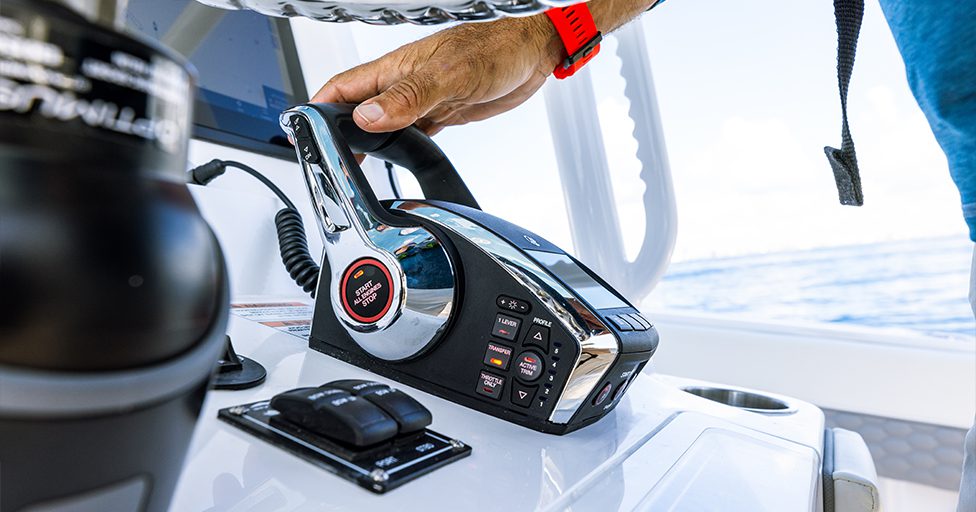
You have the controls themselves, whether that means a DTS control head or a mechanical control box. Then you have the wiring and harnessing that connect the helm to the engine. Then, depending on the setup, there may be ignition harnesses, key switch assemblies, and data-network parts for SmartCraft integration.
And then there is the part that tends to get forgotten until install day: routing hardware.
That includes items such as a Mercury rigging hose kit or a Mercury rigging tube, which help protect cables and harnesses as they pass through the transom area and into the engine. These are not just cosmetic extras. Without them, you are more likely to end up with rubbing, tight bends, or water exposure in places that should stay protected.
| Component Category | What It Usually Includes |
| Controls | DTS control head or mechanical control box |
| Harnessing | Engine harness, ignition harness, adapter wiring |
| Data | SmartCraft network parts or analog gauge wiring |
| Routing | Mercury rigging hose, Mercury rigging hose kit, Mercury rigging tube |
One of the most common problems is not buying the wrong main part. It is forgetting one of the smaller pieces that connects the system together.
The 7 Most Common Mistakes
A few issues come up again and again:
- Mixing DTS and mechanical parts
- Assuming SmartCraft is plug-and-play without the right adapters
- Buying controls but missing harnesses
- Ordering the wrong Mercury rigging hose length
- Using mismatched connectors or generations
- Ignoring power and ground quality
- Troubleshooting symptoms before confirming what system is actually installed
Most of these are avoidable if the system is mapped out first.
Why Shop Mercury Rigging as a System
Rigging tends to go more smoothly when it is treated like a complete package rather than a collection of unrelated parts.
That is because the real delays usually come from the missing middle pieces. Not the control itself, but the harness behind it. Not the display, but the adapter required to make it talk to the engine. Not the hose, but the fact that it was ordered too short.
Using a matched Mercury outboard rigging kit reduces those gaps. It also makes the final install cleaner. A proper Mercury rigging hose or Mercury rigging tube keeps the run protected and organized, which helps both reliability and serviceability later.
There is also a troubleshooting advantage. When the components were chosen to work together from the start, it is much easier to isolate the problem if something is not behaving correctly.
Kits vs Piecing It Together: When a Rigging Kit Saves Money
Buying separate components can look cheaper on paper. Sometimes it is. But that only holds true if every part is correct on the first order.
In practice, the hidden cost usually comes from mismatches. One missing harness, one wrong connector, one shipping delay, and suddenly the lower upfront price no longer looks like a bargain.
That is why many buyers do better with a Mercury rigging kit, especially for more involved setups. Once twin engines or dual stations are introduced, the value of a matched system becomes even clearer.
Install and Routing Checklist
Before ordering, confirm a few basics:
- DTS or mechanical
- SmartCraft or analog
- Single-engine or twin
- Single station or dual station
- Actual run length for the Mercury rigging hose kit
- Whether a Mercury rigging tube is needed for cleaner routing
That short checklist can prevent a surprising amount of rework.
FAQ
What’s the difference between Mercury outboard rigging for DTS vs mechanical controls?
DTS systems are electronic. Mechanical systems use physical throttle and shift cables. The parts differ from the control head through the harness, so it is important to identify the system before buying anything.
Do I need SmartCraft parts if I only want basic gauges?
Not always. If basic analog gauges meet your needs, you may not need SmartCraft components. But if you want more detailed engine information, digital monitoring, or networked displays, SmartCraft becomes part of the rigging plan.
What’s included in a Mercury outboard rigging kit?
That depends on the application, but most kits include the core components needed to properly connect the helm and engine. That may include controls, harnesses, ignition wiring, and the related connection hardware needed for the system.
How do I choose the right length of Mercury rigging hose or a Mercury rigging hose kit?
Measure the real routing path, not the straight-line distance. Leave enough length for engine movement, steering travel, and clean bends. Too short is a much bigger problem than slightly too long.
What is a Mercury rigging tube, and when do I need one?
A Mercury rigging tube provides a protected path for cables and hoses between the boat and the engine. It helps keep the install cleaner and reduces wear from chafe, water exposure, and movement over time.