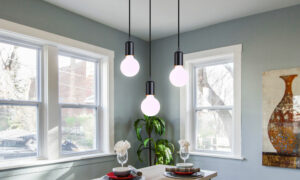
LED ceiling lights use semiconductor technology. They convert electricity directly into light. This process eliminates waste heat. Traditional bulbs waste 85% of energy as heat. LED ceiling lights waste only 10-15%.
Your electricity bill drops immediately. Most users see 75% less monthly costs. The fixtures last 50,000 hours. That equals 20 years of typical daily use. You replace traditional bulbs every 6-12 months. LED ceiling lights need replacement once per decade.
Heat reduction matters in summer. Your air conditioning works less. Cooling costs drop alongside lighting expenses. In winter, the minimal heat from LED ceiling lights means your heating system does more work. This trade-off still favors LED fixtures overall.
How LED Ceiling Lights Work Technically
Light-emitting diodes produce light through electroluminescence. A semiconductor junction emits photons when electricity flows through it. This happens instantly. No warm-up time occurs like fluorescent tubes. Your LED ceiling lights reach full brightness within milliseconds.
Color temperature controls the light appearance. It’s measured in Kelvin units. Warm white sits at 2700K. Neutral white registers at 4000K. Cool white reaches 5000K or higher. Different rooms benefit from different temperatures. Bedrooms need warm light. Offices need cool light. Kitchens work well with neutral light.
The color rendering index (CRI) affects object appearance. Higher CRI means colors look more natural. Most LED ceiling lights offer 80+ CRI. Premium models reach 95+ CRI. Retail environments require high CRI. Medical facilities demand the highest CRI levels.
Comparing LED Ceiling Lights to Traditional Options
Incandescent Bulbs: Traditional incandescent bulbs produce light by heating wire. The process is inefficient. You pay for mostly heat, not light. Lifespan averages 1,000 hours. Replacement costs accumulate fast. They’re now banned in most developed countries.
Fluorescent Lights: Fluorescent tubes contain mercury. This toxin requires special disposal. Energy consumption remains high compared to LED ceiling lights. Flickering causes headaches and eye strain. Warm-up time delays illumination. Mercury contamination poses environmental risks.
Halogen Lights: Halogen bulbs create intense heat. They burn hotter than incandescent lights. Fire hazard increases substantially. Lifespan extends to 2,000 hours maximum. Energy waste remains severe.
LED Ceiling Lights: No toxic materials exist in LED ceiling lights. Recyclable components make disposal simple. Energy consumption drops 75-80% compared to older technology. No flickering occurs. Instant illumination happens. Lifespan reaches 50,000 hours. Environmental impact is minimal.
Real-World Cost Savings with LED Ceiling Lights
A typical office uses 20 ceiling lights. Each light runs 8 hours daily. Traditional 60-watt incandescent bulbs cost $0.72 monthly per light. Monthly cost: $14.40. Annual cost: $172.80.
Equivalent LED ceiling lights use 9 watts. Monthly cost: $0.11 per light. Monthly total: $2.20. Annual cost: $26.40. Year one savings: $146.40.
Initial investment matters. A quality 9-watt LED ceiling light costs $15. A 60-watt incandescent costs $2. The $13 difference pays back in 90 days through energy savings. The LED ceiling light then saves $146.40 annually for 20 years. Total savings: $2,928 per fixture.
Multiply this across 20 fixtures. Total 20-year savings: $58,560. This calculation ignores declining utility rates and replacement labor costs. Real savings exceed these conservative estimates.
Types of LED Ceiling Lights for Specific Spaces
Recessed LED Ceiling Lights: These fixtures mount flush with the ceiling. They create clean architectural lines. No visual obstruction occurs. Installation requires ceiling cavity space. Perfect for modern interiors. Typical wattage: 8-15 watts.
Troffer LED Ceiling Lights: Troffers fit into drop-ceiling grids. Offices use them extensively. They provide even illumination across large areas. Standard sizes match existing ceiling tiles. Installation takes minutes. Typical wattage: 30-65 watts.
Panel LED Ceiling Lights: Flat rectangular panels mount to ceilings. They distribute light evenly. Hospital operating rooms use them. Cleanrooms depend on panel designs. Food preparation areas require their reliability. Typical wattage: 35-72 watts.
Canopy LED Ceiling Lights: Gas stations use canopy lights. Parking garages require them. Retail storefronts depend on their brightness. They mount beneath overhead structures. They illuminate large areas effectively. Typical wattage: 50-150 watts.
Linear LED Ceiling Lights: These fixtures run in straight lines. Warehouses use them extensively. They reduce shadows significantly. Installing multiple units creates uniform brightness. Typical wattage: 40-100 watts.
Brightness Levels and Space Requirements
Lumens measure actual light output. This matters more than watts. One lumen equals one candela at one meter distance. Your room size determines required lumens.
Living rooms need 1,500-3,000 lumens. One 15-watt LED ceiling light produces 1,200 lumens. You need 2-3 fixtures for proper lighting. Bedrooms need 1,000-2,000 lumens. Kitchen work surfaces need 3,000-4,000 lumens. Bathrooms require 2,000-3,000 lumens. Offices need 3,000-5,000 lumens.
Ceiling height affects brightness perception. Higher ceilings need brighter lights. Eight-foot ceilings work well with standard LED ceiling lights. Twelve-foot ceilings need higher-lumen options. The inverse square law applies. Doubling distance reduces brightness to one-quarter.
Installation Reality for LED Ceiling Lights
Professional installation costs $100-200 per fixture. DIY installation saves money. Most homeowners can replace standard recessed lights. Hardwired fixtures need electrician expertise.
Existing wiring works with LED ceiling lights. No electrical upgrades are required. Dimmer switches need verification. Old dimmers don’t always work with LED ceiling lights. Modern dimmers cost $30-50. They’re a worthwhile investment.
Voltage requirements matter. Standard US voltage is 120 volts. Commercial spaces use 277 volts. Matching voltage to your LED ceiling lights prevents failure. Check your circuit breaker amperage. Most LED ceiling lights draw minimal current.
Installation time varies. Recessed lights take 30-45 minutes per fixture. Troffers take 15 minutes per fixture. Hardwired lights take 1-2 hours. The process requires a ladder. Safety precautions prevent falls.
Lifespan and Maintenance of LED Ceiling Lights
LED ceiling lights last 50,000 hours average. Some premium models reach 70,000 hours. This assumes proper operating conditions. Heat buildup reduces lifespan. Ventilation around fixtures prevents overheating.
Maintenance is minimal. Dust accumulates on lenses. Cleaning with dry cloths removes dust. Avoid water near electrical connections. Check connections annually. Tighten any loose fixtures.
Temperature tolerance matters. Most LED ceiling lights operate in -10°C to 40°C range. Extreme temperatures shorten lifespan. Attics can exceed safe temperature ranges. Freezers create opposite problems. Climate-controlled spaces are ideal.
Warranties vary by manufacturer. Budget models offer 3-year coverage. Quality brands provide 7-10 year warranties. Warranty claims require proof of purchase. Keep receipts for future reference.
Dimming and Control Features
Not all LED ceiling lights dim properly. Compatibility matters significantly. Old dimmer switches often cause flickering. Modern LED dimmers cost $30-50. They solve compatibility issues.
0-10V dimming works with commercial LED ceiling lights. Building automation systems control brightness. Energy savings increase with dimming. Less light means lower consumption proportionally. Occupied spaces can reduce brightness during low-activity periods.
Smart home integration is recent technology. WiFi-enabled LED ceiling lights connect to phones. Voice control works with Alexa and Google. Scheduling automates on/off times. Occupancy sensors reduce waste. These features cost more initially but maximize savings.
Dimming from 100% to 50% uses 50% power. Dimming to 25% uses 25% power. This relationship is direct and reliable. Color temperature remains consistent across brightness levels in quality fixtures.
Choosing the Right Color Temperature
2700K warm light creates cozy atmospheres. Restaurants use this temperature. Living rooms benefit from warmth. Bedrooms feel more comfortable with warm light. The human eye perceives 2700K as inviting.
4000K neutral light works for productivity. Offices function better under neutral light. Kitchens benefit from clarity. Task-focused spaces need this temperature. No color distortion occurs. Natural appearance emerges.
5000K cool light promotes alertness. Hospitals prefer this brightness. Security areas use cool light. Retail displays shine under 5000K. Colors appear vibrant and true.
Mixing temperatures in one home creates problems. Consistency matters psychologically. Choose one temperature throughout. Transition areas can bridge differences. Hallways might use 4000K between warm and cool spaces.
Environmental Impact of LED Ceiling Lights
LED ceiling lights contain no mercury. Fluorescent tubes require hazardous waste disposal. Mercury leaks contaminate soil. LED ceiling lights go to standard recycling. Manufacturing uses less energy than production of incandescent bulbs.
Carbon footprint reduction is significant. One LED ceiling light replacing incandescent prevents 250 pounds of CO2 emission over its lifetime. A household with 40 lights prevents 10,000 pounds of CO2. That equals 5 metric tons per home.
Electricity grids produce less pollution. Reduced demand decreases fossil fuel burning. Coal-fired plants use 40% of US electricity. Cleaner energy sources can expand capacity. LED ceiling lights reduce that demand by billions of watts globally.
Raw material extraction is minimal. LED production requires less copper than incandescent manufacturing. Silicon processing is efficient. Recycled plastic appears in LED housing. Sustainable sourcing is improving across manufacturers.
Finding Quality LED Ceiling Lights
Brand reputation indicates reliability. Established manufacturers warranty products confidently. Unknown brands offer low prices but fail frequently. Replacement hassles cost time and money. Quality costs more initially but saves overall.
UL certification confirms safety. Energy Star labels prove efficiency. DLC certification indicates commercial-grade quality. Look for these marks before purchasing. Counterfeit products lack proper certifications. Authorized retailers guarantee authenticity.
Lumens per watt (efficacy) shows true efficiency. Higher numbers mean better performance. 100+ lumens per watt is excellent. 90-100 is good. Below 80 wastes money. Check specifications before buying.
Warranty length reflects manufacturer confidence. Seven-year warranties are standard for quality brands. Three-year warranties suggest budget quality. Two-year warranties indicate budget fixtures. Extended warranties exist but rarely prove worth the cost.
Summary: LED Ceiling Lights Make Financial and Environmental Sense
LED ceiling lights deliver measurable advantages. Electricity consumption drops dramatically. Replacement frequency decreases substantially. Heat production becomes minimal. Environmental contamination ceases. Lifespan extends beyond 20 years.
Upfront costs appear high. Payback occurs within 18-24 months. Total ownership cost becomes lowest among all options. Twenty-year savings exceed $2,000 per fixture in typical installations.
Modern technology improves daily. Dimming quality increases. Smart controls expand. Color accuracy improves. Efficacy ratings climb higher. Yesterday’s premium is today’s standard.
Installation professionals handle complex jobs. DIY replacement works for simple swaps. Building automation integrates with newer LED ceiling lights. Your investment pays dividends immediately and continues for decades.
The transition to LED ceiling lights is complete. They’re no longer experimental. They’re the standard choice. Standard offices, homes, and facilities use them. The question isn’t whether to switch. It’s how quickly to complete your conversion.