Inside the High Stakes World of Banking AI, Saiprakash Kodela Says Trust Must Come First

Artificial intelligence is entering one of the most sensitive areas of modern life: the financial system. It is now used to verify identities, monitor transactions, detect suspicious activity, assess risk, and support decisions about whether money should move or be stopped. This shift has expanded the conversation far beyond technology teams and innovation departments. The question is no longer only whether AI can detect fraud. The more important question is whether AI can be trusted inside banking systems that face constant pressure from cybercrime, regulation, privacy expectations, and public scrutiny.
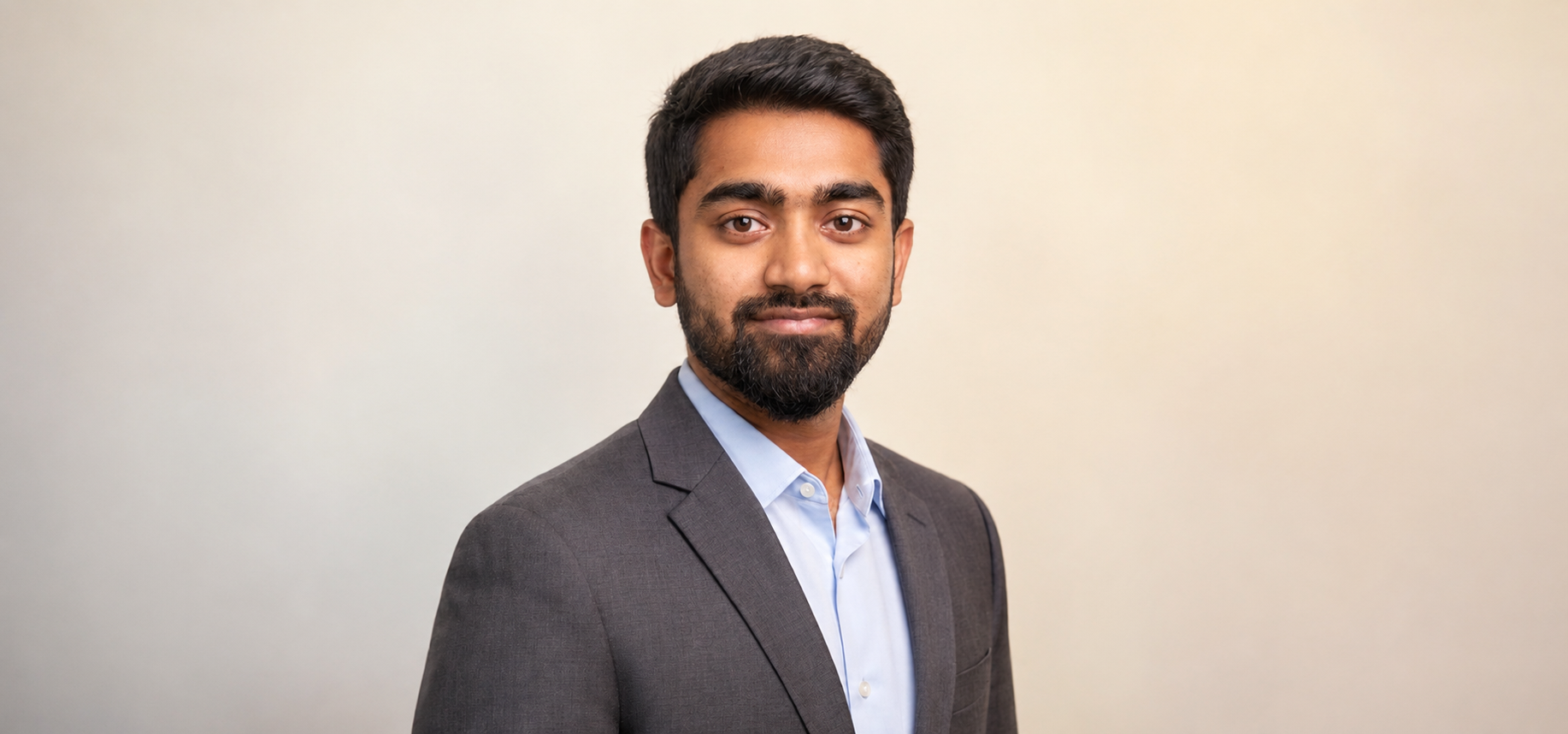
During the interview, Saiprakash Kodela returned to this issue repeatedly. In his view, the future of financial AI will depend not only on model performance, but on whether institutions can build systems that remain explainable, auditable, secure, and resilient in real-world environments.
Kodela works at the intersection of banking technology, applied artificial intelligence, and cybersecurity. His work spans financial infrastructure, fraud detection, privacy-preserving computing, intelligent automation, and governance for secure AI systems. What stands out is not simply the range of areas involved, but the consistency of the problem he is focused on: how to make AI trustworthy enough for financial systems that affect people every day.
“In banking, intelligence alone is not enough,” Kodela said. “A system has to be fast, but it also has to be explainable, auditable, secure, and resilient. If it cannot meet that standard, it should not be making decisions that affect people’s money.”
That position comes at a time when financial fraud is changing rapidly. Criminals are using generative AI to create synthetic identities, clone voices, generate deepfake content, produce convincing phishing messages, and run social-engineering attacks at scale. At the same time, instant-payment systems have narrowed the time available to detect and stop suspicious activity. A transaction that might once have been reviewed over hours can now move in seconds.
The scale of the problem has become difficult to ignore. Fraud losses, cyber-enabled crime, and AI-assisted scams are growing concerns for banks, regulators, and customers alike. These developments show that financial institutions are not facing only a fraud-detection problem. They are facing an infrastructure problem.
During the interview, Kodela described the mismatch between older defenses and newer threats in direct terms. Traditional fraud systems were often built around static rules, delayed review cycles, and isolated checks. That approach is under strain in an environment where attackers adapt quickly, funds move instantly, and customer data flows across banks, fintech platforms, and third-party systems.
“The attacker is now automated and adaptive,” Kodela said. “The defense has to be equally adaptive, but with a higher burden. It must protect privacy, preserve evidence, and explain itself to regulators.”
This idea sits at the center of his work. Kodela does not treat AI fraud detection as a model-only problem. He treats trust as an engineering requirement. A model may identify a suspicious transaction, but the surrounding system determines whether that decision can actually be relied upon. Can it explain why it acted? Can it protect sensitive data? Can it continue operating if part of the system is compromised? Can it be audited after the fact? Can it work across institutions without weakening privacy protections? These are the kinds of questions his work is designed to address.
“A fraud model that cannot explain itself is a liability, not an asset,” he said. “In banking, the real question is not just whether the system worked. It is whether you can trust it, audit it, and defend it.”
That perspective is grounded in practical experience. Earlier in his career, Kodela worked on backend financial systems, secure authentication, database modernization, transaction-processing infrastructure, and cloud-based enterprise systems. This background matters because financial AI is not deployed in a vacuum. It must function inside complex, regulated, high-volume environments where accuracy, continuity, security, and accountability are essential.
One example of this practical foundation involved financial-system migration work, where legacy systems had to be modernized while preserving data accuracy, transaction integrity, and operational stability. Another involved enterprise security automation, where monitoring systems needed to protect sensitive credentials, reduce configuration risks, and maintain reliable audit trails. These experiences reflect a broader pattern in Kodela’s approach: he is not only focused on detection, but also on integrity, evidence, recovery, and resilience.
That same approach appears in his intellectual-property and research work. His inventions and publications address several important gaps in modern financial AI, including secure coordination among intelligent systems, privacy-preserving fraud detection, explainable transaction monitoring, and continuous fraud surveillance across connected banking environments.
One area of his work focuses on how AI systems inside financial institutions can cooperate securely without assuming trust by default. As banks adopt more intelligent tools and automated agents, those systems themselves can become part of the attack surface. Kodela’s work applies zero-trust principles to this problem, seeking to ensure that intelligent systems can collaborate while continuously verifying one another.
A second area concerns privacy-preserving fraud detection. In modern banking, fraud patterns may appear across multiple institutions or platforms, but customer data cannot simply be pooled into a single central system without serious privacy and regulatory concerns. Kodela’s work explores ways to detect suspicious patterns across decentralized environments while respecting data protection requirements.
A third area is explainable fraud detection. Automated financial decisions cannot operate as black boxes if they are to survive internal review, customer scrutiny, or regulatory examination. A system that blocks or flags a transaction must be able to show why it acted and support meaningful human review.
A fourth area concerns continuous monitoring in open-banking environments. As financial services become more connected, risk may not appear clearly inside a single institution. It may emerge through the relationships between banks, fintech platforms, payment providers, and third-party services. Kodela’s work addresses the need for ongoing, ecosystem-level monitoring rather than isolated checks.
Taken together, these efforts show a clear pattern. He is not simply applying AI to fraud detection in a general sense. He is working on the infrastructure required for financial AI to be secure, explainable, privacy-respecting, and operationally dependable.
This distinction is becoming increasingly important. Financial institutions are moving toward real-time payments, open-banking interfaces, cloud infrastructure, AI-driven risk systems, and more autonomous decision-support tools. Each step can improve speed and efficiency. Each step can also expand the attack surface. In this environment, the market does not only need people who can build accurate models. It needs professionals who understand how intelligent systems behave inside regulated, high-risk financial infrastructure.
“The future of financial AI will not be defined only by better models,” Kodela said. “It will be defined by better controls around those models.”
That observation helps explain the broader significance of his work. Fraud prevention, banking security, and AI governance are not narrow internal concerns. They affect customers, small businesses, financial institutions, regulators, and public confidence in the systems that move money. Better fraud detection can stop scams before funds leave an account. Explainable controls can reduce wrongful transaction blocks and provide a clear basis for review. Privacy-preserving AI can improve detection without unnecessary centralization of sensitive information. Auditable systems can make automated decisions more accountable.
The practical value of this work becomes clear in everyday situations. A customer may receive a call that sounds exactly like a family member asking for an urgent transfer. A context-aware fraud system could recognize that the transaction does not fit normal behavior and intervene before the money is lost. A small business may make a large but legitimate supplier payment. An explainable system could reduce the risk of blindly freezing the transaction and provide a transparent review path if it is flagged. A bank may face a security gap caused by a misconfigured monitoring system. Intelligent automation could detect and repair the weakness before it becomes a larger risk.
These examples point to a broader public value. Trustworthy financial infrastructure does not only protect banks. It can protect households from scams, reduce friction for legitimate businesses, strengthen accountability, and make automated decisions more defensible. In that sense, professionals working in this area contribute to more than technological efficiency. They contribute to the safety and stability of a critical public-facing system.
Kodela’s research follows the same direction. His work on real-time fraud detection, financial risk prediction, privacy-preserving intelligence, cross-bank fraud analysis, encrypted computation, and self-healing security systems reflects a sustained effort to solve one central problem: how to use AI in finance without sacrificing trust.
His contributions also extend beyond patents and research. Kodela has participated in broader academic and professional conversations around intelligent systems, including editorial and speaking roles connected to artificial intelligence, machine learning, and data-driven applications. Such involvement matters in a field where deployment standards are still evolving and where today’s technical choices may influence the future of safe and accountable financial AI.
There is also a global dimension to his profile. As a technologist of Indian origin working on financial-security challenges across international contexts, Kodela reflects the increasingly cross-border nature of banking infrastructure. Financial systems are connected globally, and so are the risks facing them. Solutions that preserve trust across this complexity are likely to become more important as AI becomes more deeply involved in decisions about money, identity, risk, and access.
During the interview, Kodela returned to a final point that captured the broader meaning of his work.
“What matters is not how a fraud system looks in a demonstration,” he said. “What matters is whether it still protects people, explains itself, and holds up against attack after months in production.”
That remark offers a useful measure of both the field and the person working within it. As artificial intelligence reshapes financial systems, there is a growing need for professionals who can connect innovation with accountability, speed with security, and automation with public trust. Saiprakash Kodela’s work suggests that this connection may be where the future of responsible financial AI is ultimately decided.