
Inside a Texas Bitcoin Mine: How Crypto Miners Are Battling AI for Grid Power

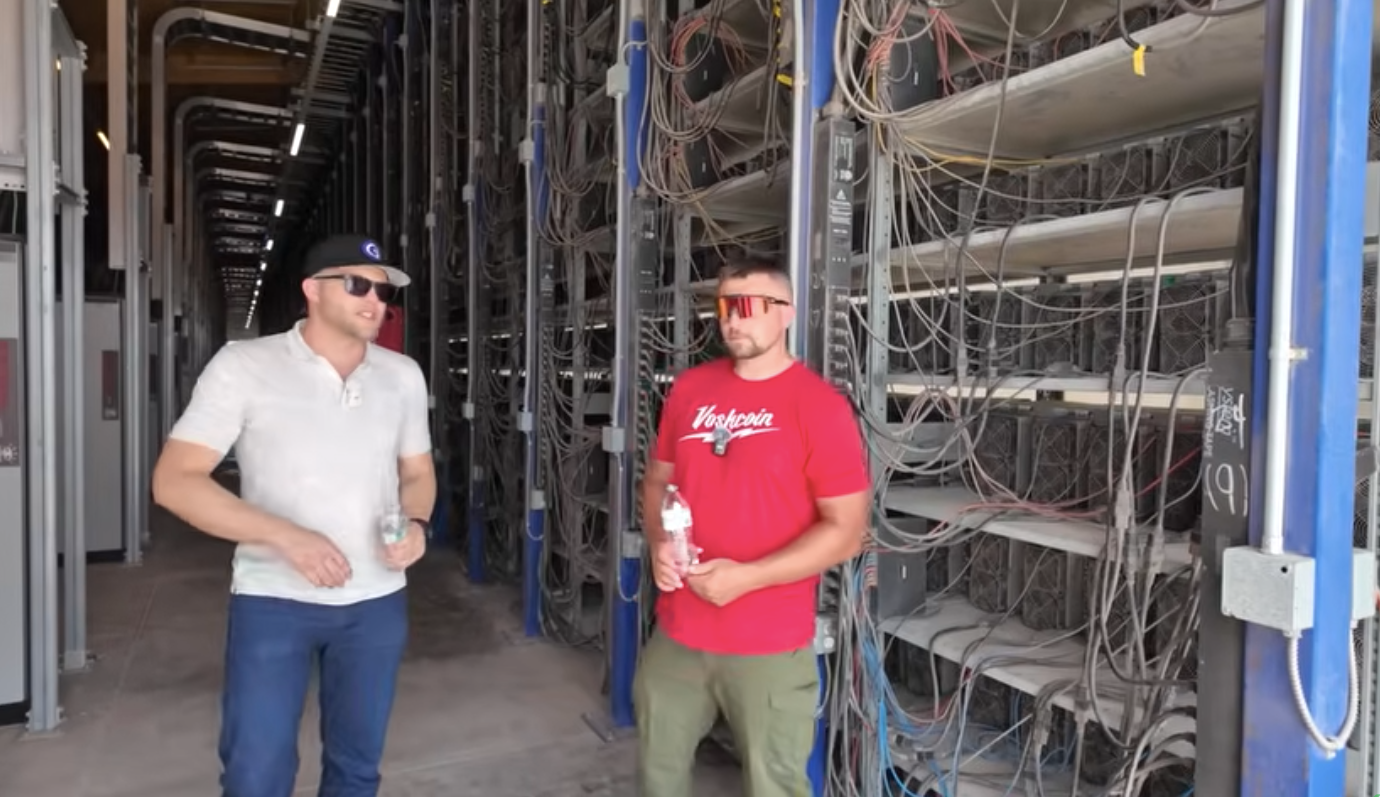
Crypto YouTube creator VoskCoin recently went behind the scenes at an industrial Bitcoin mining facility in Texas. Viewers might expect a video entirely focused on the price of Bitcoin or the newest mining hardware. Instead, the conversation tackled a very different battle. It focused on the fight for access to electricity.
In a newly released video, VoskCoin toured a massive GoMining site in Texas. He walked the floor alongside GoMining North America CEO Jared Focose. The two discussed exactly how Bitcoin miners are adapting to a changing landscape. AI data centers are aggressively consuming an increasing share of the U.S. power grid. This shift forces miners to get creative.
Hyperscale AI facilities are notoriously inflexible. Focose explained that these data centers typically require uninterrupted electricity to train complex models and process data. Bitcoin mines are completely different. They can quickly reduce their power consumption when grid demand spikes.
During the facility tour, Focose pointed out that the Texas location regularly powers down during peak energy demand periods. This flexibility helps stabilize the local energy grid. It also significantly lowers the company’s own transmission costs.
“We act like a battery on the grid,” Focose noted.
Flexible energy consumption has quickly become a competitive advantage for modern mining operations. Bitcoin miners have spent years developing strong relationships with local utilities. They participate heavily in demand response programs. When a heatwave hits Texas, miners power down. The electricity flows straight back to residential homes. The rapid expansion of inflexible AI infrastructure is creating massive new challenges for those same electricity providers.
Competition for power is now the defining trend in digital infrastructure. Major technology companies are pouring billions of dollars into AI data centers. Because of this influx of cash, securing new grid connections is becoming incredibly difficult. Focose revealed that GoMining is currently evaluating roughly two to three gigawatts of potential new mining capacity. However, actually finding available power is significantly harder today than it was just three years ago.
The tour went far beyond the energy debate. Vosk explored a 25-megawatt facility housing approximately 6,800 ASIC miners. He spoke directly with the technicians responsible for maintaining the site. They walked through the massive cooling systems, monitoring software, and physical infrastructure required to keep the operation running around the clock.
Engineers explained the sheer scale of the operation. The company tracks more than 95,000 mining machines across its entire global fleet. They use proprietary software to identify maintenance issues in real time. If a fan fails or a hash board drops off, the software flags it instantly.
This visit offered a rare glimpse into the true scale of modern Bitcoin mining companies. GoMining now employs more than 250 people. The staff spans engineering, software development, physical infrastructure, and daily operations. Industrial miners have evolved. They are no longer simple operators plugging in hardware. They are large scale technology and energy management businesses.
AI companies will continue to race across North America to secure electricity. VoskCoin’s latest tour makes one thing incredibly clear. The next great competition in Bitcoin mining is not about who owns the most machines. The real winners will be the companies that can secure reliable power while continuing to provide tangible value to the grid.






Comment