
KYC in US Finance 2026: How Identity Verification Stopped Being a Friction Point and Started Being a Revenue Surface

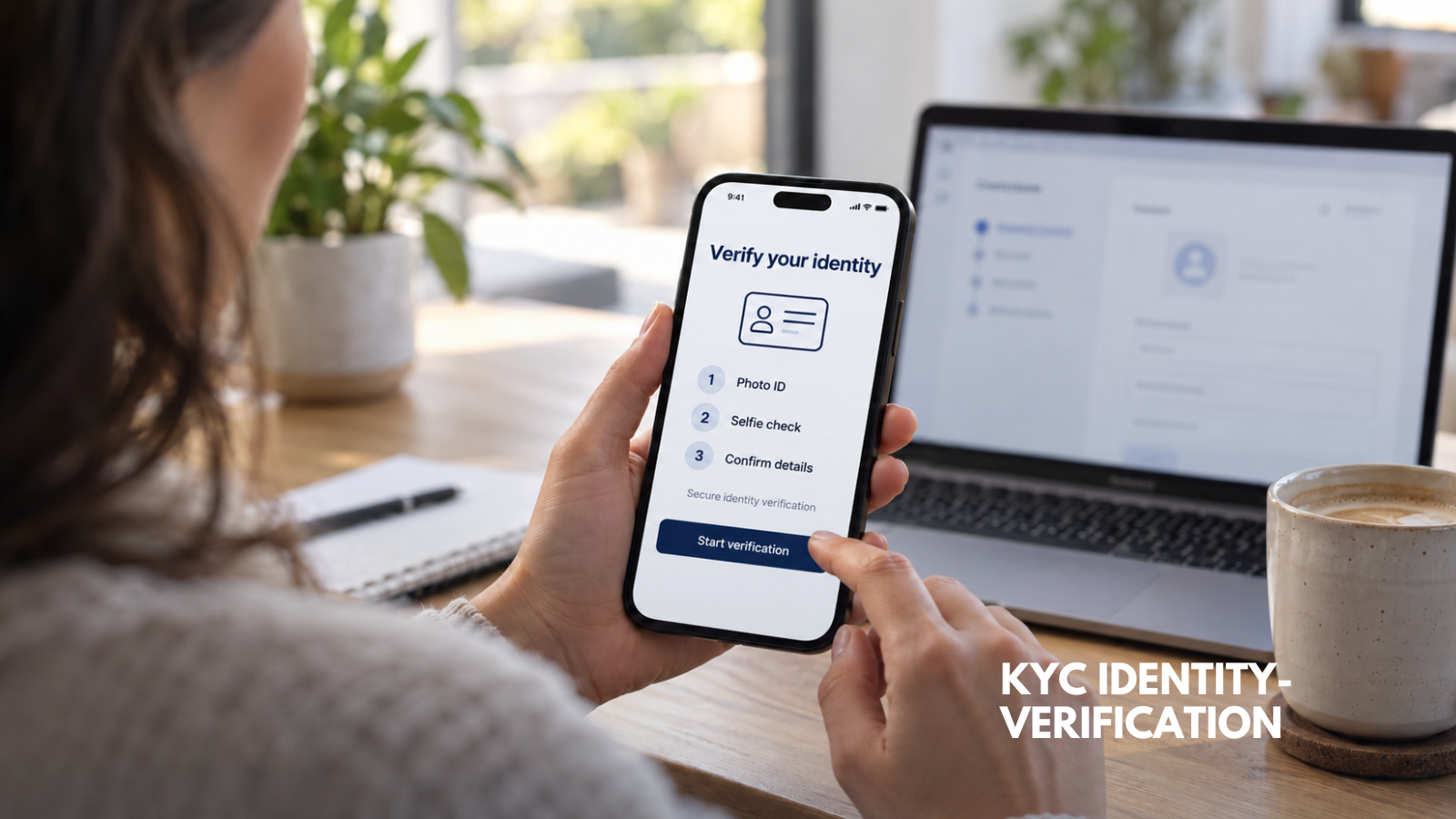
A loan officer at a Midwest community bank used to keep a paper checklist taped to her monitor: driver’s license scan, Social Security number written in pen, address verified against a utility bill. That checklist is gone, replaced by a credit-bureau pull that completes before the applicant has finished typing her email address. The shift matters more than it looks. Financial institutions in the United States and Canada spend roughly $61 billion a year on financial-crime compliance, much of it concentrated in the customer-onboarding stack, according to LexisNexis Risk Solutions. When that stack moves from paper to API, the same dollars start producing something banks did not previously expect from compliance: customers who actually finish the application.
The change is not cosmetic. In June 2025, FinCEN, the OCC, the FDIC, and the NCUA jointly issued an order allowing banks to obtain a customer’s taxpayer identification number from reliable third-party sources rather than directly from the customer. That single regulatory move, paired with the wider acceptance of NIST-aligned digital credentials, has flipped onboarding from a friction point that drove abandonment into a surface where banks now measure conversion, lifetime value, and product attach rates with the same rigor they apply to a credit card pricing change.
What the TIN exemption actually changed
The June 2025 FinCEN order does not weaken the Customer Identification Program rule. Banks still have to form a reasonable belief that they know the true identity of each customer, and they still have to obtain a TIN before opening an account. What changed is the source. Banks can now pull the TIN from a credit bureau, a payroll processor, or an identity-verification vendor that has the data on file, provided the institution has written, risk-based procedures and the third-party source is reliable. The FDIC’s Financial Institution Letter on the exemption walks through the conditions in detail and is the cleanest single reference for compliance teams writing the new procedures.
The operational effect is real. A typical retail-banking onboarding flow used to ask the applicant to type a nine-digit number, which is one of the highest-abandonment fields on any form. Removing that field, or pre-filling it from a bureau record the applicant validates with a tap, shortens onboarding by minutes and cuts abandonment in the high single digits. For a bank acquiring 200,000 new checking customers a year at a fully loaded acquisition cost north of $300, a five-point conversion lift is not a rounding error. It is several million dollars of incremental net new revenue every quarter, and it does not require a marketing dollar.
The compliance officer’s incentive structure changes too. Where the old metric was alerts cleared per day, the new metric is conversion at each step of the funnel. Banks that have rebuilt onboarding around this view treat the KYC team as a co-owner of the acquisition number, not as a gate that approves or rejects the product team’s plans.
The cost of getting it wrong, and the cost of doing it well
Compliance spending is no longer a flat tax. LexisNexis found that 79 percent of US and Canadian financial institutions saw their KYC software costs rise in the prior twelve months, and 82 percent of mid- and large-sized institutions reported the steepest increases tied to KYC technology specifically. Database verification against a credit bureau or government registry can cost as little as $13 per check. A full document verification with biometric matching and liveness detection can reach $130. Banks are running both, then routing customers to the cheaper path when the risk score allows it.
| Verification method | Approximate per-check cost | Typical use case |
|---|---|---|
| Database / bureau pull | $13 to $25 | Low-risk retail account opening |
| Document plus selfie match | $45 to $80 | Mid-risk consumer onboarding |
| Full document with liveness and biometric | $90 to $130 | High-risk, business, or wealth accounts |
| Continuous monitoring (per customer / year) | $8 to $20 | Periodic refresh and sanctions screening |
The implication for the chief compliance officer is that KYC has become a portfolio problem, not a procurement problem. Routing 60 percent of applicants through a $20 path and 40 percent through a $90 path produces a blended cost the bank can quote to the product team as a unit economic. That is a different conversation than the one banks were having in 2022, when KYC sat inside a single vendor contract and grew at 12 percent a year regardless of what the product team did.
Digital identity and the NIST IAL-2 question
FinCEN’s broader 2024 request for comment on CIP modernization signaled that high-assurance digital credentials meeting NIST Identity Assurance Level 2 or higher are acceptable substitutes for traditional document review. Banks have started accepting state-issued mobile driver’s licenses, IRS ID.me credentials, and bank-issued reusable identities. The downstream effect is that a customer who has already proven who she is to one regulated institution does not have to prove it again from scratch at the next one.
That has consequences for product velocity. A small-business customer opening a merchant services account on top of a checking relationship used to face a parallel KYC cycle. With a reusable, IAL-2-grade credential carried into the second product, the merchant account opens in hours rather than days. For more on how this connects to onboarding architecture, see TechBullion’s prior coverage of digital onboarding stacks at US banks.
The credential portability story is also reshaping the wealth side of the bank. A high-net-worth client opening a brokerage account, a trust account, and a private banking relationship in the same week used to complete three nearly identical KYC workflows. With reusable credentials and shared identity attestations, the work compresses into a single cycle with downstream attribute checks. Front-line bankers report client onboarding times falling from 14 days to 4 in the cases where the credential chain holds end to end.
Why fraud teams pushed back, and what they got
Fraud teams did not love the TIN exemption. Synthetic identity fraud, where criminals fuse a real SSN with a fabricated name and date of birth, accounted for a 37 percent year-over-year jump in related suspicious activity reports, per FinCEN’s fiscal-year 2024 figures. If banks pull a TIN from a bureau and the bureau itself has been seeded with a synthetic record, the verification is circular.
The compromise is risk-based. Banks using the third-party TIN path have stitched in device intelligence, email-age signals, and behavioral biometrics before the bureau call rather than after it. Several large issuers have also added a step-up to document verification any time the bureau record is younger than 24 months, the typical aging window for a synthetic identity. That trade is visible in the SAR data: depository institutions filed 2.6 million of the 4.7 million SARs in fiscal 2024, with fraud-related filings holding at 52 percent of the total. See the FinCEN news release on its expanded CIP final rule for context on which institutions are now in scope of the broader rule.
From cost center to revenue surface
The headline shift is that retail and small-business product teams now ask the KYC team for a service-level agreement on conversion, not just on false-positive rates. A 92 percent passthrough at the bureau tier is treated as a product feature, not a compliance metric. Banks that have rebuilt their stack around modular vendors are quoting product launches in weeks where they used to quote them in quarters. For deeper context on internal tooling, see TechBullion’s analysis of RegTech vendor consolidation at US banks and our piece on synthetic identity fraud detection at retail banks.
The revenue surface framing also reaches into pricing. Banks that can verify a customer in under 30 seconds with high confidence are charging premium fees for instant-issuance debit cards and same-day account funding. Banks that take 36 hours to verify cannot offer those products at all, or have to price them at a level customers reject. The KYC team is, for the first time, on the product team’s pricing committee. That is a structural change, not a workflow change.
The next test is whether the same logic survives the first major identity-data breach against a reusable credential. If a state-issued mobile ID is compromised at scale, the question banks will face is not whether to keep accepting it, but whether they have built a credentialing portfolio diverse enough to fail over within a quarter. The institutions running that drill now will be the ones still operating quietly when it happens.







Comment