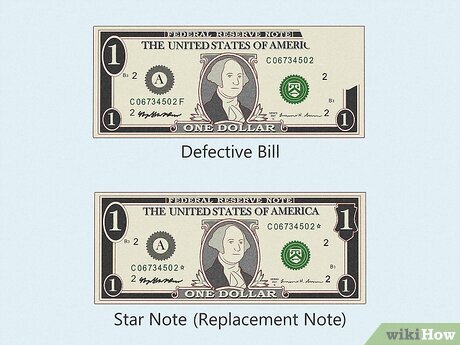
Finding a star at the end of a dollar bill’s serial number can feel exciting, especially if you are new to collecting. It does not automatically mean you have a high-value bill, but it does mean your note has a different production story. To judge it properly, you need to look at the serial number, series year, denomination, issuing district, condition, and production run.
What Is a Star Note?
A star note is a replacement banknote. It is not an error note. During currency production, if a sheet is found to be imperfect after serial numbers have already been printed, it may be replaced with a special sheet. Instead of reusing the exact same serial number with the usual final letter, the replacement note carries a star symbol at the end of the serial number.
Why do some dollar bills have a star in the serial number?
The star helps identify a replacement note without disrupting the serial number system. Standard notes usually follow a structured numbering format, but a star can appear where the final suffix letter would normally be. This allows the replacement note to enter circulation while still showing that it came from a separate replacement process.
How to Identify a Star Note on a Dollar Bill
Start with the serial number on the front of the bill. A true star note will show a small star symbol at the end of that serial number, not somewhere else on the design. Then check the denomination, series year, and issuing district. U.S. notes also include identifiers such as serial numbers, Federal Reserve indicators, plate numbers, note position details, and series year, all of which help you describe the bill accurately.
Are star notes always valuable?
No. Some star notes are collectible, but many are only worth a modest amount over face value, especially if they are common, heavily circulated, or from a large production run. The star makes the note interesting; rarity and condition are what can make it more desirable. Price guides show that modern star replacement notes can vary widely by series, district, denomination, and grade.
How to use a Star Note Lookup Tool
Before assuming your bill is rare, you can use a Star Note Lookup tool to review its production details and better understand its place within the series. You will usually need to enter the denomination, series year, and full serial number, including the star. Lookup tools can show production numbers and print run information, which gives you a better starting point before comparing market interest.
What Makes a Star Note Rare?
Several factors can make a star note more appealing to collectors. A smaller print run is usually more interesting than a large one. Older series, higher denominations, and notes in crisp uncirculated condition may also attract stronger attention. Some collectors also look for unusual serial numbers, such as very low numbers, repeaters, ladders, or radar-style patterns.
Condition matters more than beginners often expect. A note with sharp corners, bright paper, no folds, and no stains will usually be easier to evaluate than one that has been carried in a wallet for years. If you find a star note in change, avoid folding it again. Place it flat in a protective holder and handle it by the edges.
Another detail to consider is whether the note belongs to a full print run or a much smaller run. Collectors often compare the total number of star notes produced for that specific series and district, because two bills can look similar at first glance but have very different scarcity levels. A newer bill from a large run may be easy to find, while another from the same denomination and year could be harder to locate if fewer replacements were printed.
You should also look at overall eye appeal. Even when a star note is not extremely rare, a clean design, centered printing, strong color, and minimal handling can make it more attractive to collectors. Small issues such as stains, tears, writing, heavy folds, or soft corners can reduce interest quickly. For that reason, it is worth checking the bill carefully before storing it or comparing it with other examples.
Final Tips for New Currency Collectors
If you are just starting, do not focus only on possible profit. First, learn how to read the bill. Write down the denomination, series year, serial number, issuing district, and condition. Then compare that information with production data and recent collector interest. A careful check is better than assuming every star note is rare.
You should also be cautious with online price claims. Asking prices are not the same as confirmed selling prices, and condition can change value dramatically. When a bill looks especially unusual, such as an older star note, a very low serial number, or a crisp note from a small run, it may be worth getting a more experienced collector or professional grader to review it.