Businesses that collect publicly available web data, verify regional advertising, test localized user experiences, or run distributed applications need proxy infrastructure they can depend on. For these workflows, a socks5 proxy can be a practical choice because it supports more than standard browser-based HTTP traffic and works with many tools used by developers, QA teams, researchers, and data operations professionals.
The value of a SOCKS5 proxy is not simply that it changes an IP address. It is about having controlled, compatible network access for a legitimate business purpose. Teams evaluating providers can review current product options, documentation, and onboarding details directly at https://socks5.io.
Choosing the right provider requires more than comparing advertised IP counts. Connection consistency, IP quality, session controls, geographic options, authentication, documentation, pricing clarity, and responsible-use practices all affect whether a proxy service will perform well in a real workflow.
What Is a SOCKS5 Proxy?
SOCKS5 is a proxy protocol that relays internet traffic through an intermediary server. When a connection is routed through a proxy, the destination service sees the proxy IP address rather than the user’s original IP address.
Unlike an HTTP proxy, which is primarily built for web requests, SOCKS5 operates at a lower networking layer. This makes it more flexible for certain applications, including browsers, automation tools, command-line utilities, selected data-collection platforms, and custom software environments.
That flexibility is why SOCKS5 is often considered by technical teams that need proxy support outside a conventional web browser. Still, the protocol is only one part of the decision. The provider’s network design and operational controls will usually have a greater impact on day-to-day results.
It is also important to understand what SOCKS5 does not do. SOCKS5 routes traffic, but it does not automatically encrypt it. Sensitive traffic should continue to use HTTPS or another secure application protocol, while teams should protect credentials and follow normal security practices.
Why Businesses Use SOCKS5 Proxies
A reliable proxy service can help organizations perform location-aware, repeatable work without tying every request to a single corporate IP address. The objective should always be clear and legitimate: research, quality assurance, public-data analysis, monitoring, or application testing.
Common business use cases include:
- Market research based on public product pages, listings, and search results
- Localized website testing across countries or cities
- SEO and search visibility research
- Public ad-verification workflows
- Brand and reputation monitoring
- Compatibility testing for websites and applications
- Public web-data collection conducted within applicable rules and limits
For example, an e-commerce team may want to review how its own publicly visible product pages appear in several markets. A marketing analyst may need to compare localized search results. A QA team may need to test whether a website delivers the correct language, currency, or regional content. In each case, the proxy is a tool for observing a public-facing experience from a relevant network location.
What Separates a Useful Proxy Network From a Marketing Claim?
A proxy provider should be evaluated on operational fit, not on broad promises such as “unlimited access” or “complete anonymity.” Those claims are rarely useful to a technical buyer who needs predictable behavior and transparent controls.
The table below outlines what matters for common SOCKS5 proxy use cases.
| Use Case | Key Proxy Requirement | Why It Matters |
| Public web-data research | IP quality, rotation controls, clear usage limits | Supports consistent and responsible collection workflows |
| Localized QA testing | Geographic targeting and sticky sessions | Helps recreate a country- or region-specific user experience |
| SEO research | Location options and stable connections | Enables comparisons of public search visibility by market |
| Ad verification | Regional coverage and session management | Helps validate how public campaigns are delivered |
| Application testing | SOCKS5 compatibility and authentication | Makes implementation easier across technical tools |
| Brand monitoring | Dashboard access and usage visibility | Allows teams to manage ongoing monitoring operations |
The right configuration depends on the work. A one-time public-page check may need a different setup from a long-running research project. Teams should define request volume, target regions, required session duration, and internal compliance requirements before selecting a product.
Residential, Datacenter, and Other Proxy Choices
Proxy buyers often encounter several IP categories. Each has a different role.
Residential proxies use IP addresses associated with consumer internet connections. For legitimate workflows that need a typical residential network context, they can be useful for localized public-site testing, market research, and public content monitoring.
Datacenter proxies are commonly associated with cloud or hosting infrastructure. They can be suitable when speed, predictable infrastructure, and high-volume technical tasks are more important than simulating a consumer-network environment.
Sticky sessions allow a user to retain the same proxy IP for a defined period. This is useful for multi-step tests, such as moving through a public checkout flow or reviewing region-specific website content without changing the visible network location mid-session.
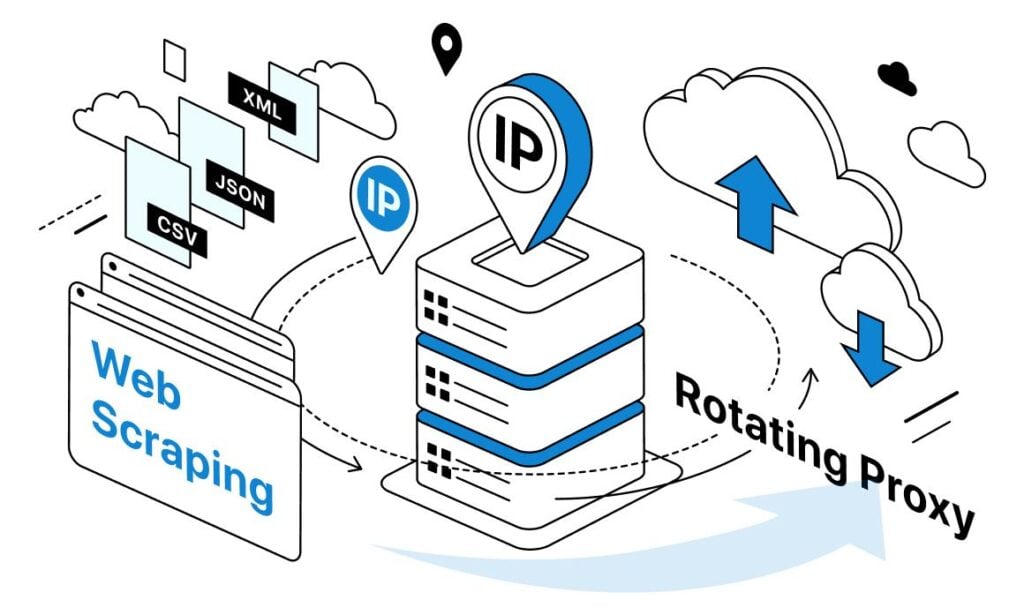
Rotating sessions change the IP address based on a selected rule, such as a time interval or request cycle. This may help distribute legitimate data-collection requests where a persistent session is unnecessary.
A responsible provider should explain these choices clearly. Buyers should not assume that one IP type is always better. The appropriate option is the one that matches the technical requirement and complies with the rules governing the target service.
What to Look for in a SOCKS5 Provider
Before committing to a provider, technical and operational teams should test the service against the workflow they actually plan to run. A generic speed test is not enough. The goal is to confirm whether the proxy works reliably with the organization’s browser, application, scraper, testing framework, or data platform.
Key evaluation areas include:
Protocol Compatibility
Confirm that the provider supports SOCKS5 and offers a straightforward authentication method. Documentation should clearly explain host, port, username, password, and any IP-allowlisting requirements. Integration should not depend on vague instructions or undocumented workarounds.
Geographic Targeting
Location controls matter when teams need to evaluate region-specific public experiences. Depending on the project, country-level targeting may be sufficient. Other workflows may require more precise state or city targeting. Buyers should only pay for greater precision when it has a real business purpose.
Session Controls
Understand how rotating and sticky sessions work before deploying. Ask how long a sticky session can be maintained, when an IP rotates, and whether the provider gives the customer practical control over the behavior.
Usage Reporting
Transparent reporting helps teams manage bandwidth and avoid surprise costs. A good dashboard should make it easy to review consumption, manage credentials, and understand which proxy configurations are active.
Support and Documentation
When an integration fails, useful documentation and responsive support matter more than a feature list. Teams should look for clear setup guidance, troubleshooting information, and a support channel that can address technical questions.
Pricing Transparency
Proxy pricing may be based on bandwidth, ports, IPs, or a combination of factors. Buyers should compare the model against expected workload, not only the lowest advertised starting price.
Evaluating SOCKS5.IO for Business Workflows
SOCKS5.IO presents proxy infrastructure designed for web-data collection and related technical workflows. Its public platform includes SOCKS5 connectivity and proxy offerings intended to serve different operational requirements, including residential proxy use cases.
For a team comparing providers, several practical factors stand out:
- The platform offers a free-trial route, allowing users to test technical compatibility before expanding usage.
- SOCKS5.IO publicly advertises entry pricing from $1.08 per GB, which may appeal to teams evaluating bandwidth-based proxy costs.
- Its product approach recognizes that proxy needs differ by use case rather than treating every workflow as identical.
- The customer console provides a central place to manage access and service usage.
- Documentation and support resources can help reduce the time needed to configure and validate an integration.
These are useful starting points, but every business should validate the service against its own requirements. A small digital agency tracking localized public search results will have different needs from a data engineering team handling a larger research workload. Testing should include the intended geography, normal request volume, session behavior, error handling, and usage-monitoring process.
Responsible Proxy Use Matters
Proxy technology is legitimate infrastructure, but it should be used with clear boundaries. Organizations should comply with applicable laws, contractual obligations, website terms, rate limits, and privacy requirements. They should not use proxies to evade access controls, collect data unlawfully, or misrepresent identity for harmful purposes.
A well-managed proxy program should include:
- A documented business purpose for each workflow
- Request-rate controls and monitoring
- Clear rules for handling personal or sensitive information
- Credential protection and role-based account access
- Data-retention limits
- A review process for target-site restrictions and legal obligations
These practices are not merely legal safeguards. They also improve operational quality. Teams that define their goals, monitor usage, and collect only what they need tend to build more reliable systems.
Frequently Asked Questions
Is SOCKS5 better than an HTTP proxy?
It depends on the task. SOCKS5 is often preferred when an application needs broader protocol flexibility. HTTP proxies can be simpler for browser-focused or web-request-only workflows.
Does SOCKS5 encrypt traffic?
No. SOCKS5 routes traffic but does not provide encryption by itself. Use HTTPS and secure application protocols whenever sensitive information is transmitted.
What is the difference between rotating and sticky proxies?
Rotating proxies change IP addresses based on a provider’s configured rules. Sticky proxies keep the same IP for a session, which can be useful when a task requires continuity.
Can SOCKS5 proxies be used for localized testing?
Yes. When a provider offers geographic targeting, teams can test how public pages, content, or advertising appears from different locations. The testing activity should remain compliant with relevant platform rules.
How should a business assess SOCKS5.IO?
Start with a controlled trial using the actual tools and workflow your team plans to use. Review SOCKS5 compatibility, location availability, session controls, pricing, dashboard visibility, documentation, and support quality before scaling.
Final Thoughts
The best SOCKS5 proxy provider is not necessarily the one making the biggest claims. It is the provider that offers the right IP type, session behavior, location coverage, pricing structure, and technical support for a specific, compliant use case.
For businesses conducting public web research, regional QA, SEO analysis, ad verification, or application testing, the decision should be grounded in real-world validation. Test carefully, use the service responsibly, and choose infrastructure that gives your team clear controls rather than unnecessary complexity.