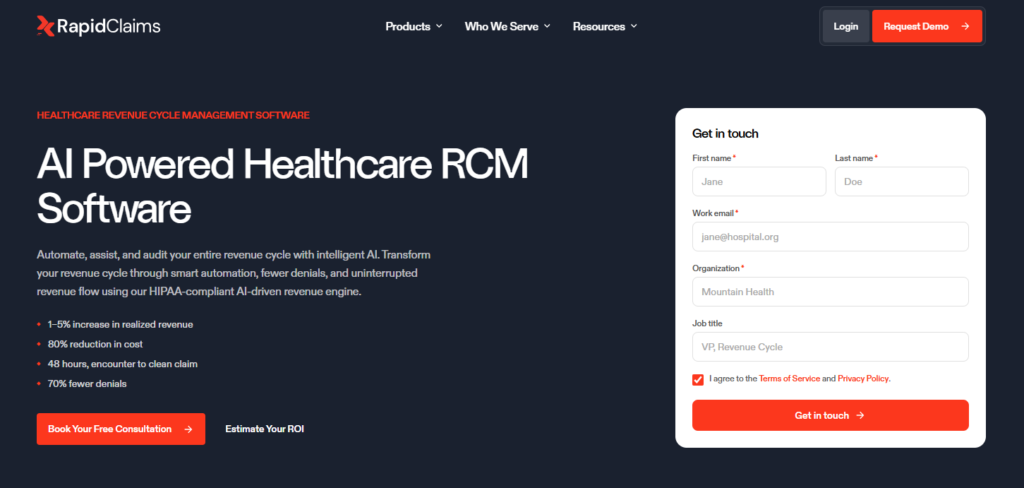
Healthcare revenue cycle management involves much more than sending claims and collecting payments. It starts when a patient schedules an appointment and continues through registration, insurance verification, coding, claim submission, payment posting, and follow-up on outstanding balances. When any part of this process is slow or inaccurate, healthcare organizations can experience delayed payments, claim denials, revenue leakage, and increased administrative workload.
This is where Revenue Cycle Management Software can make a significant difference. By connecting different revenue cycle activities through a centralized digital system, healthcare providers can reduce manual work, improve data accuracy, identify problems earlier, and create a smoother path from patient registration to payment.
What Is Revenue Cycle Management Software?
Revenue Cycle Management Software is a technology solution designed to help healthcare organizations manage and automate financial processes associated with patient care. It can support activities such as patient registration, insurance eligibility verification, charge capture, medical coding, claims management, payment posting, denial management, and patient billing.
Instead of relying on disconnected systems and manual processes, an RCM solution can bring important financial and administrative information into one workflow. This gives staff greater visibility into accounts and helps healthcare organizations manage revenue more efficiently.
Why Healthcare Revenue Cycles Often Face Challenges
Healthcare revenue cycles involve multiple departments, systems, payers, and processes. A small error at the beginning can create problems later in the billing cycle.
For example, an incorrect patient detail or outdated insurance record may result in a claim being rejected. If the issue is not identified quickly, staff may need to spend additional time researching the account, correcting information, and resubmitting the claim.
Common revenue cycle challenges include:
- Incomplete patient information
- Insurance eligibility errors
- Manual data entry
- Coding and documentation issues
- Claim submission delays
- High denial rates
- Delayed payment posting
- Difficulty tracking unpaid claims
- Limited visibility into accounts receivable
- Increasing administrative workload
An effective AI RCM sofware solution can help address many of these challenges by automating repetitive activities and providing better control over the revenue cycle.
How Revenue Cycle Management Software Improves the Process
The biggest advantage of Revenue Cycle Management Software is that it can support the entire revenue cycle rather than focusing on only one stage.
Here is how it can improve each major step.
1. Streamlining Patient Registration
Patient registration is the starting point of the healthcare revenue cycle. Accurate information collected at this stage is essential because registration errors can affect eligibility checks, billing, claims, and payments.
Revenue cycle software can help standardize the collection of patient information and reduce repetitive manual data entry. Digital registration workflows can also make it easier to capture demographic, insurance, and billing details accurately.
By improving data quality at the beginning of the process, healthcare organizations can reduce errors that may otherwise appear later during billing and claims processing.
2. Improving Insurance Eligibility Verification
Insurance verification is another important step in preventing payment problems.
Revenue Cycle Management Software can help automate eligibility checks and provide staff with information about a patient’s insurance coverage before services are delivered. This can help identify inactive coverage, incorrect policy information, and potential coverage limitations earlier.
Early verification allows staff to address insurance-related issues before they become claim problems.
3. Reducing Manual Data Entry
Manual data entry consumes considerable staff time and increases the possibility of human error.
With an RCM system, information can move between different stages of the revenue cycle with less repetitive entry. Patient information, insurance details, charges, and billing data can be managed through connected workflows.
Reducing unnecessary data entry allows administrative teams to spend more time on tasks that require human attention, such as resolving complex accounts and communicating with patients or payers.
4. Supporting Accurate Charge Capture
Every service provided needs to be accurately reflected in the billing process. Missed or incorrect charges can result in revenue leakage.
Revenue cycle technology can help organizations identify charges associated with patient services and ensure that relevant billing information moves into the appropriate workflow.
Better charge capture can help healthcare providers reduce missed revenue opportunities while maintaining a more consistent billing process.
5. Improving Medical Coding Workflows
Medical coding plays a critical role in converting clinical information into standardized codes used for billing and reimbursement.
Coding errors can contribute to claim delays, rejections, and denials. Revenue cycle software can support coding workflows by organizing relevant information and helping staff identify potential issues before claims are submitted.
Although technology does not replace the need for qualified coding professionals, it can provide tools that make their work more organized and efficient.
6. Making Claims Submission More Efficient
Claims represent one of the most important stages of the revenue cycle. Delayed or inaccurate claims can directly affect how quickly a healthcare organization gets paid.
An RCM system can help organize claims, identify missing information, and support electronic submission workflows. Automated checks can help detect certain issues before claims reach the payer.
This proactive approach can reduce avoidable errors and help healthcare organizations move claims through the billing process more efficiently.
7. Strengthening Denial Management
Claim denials can be a major source of lost time and delayed revenue. Simply resubmitting denied claims without understanding the underlying cause can result in repeated problems.
Revenue Cycle Management Software can help categorize and track denials, allowing organizations to identify recurring patterns. For example, a provider may discover that a significant number of denials are related to eligibility, coding, authorization, or missing information.
Once these trends become visible, revenue cycle teams can focus on correcting the underlying process instead of repeatedly addressing the same issue.
8. Accelerating Payment Posting
Payment posting involves recording payments and adjustments received from insurance companies and patients.
When this process is handled manually, it can take significant administrative time. Delays in payment posting can also make it difficult for staff to understand the current status of accounts receivable.
An RCM platform can help organize payment information and make account updates more efficient. More timely payment posting gives financial teams a clearer view of outstanding balances and available revenue.
9. Improving Accounts Receivable Management
Accounts receivable represents money that is still owed to the healthcare organization. Managing these balances effectively is essential for maintaining healthy cash flow.
Revenue cycle software can help staff monitor unpaid accounts, identify aging balances, and prioritize follow-up activities. Instead of manually reviewing large numbers of accounts, teams can use system-generated information to focus their attention where it is most needed.
This can make follow-up activities more structured and potentially reduce the time required to collect outstanding payments.
10. Making Patient Billing More Transparent
Patients are increasingly responsible for a larger portion of their healthcare expenses. As a result, clear and timely billing communication has become an important part of the revenue cycle.
An effective RCM system can support organized patient billing workflows and provide staff with better access to account information. When patients can receive clearer information about balances and payments, billing conversations can become easier to manage.
Improved billing transparency can also support a better overall patient financial experience.
Benefits of Using RCM Software Across the Healthcare Revenue Cycle
Implementing RCM sofware across multiple stages of the revenue cycle can provide several operational benefits.
Reduced Administrative Work
Automation can reduce repetitive tasks such as data entry, eligibility checks, claim tracking, and payment processing. This allows revenue cycle teams to focus on exceptions and more complex accounts.
Fewer Avoidable Errors
Automated validation and standardized workflows can help reduce errors caused by inconsistent data entry or missed information.
Faster Claims Processing
When claims are prepared and reviewed more efficiently, healthcare organizations can reduce unnecessary delays between service delivery and claim submission.
Better Denial Visibility
Centralized denial tracking can help organizations understand why claims are being denied and identify recurring problems.
Improved Cash Flow
Faster processing, fewer avoidable denials, and more organized accounts receivable follow-up can contribute to a more predictable revenue cycle.
Greater Operational Visibility
Healthcare leaders can use revenue cycle data to monitor performance and identify bottlenecks. Instead of relying only on individual staff reports, management can gain a broader view of the financial workflow.
Key Features to Look for in Revenue Cycle Management Software
Not every healthcare organization has the same needs. However, certain capabilities can be particularly valuable when evaluating an RCM platform.
Important features may include:
- Patient registration management
- Insurance eligibility verification
- Charge capture
- Medical coding support
- Claims management
- Claim status tracking
- Denial management
- Payment posting
- Accounts receivable management
- Patient billing
- Reporting and analytics
- Workflow automation
- Integration with existing healthcare systems
- Data security and access controls
The right solution should fit the organization’s existing processes rather than creating unnecessary complexity.
How Automation Changes the Healthcare Revenue Cycle
Traditional revenue cycle processes often depend on staff manually moving information from one stage to another. This can create delays and increase the possibility of errors.
Automation changes this model by allowing routine tasks to follow predefined workflows. For instance, eligibility information can be checked earlier, claims can be reviewed before submission, and unpaid accounts can be prioritized for follow-up.
The goal is not to automate every decision. Instead, automation should handle repetitive and predictable tasks while allowing experienced staff to focus on exceptions, complex claims, and patient interactions.
Using Data to Make Better Revenue Cycle Decisions
One of the most valuable benefits of Revenue Cycle Management Software is the data it can provide.
Healthcare organizations can analyze metrics such as:
- Claim denial rates
- Days in accounts receivable
- Clean claim rates
- Payment turnaround times
- Outstanding balances
- Collection performance
- Registration error rates
- Payer-specific trends
These insights can help healthcare leaders identify where revenue is being delayed or lost.
For example, if a particular payer consistently generates a high number of denials, the organization can investigate the reason and adjust its workflow accordingly. Data turns revenue cycle management from a reactive process into a more proactive one.
Choosing the Right RCM Software for a Healthcare Organization
Before implementing an RCM solution, healthcare organizations should evaluate how well the software fits their existing operations.
Important considerations include:
Integration: The system should work effectively with existing clinical, billing, and practice management systems.
Scalability: The solution should be able to support the organization’s growth and changing operational requirements.
Automation: Organizations should identify which repetitive tasks can be automated without compromising accuracy or control.
Reporting: Strong reporting capabilities can help financial teams monitor performance and identify problems.
Security: Healthcare financial and patient information requires appropriate security measures and access controls.
Ease of use: A complicated platform can create additional administrative challenges. Staff should be able to use the system efficiently with appropriate training.
The Future of Healthcare Revenue Cycle Management
Healthcare revenue cycle management is becoming increasingly technology-driven. As organizations handle larger volumes of patient and financial information, manual processes can become more difficult to maintain.
Modern RCM platforms are increasingly focused on automation, real-time information, analytics, and intelligent workflow management. These technologies can help organizations identify potential issues earlier and improve the movement of information throughout the revenue cycle.
The future of revenue cycle management will likely focus not only on collecting payments but also on preventing revenue problems before they occur.
Conclusion
The healthcare revenue cycle is a connected process. A registration error can affect eligibility. An eligibility problem can contribute to a denied claim. A denied claim can delay payment. A delayed payment can increase accounts receivable and create additional administrative work.
Revenue Cycle Management Software helps healthcare organizations connect these processes and manage them more efficiently. From patient registration and insurance verification to claims, denial management, payment posting, and accounts receivable follow-up, the right technology can reduce manual work and provide greater visibility across the entire financial workflow.
Rather than treating revenue cycle management as a series of separate administrative tasks, healthcare providers can use technology to create a more coordinated process from the moment a patient enters the system until the final payment is received.
Frequently Asked Questions
What is Revenue Cycle Management Software?
Revenue Cycle Management Software is a technology solution that helps healthcare organizations manage financial and administrative processes from patient registration through billing, claims, payments, and accounts receivable.
How does RCM software reduce claim denials?
RCM software can help identify missing or inconsistent information before claims are submitted and track denial patterns after submission. This allows healthcare organizations to address recurring issues and improve their billing workflows.
Can RCM software automate insurance verification?
Yes. Many RCM solutions can support automated insurance eligibility and verification workflows, helping staff identify coverage-related issues earlier in the revenue cycle.
How does RCM software improve cash flow?
By reducing manual delays, improving claims processing, supporting denial management, and organizing accounts receivable follow-up, RCM software can help healthcare organizations move payments through the revenue cycle more efficiently.
Is RCM software useful for small healthcare practices?
Yes. Small practices can also benefit from automation and centralized revenue cycle workflows. The appropriate solution depends on the practice’s size, specialties, existing systems, and operational requirements.