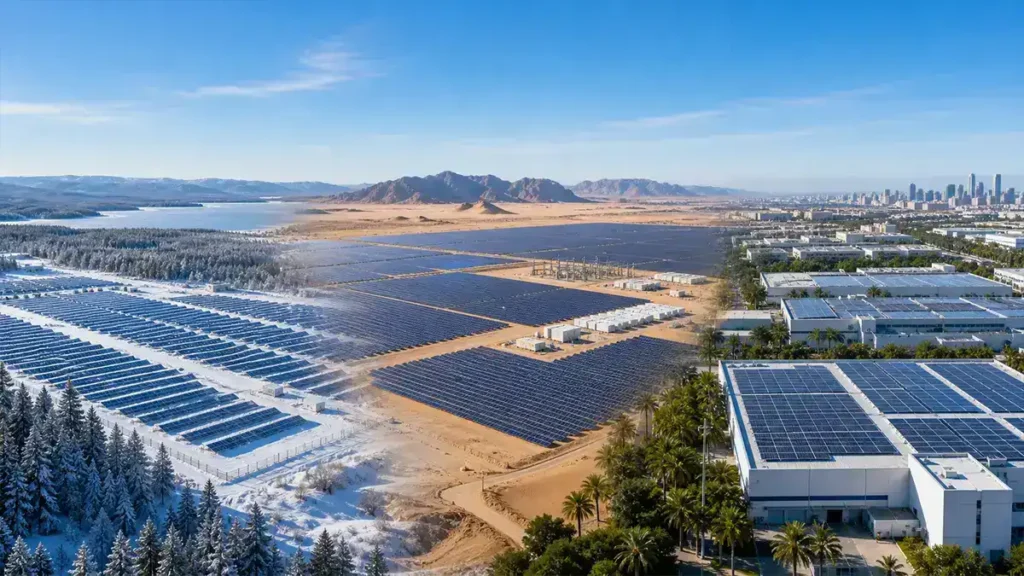
Solar projects are being developed in more locations and under more varied conditions than ever before. Rooftops, factories, warehouses, farms, car parks, and open commercial land are all being used for photovoltaic installations. However, a mounting system designed for one market may not be suitable for another.
Solar mounting projects across Southeast Asia, Japan, South Korea, the Middle East, and Europe can face very different requirements. Rainfall, humidity, coastal exposure, wind, snow, heat, roof design, soil conditions, and local construction practices all influence the mounting approach.
At the same time, customers in Europe, the United States, and Australia may need solar mounting accessories that match different roof profiles, panel formats, structural methods, and installation practices. This is why solar mounting should be planned according to the actual project environment rather than treated as a standard component.
Why Solar Mounting Needs Local Planning
Solar panels may look similar from one project to another, but the structure beneath them must respond to local conditions. A rooftop system in Singapore may need to handle high humidity, frequent rainfall, limited roof space, and a dense urban environment. A ground-mounted project in Thailand or Vietnam may require careful planning for heavy rain, soil conditions, drainage, and maintenance access.
Projects in the Philippines and Indonesia may involve coastal air, high humidity, intense sunlight, and severe seasonal weather. Japan and South Korea create additional requirements related to building structure, seasonal weather, limited installation space, and local construction expectations.
In the Middle East, high temperatures, dust, ultraviolet exposure, and large open sites can affect material selection and array layout. European projects may require close attention to roof compatibility, snow or wind conditions, corrosion resistance, and project-specific installation requirements.
These factors influence the choice of foundations, rails, clamps, brackets, fasteners, roof attachments, and protective finishes. A reliable mounting solution should therefore be evaluated together with the project location, building type, panel layout, and construction method.
Solar Mounting Opportunities in Southeast Asia
Southeast Asia has strong potential for commercial and industrial solar development. Businesses are installing photovoltaic systems on factories, warehouses, commercial buildings, farms, and other properties to manage energy costs and make better use of available space.
Singapore often requires compact rooftop solutions because available land is limited. High humidity and frequent rainfall make drainage planning and corrosion resistance important. Installers may also need to work around air-conditioning equipment, service routes, roof openings, and other building facilities.
Thailand and Vietnam have a wide range of commercial, industrial, agricultural, and rooftop projects. Depending on the site, mounting design may need to account for heavy rainfall, high temperatures, soil conditions, and future maintenance access. Ground-mounted systems require suitable foundations and practical row layouts, while rooftop installations must be compatible with the building structure.
The Philippines and Indonesia may involve coastal environments, high humidity, intense sunlight, and strong seasonal weather. For these projects, the durability of fasteners, rails, clamps, and structural connections is especially important. A well-planned system should also allow efficient installation when weather conditions change.
Planning for Japan and South Korea
Japan has a diverse solar market that includes residential rooftops, commercial buildings, factories, logistics facilities, and ground-mounted systems. Mounting design may need to consider typhoons, heavy rainfall, coastal exposure, earthquakes, snow in some regions, and limited available space.
Rooftop projects in Japan require careful review of roof materials, waterproofing, building capacity, and maintenance access. Ground-mounted projects may require closer attention to foundations, drainage, soil conditions, and local weather exposure. Components also need to be practical for local installers and suitable for the project’s construction method.
South Korean projects may be developed on factories, logistics facilities, commercial buildings, and other properties where roof space must be used efficiently. Depending on the location, mounting design may need to account for wind exposure, seasonal temperature changes, and snow loads.
Older buildings may require additional structural review before solar equipment is installed. A suitable mounting layout should avoid blocking drainage channels, maintenance paths, and essential building equipment. Clear technical drawings and compatible components can help reduce uncertainty during construction.
Mounting Requirements in the Middle East
Solar development in the Middle East often involves large open sites, industrial properties, commercial facilities, and utility-scale projects. Strong solar radiation creates excellent potential for photovoltaic generation, but the environment also presents practical challenges.
High temperatures can affect equipment and working conditions. Dust may increase the need for cleaning and inspection, while strong ultraviolet exposure makes material durability important. Ground-mounted projects also require suitable foundations, efficient row spacing, service access, and practical maintenance planning.
A mounting structure should be strong enough for the site while remaining practical to install. In dry and dusty areas, the layout should allow inspection teams to reach important parts of the system without unnecessary difficulty.
European Solar Mounting Projects
Europe includes many different climates, building types, and installation practices. Commercial rooftop projects may be developed on warehouses, factories, offices, agricultural buildings, and public facilities. Ground-mounted systems may be used on industrial land, commercial sites, and agricultural properties.
Depending on the location, project teams may need to consider snow loads, strong wind, rainfall, roof age, building capacity, and corrosion exposure. In coastal areas, anti-corrosion performance may be particularly important. In colder regions, the structure and foundations may need to be reviewed for snow and freezing conditions.
Across European markets, installers may need components that fit established roof systems, local structural practices, and project-specific installation requirements. Accurate dimensions, consistent manufacturing, and clear installation guidance can help reduce labor time and avoid unnecessary adjustments on site.
Solar Mounting Accessories for Europe, the United States, and Australia
In addition to complete mounting systems, many customers require individual solar mounting accessories. These products may include rails, roof hooks, clamps, brackets, connectors, fasteners, flashing components, and other parts used for rooftop or ground-mounted installations.
European customers may focus on roof compatibility, material performance, and installation requirements. United States projects may require accessories suited to local roof profiles, wind conditions, commercial buildings, and different panel arrangements.
Australian projects may involve high solar exposure, rural properties, commercial sheds, large rooftops, and demanding outdoor conditions. In these environments, accessory quality and compatibility are important for both installation efficiency and long-term reliability.
Product consistency matters because installers may use the same components across many panels or roof sections. If dimensions are inconsistent, small fitting problems can create delays and additional labor costs.
Choosing Materials for Long-Term Reliability
Material selection directly affects the service life of a solar mounting system. Aluminum is commonly used for rails and clamps because it is lightweight and offers good corrosion resistance. Galvanized steel may be selected where greater structural strength is required. Stainless steel fasteners can be useful in humid, coastal, or industrial environments.
Salt air, moisture, pollution, dust, ultraviolet exposure, and temperature changes can gradually affect metal components. Choosing suitable materials and surface treatments can help reduce corrosion and maintenance requirements.
Manufacturing quality is equally important. Rails, brackets, clamps, bolts, and connectors should be produced consistently so installers can assemble the system efficiently and avoid repeated adjustments on site.
A Practical Approach to Solar Project Planning
Before choosing a supplier, project owners and EPC contractors should confirm whether the system suits the local roof or soil conditions, whether it has been designed for local weather exposure, and whether technical drawings and installation guidance are available.
They should also consider future inspection, maintenance access, component compatibility, and the supplier’s ability to support project-specific requirements.
Ziyuan Energy supplies mounting systems for ground-mounted, rooftop, and commercial photovoltaic projects in a range of installation environments. Its product offering serves project requirements across Southeast Asia, Japan, South Korea, the Middle East, and Europe, while its solar mounting accessories are also available for customers in Europe, the United States, and Australia.
As commercial solar development continues to expand, local conditions will remain an important part of project planning. A suitable mounting structure is not simply a frame for solar panels. It is part of the project’s structural, installation, and maintenance strategy.
When developers choose a mounting solution that matches the local climate, building type, and construction method, they can improve installation efficiency and reduce avoidable risks. For more information about solar mounting products and photovoltaic project solutions, visit solar mounting systems.