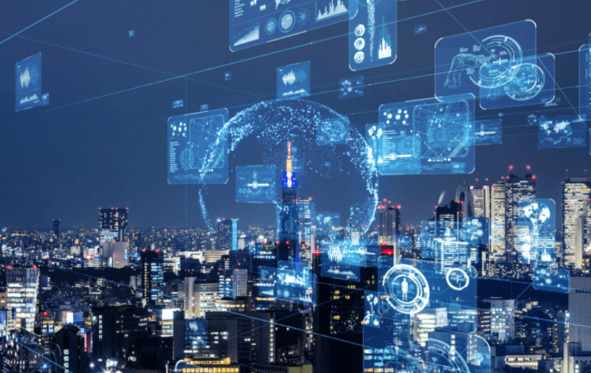
Cities today are growing faster than ever, but managing them is becoming more complex. Traffic problems, energy waste, and infrastructure challenges are increasing every day. This is where digital twin technology is making a real difference. By using real-time data and AI, cities can plan smarter, reduce risks, and improve how urban systems work.
Managing a modern city is genuinely hard. Millions of people, thousands of systems, and countless moving parts all need to work together every single day. For a long time, the tools available to city planners were not good enough to handle that level of complexity. But things are starting to change, and digital twin technology is at the center of this transformation.
So What Exactly Is a Digital Twin?
Imagine having a perfect virtual copy of your entire city. One that updates itself in real time, shows you exactly what is happening across every road, building, and water pipe, and lets you test ideas before committing to them in the real world. That is essentially what a digital twin is.
It sounds almost too good to be true, but digital twin technology is already being used in cities like Singapore, Amsterdam, and Helsinki to solve real urban problems every day. These cities are not just drawing maps. They are building living digital replicas of themselves that help decision makers plan smarter and respond faster.
What Goes Into Building an Urban Digital Twin?
Building one is no small feat. It brings together several layers of technology that all need to work in harmony:
- IoT sensors spread across the city, constantly feeding live and accurate information
- Artificial intelligence and machine learning that analyze data and generate insights
- Detailed 3D city modeling for a realistic and interactive view
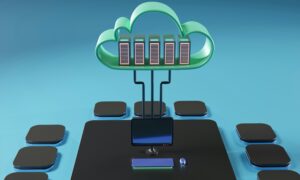
- Cloud computing to handle large volumes of data
- Integrated systems connecting transport, energy, and public services
When these elements come together properly, the result is genuinely powerful.
Where Digital Twins Are Making a Real Difference?
Tackling Traffic Before It Becomes a Problem
Anyone who has lived in a growing city knows traffic is one of the hardest things to get right. Build a new road, and you attract more cars. Close a lane for repairs, and gridlock follows. Urban digital twins are helping planners get ahead of these problems rather than just reacting to them.
By simulating changes to road layouts or bus routes before anything is physically built, city authorities can test dozens of scenarios and pick the one that actually works. As cities move toward more adaptive transportation systems, demand-responsive solutions are becoming increasingly important, as explored here: https://thesiddique.com/demand-responsive-transit-ai-powered-bus/, which highlights how AI is reshaping public transit.
When something unexpected happens, the city can respond intelligently rather than grinding to a halt.
Making Cities Greener and More Energy Efficient
Energy waste in cities is a massive problem that most people never see. Buildings consuming more power than they need, street lighting staying on when nobody is around, heating systems running on outdated schedules, it all adds up. Digital twin technology gives energy managers a clear picture of where waste is happening and what can be done about it.
Cities have been able to model the impact of switching to renewable energy or upgrading to smart grids and see the projected savings before spending a single dollar. This kind of data-driven decision-making is helping cities become more sustainable.
Preparing for Climate Challenges
This one feels particularly urgent right now. Flooding, extreme heat, and violent storms are becoming more frequent, and cities need to be ready.
Digital twins allow planners to run realistic simulations of extreme weather scenarios and see exactly which parts of the city are most vulnerable.
Rather than waiting for a flood to expose a weakness in the drainage system, a city can identify and fix that weakness years in advance. That is not just smart planning. It is the kind of forward thinking that saves lives.
Better Buildings, Better Neighborhoods
Anyone who has watched a new development go up nearby and thought, “Did anyone actually think this through?” will appreciate this one.
AI in urban planning, combined with digital twin technology, means the full impact of a new building can be modeled before a single planning permission is granted. How will it affect sunlight on the street below? What will it do to local traffic? How much extra demand will it place on water and electricity?
These questions used to be answered with rough estimates. Now they are answered with data.
How Real-Time Data Keeps Digital Twins Alive?
A digital twin is only as good as the data feeding into it. This is something that does not get talked about enough.
Without a constant flow of real-time urban data from sensors, cameras, meters, and connected vehicles, the model quickly becomes outdated and useless. IoT smart cities infrastructure is what keeps the digital twin current and reliable, essentially the nervous system of the entire operation.
The moment that the data pipeline slows down or breaks, the twin loses its value. That is why investing in robust IoT infrastructure is just as important as the digital twin platform itself.
The Role of AI in Making Sense of It All
Collecting data is one thing. Knowing what to do with it is another entirely. This is where artificial intelligence earns its place. AI spots patterns that human analysts would never catch, flags problems before they become emergencies, and helps city managers make faster and more confident decisions every single day.
For anyone following the development of smart city technology, the combination of IoT and AI within digital twin platforms is one of the most exciting and consequential developments in urban management today. It is turning raw data into genuine intelligence, and that changes everything.
Cities Already Leading the Way
It is worth looking at where digital twin technology is already delivering real results:
- Singapore has built one of the world’s most advanced urban digital twin platforms, using it to manage everything from urban planning to pandemic response
- Amsterdam uses digital twin technology to model energy usage across the city and plan its transition to renewable sources
- Helsinki has created a detailed 3D digital twin of the city center to support long-term smart city infrastructure development
- Dubai is investing heavily in urban digital twin systems as part of its broader smart city strategy for 2030 and beyond
These are not pilot projects or experiments. These are fully operational systems delivering measurable results right now.
The Honest Challenges Nobody Talks About Enough
It would not be fair to paint an entirely rosy picture. Digital twins in smart cities face some real and significant obstacles:
- Privacy concerns are legitimate, as collecting real-time urban data at this scale requires careful handling
- Balancing useful data and personal privacy is difficult to get right
- The costs are high, and building a full digital twin system can be expensive
- Legacy systems make integration challenging
- Not every city is ready, which may increase the gap between developed and developing regions
These are not reasons to abandon digital twin technology, but there are reasons to approach it honestly and plan carefully
What Does the Future Look Like?
The honest answer is, more of everything. More sensors, more data, more AI-driven insight, and more cities realizing they cannot afford to plan without this kind of intelligence behind them.
As urban populations grow and pressure on smart city infrastructure intensifies, digital twins will move from being an exciting innovation to an absolute necessity. The technology will become cheaper, more accessible, and more deeply embedded in how cities operate day to day.
The gap between cities that have embraced digital twin technology and those that have not will become increasingly visible in how efficiently they run, how quickly they respond to problems, and how well they serve the people living in them.
Conclusion
Digital twins in smart cities are one of those rare technologies that genuinely live up to the hype, not because they are flashy, but because they solve real problems that real people experience every day.
What makes digital twin technology different is simple. It gives planners the ability to see the consequences of their decisions before those decisions are made. In a world where urban populations are growing and resources are stretched, that ability is not just useful; it is essential.
The cities investing in urban digital twins today are not just keeping up with the times. They are quietly building the blueprint for what every city will eventually need to become.