
How digital procurement is cutting industrial downtime: inside the B2B e-commerce shift in manufacturing

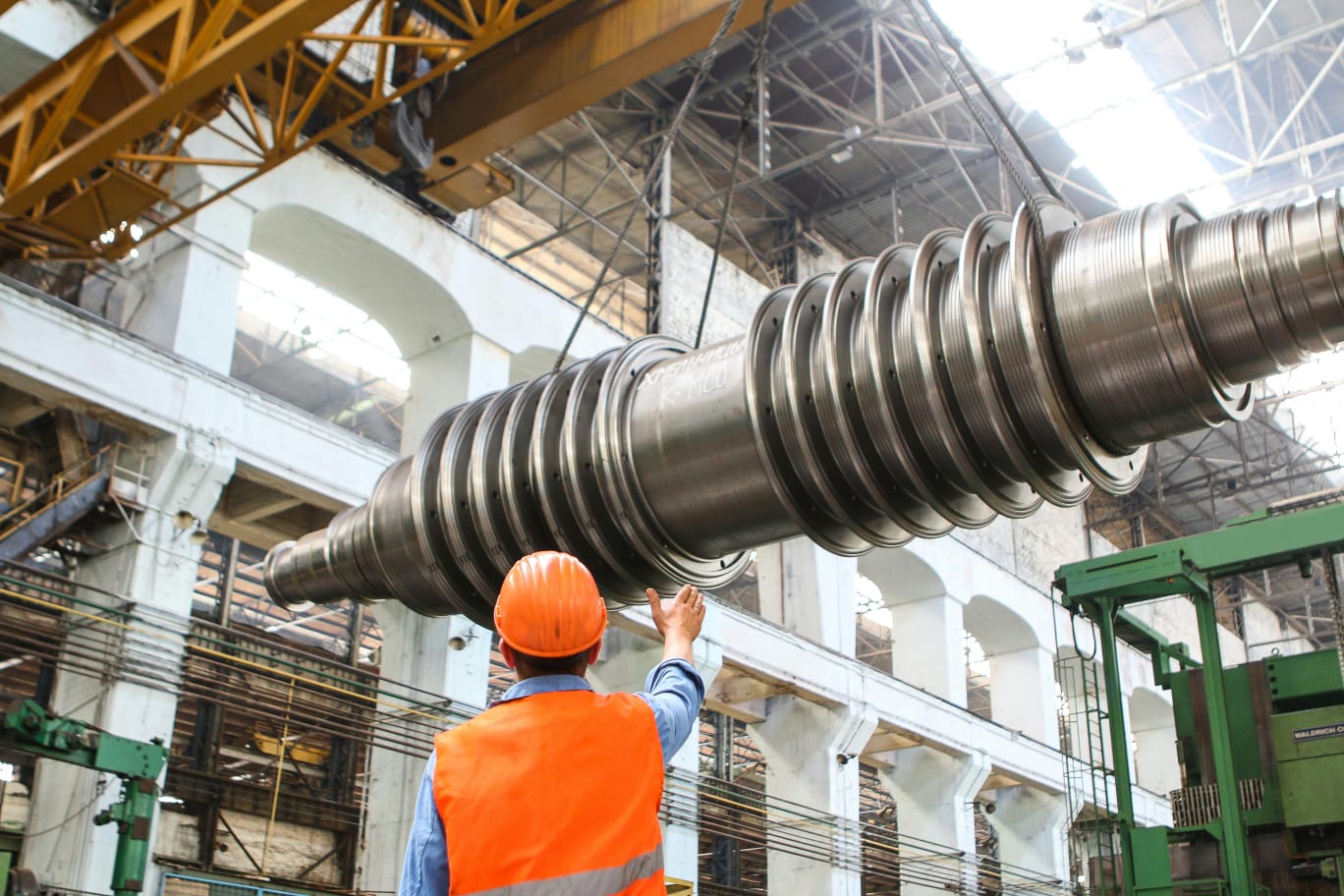
Somewhere in a packaging plant in northern Italy, a single encoder fails. The feedback signal to the PLC drops, the line stops, and within four minutes a supervisor is on the phone trying to find a replacement part that costs less than €300. The component will not be back in stock at the local distributor until Thursday. It is Monday morning. The downtime clock ticks past €15,000.
This is the unglamorous reality behind every Industry 4.0 keynote. While most of the conversation around digital transformation in manufacturing focuses on AI, robotics, and predictive analytics, a quieter revolution is reshaping the sector from a less photogenic angle: procurement. The way industrial companies buy spare parts and automation components is finally catching up with the rest of the economy — and the bottleneck it is solving may be one of the most expensive problems in modern manufacturing.
The hidden cost crisis in manufacturing
Unplanned downtime is, by any reasonable measure, the largest controllable cost in industrial production. Estimates vary across studies, but the consensus range is striking: research from Aberdeen Group has long put the cost of a single hour of unplanned downtime at over $260,000 across industries, while more recent figures from analytics provider Senseye place that number closer to $1.5 million per hour for Fortune Global 500 manufacturers.
Roughly 40 to 50 percent of these stoppages trace back to mechanical or electrical component failures. Yet the real culprit is rarely the broken part itself. It is the time spent finding, ordering, and receiving its replacement. A €200 encoder can easily generate €50,000 of idle plant cost simply because no one knew where to source it on a Monday morning.
Compounding the problem, modern plants run on a remarkably long tail of legacy components. PLCs installed by Allen-Bradley, Siemens, ABB or Schneider Electric in 2008 are still running production lines in 2026, generating sustained demand for highly specific spare parts — many of which sit outside the active catalogs of their original manufacturers.
How B2B procurement worked — and why it broke
For decades, the model was remarkably stable. Plant engineers called their local distributor. The distributor checked stock, sometimes called the manufacturer’s regional warehouse, and emailed a quote. Orders moved by fax, then by PDF. Lead times were what they were.
This system worked because it was the only system. But it has been under pressure from three directions at once.
First, the buyers themselves have changed. A generation of procurement managers who buy office supplies on Amazon Business and groceries online now finds itself confronted with B2B portals frozen somewhere around 2010 — search functions that cannot recognize a part number with a hyphen in the wrong place, no real-time stock visibility, no transparent pricing.
Second, the supply chain shocks of the last five years — the pandemic, semiconductor shortages, the war in Ukraine, sanctions, the recent reshuffling of US trade policy — have exposed how fragile traditional distributor networks really are. Plants that once held two weeks of safety stock now hold two months, and they are increasingly unwilling to wait three weeks for a non-critical replacement.
Third, the brand ecosystem itself has fragmented. A single automation cabinet might combine drives from ABB, sensors from Balluff, pneumatics from Festo or Camozzi, and a PLC from Siemens or Rockwell. Sourcing across four different manufacturer portals is not procurement; it is data entry.
The rise of specialized B2B e-commerce
Three distinct models have emerged to fill the gap, and understanding the differences matters.
At one end sit the horizontal giants — Amazon Business, Alibaba — which offer breadth but limited technical depth and inconsistent quality control for industrial-grade components. At the other end sit the manufacturer portals themselves: Siemens Industry Mall, Rockwell Automation’s Encompass network, ABB’s online catalog. These offer depth, but only within a single brand.
In between, a third model has been quietly scaling: vertical, multi-brand e-commerce specialists. These platforms aggregate inventory from dozens of automation brands under one technical catalog, with cross-reference search, full datasheets, and predictable European logistics. They are not marketplaces in the consumer sense — they hold stock, vet authenticity, and support the buyer through the purchase decision.
The model has obvious appeal in markets where manufacturers are highly fragmented and buyers need to source across brands in a single transaction. Italy, in particular, has emerged as a natural hub for this approach, given its dense manufacturing base and proximity to both German and Mediterranean industrial corridors. Operators in this space — such as multi-brand European platforms for industrial automation parts — combine catalogs spanning ABB, Siemens, Schneider Electric, Allen-Bradley, Festo, Balluff, Beckhoff and Camozzi within a single procurement workflow.
The growth driver is not price, although pricing transparency helps. It is the speed of resolution: the time between identifying a fault and having the right part on the workbench.
What “good” looks like: a buyer’s checklist
For procurement and maintenance teams evaluating digital sourcing partners, a handful of capabilities tend to separate the credible operators from the rest.
Multi-brand depth is the starting point — not a marketplace aggregating third-party sellers of unknown provenance, but a catalog backed by direct supplier relationships and real, physically held stock. Search must work the way engineers actually think: part numbers, MPNs, cross-references between equivalent components from different manufacturers. Real-time availability needs to be visible before checkout, not after. European delivery in 24 to 48 hours has become the implicit baseline. Technical pre-sales support — someone who can confirm that a substitute PLC module is genuinely compatible with a legacy installation — is where mature platforms differentiate from generic resellers. And full documentary compliance (CE marking, RoHS declarations, downloadable datasheets) is non-negotiable in regulated industries.
None of these features is exotic. Together, however, they describe the difference between a procurement workflow that supports production and one that quietly drags it down.
The European reshoring angle
The accelerant pushing this transformation forward in 2026 is geographic. After two years of tariff volatility, shifting US trade policy, and persistent Red Sea shipping disruptions, European manufacturers have grown noticeably more cautious about long-distance sourcing of critical components.
Intra-EU procurement offers tangible advantages that have become harder to ignore: same time zone, harmonized customs and VAT treatment, predictable 24 to 48 hour ground logistics, and regulatory frameworks that align across borders. For a maintenance manager in Lyon sourcing a replacement servo drive, an Italian supplier with stock in Lombardy is operationally indistinguishable from a domestic one — and dramatically faster than waiting on a transpacific shipment.
This is the niche where European specialists such as IT Automation Parts are positioning themselves: combining multi-brand catalog breadth with continental logistics infrastructure, serving the kind of procurement profile that legacy distributor networks struggle to match.
What’s next: where industrial procurement is heading
The next phase is already visible in pilot deployments across European plants.
API integration between buyer ERPs and supplier platforms is moving procurement of routine spare parts toward full automation: a CMMS flags a work order, the corresponding part is ordered without human intervention, and the receipt is reconciled against the maintenance log. Predictive maintenance systems are beginning to plug directly into procurement workflows — a vibration anomaly in a motor no longer just generates an alert; it pre-stages a replacement order. And AI-driven cross-reference engines are starting to solve the obsolescence problem, identifying compatible substitutes for end-of-life components in seconds rather than the days of phone calls a senior engineer used to require.
Further out, conversations are intensifying around circular economy models — certified refurbishment, repair-over-replace policies, traceable component lifecycles — but those are stories for another day.
The procurement ROI nobody counts
The narrative around digital transformation in manufacturing has been dominated by the visible technologies: collaborative robots, computer vision, generative AI on the factory floor. But the most measurable return on digital investment in 2026 may turn out to be the least photogenic one — the quiet rewiring of how plants buy the components that keep them running. Industry 4.0 will not be won only on the production line. It will also be won, one fast-shipped encoder at a time, in procurement.







Comment