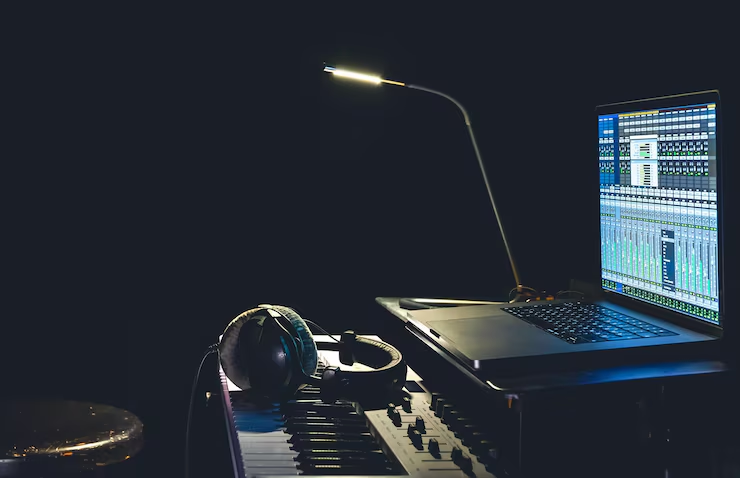
Music has always been one of the most powerful parts of digital storytelling. A short video can feel more cinematic with the right background track, a product demo can feel more polished with a subtle soundtrack, and a podcast can become more memorable with a recognizable intro. The challenge is that music production has traditionally been slower than other parts of the content workflow.
Creators can write captions, edit clips, design thumbnails, and publish social posts quickly. But creating original music often requires composition skills, production tools, licensing knowledge, and time. For independent creators and small teams, that can make music feel like a bottleneck rather than a flexible creative asset.
The rise of AI-assisted music creation
AI music generators are changing that workflow. Instead of starting from an empty timeline or searching through large stock music libraries, creators can now begin with a prompt, mood, lyric idea, or scene description. The tool can generate an original track that fits the requested direction, giving creators a faster starting point for videos, ads, games, podcasts, livestreams, and other projects.
This shift is especially useful because modern content is produced in many formats. A YouTube intro may need an energetic opening. A TikTok clip may need a short hook. A brand video may need something clean and professional. A meditation app may need ambient music. A game prototype may need background loops that can be tested quickly. AI music tools give creators a way to produce and iterate on these ideas without waiting for a full music production cycle.
Why speed matters for creators
For many creators, the value of AI music is not only that it can generate sound. The bigger value is speed. When a creator is testing several versions of a video, launching a campaign, or producing content every week, music needs to move at the same pace as the rest of the workflow.
Stock music can be helpful, but it often comes with trade-offs. Creators may spend a long time searching for the right track, find that many assets sound too familiar, or worry about whether a license works for commercial use. Original composition is powerful, but it is not always practical for every short-form video, ad variation, or early-stage creative idea.
A modern AI music generator for creators can help bridge that gap by turning prompts, lyrics, moods, or uploaded tracks into royalty-free music that is easier to adapt for different creative needs.
Beyond simple text-to-music
The most useful AI music platforms are beginning to move beyond one-step generation. Text-to-music is important, but real creative workflows usually involve revision. A creator may want to generate a few ideas, save the best version, extend an audio clip, create a cover-style variation, refine lyrics, or turn music into a video asset for publishing.
This broader workflow matters because music creation is rarely finished in one click. The first output might inspire a new direction. A lyric draft might become the foundation for a song. A short track might need to be extended. A creator may want to keep different styles organized across multiple projects. Tools that support these steps can become part of a creator’s regular production process rather than a one-time experiment.
Use cases across content and media
AI-generated music is useful across many creative fields. Video creators can use it to create background tracks for social content, tutorials, travel clips, and product videos. Marketers can use it to test different ad variations without relying on the same stock tracks. Podcasters can create intros, outros, and subtle background beds. Indie game makers can experiment with music ideas while building early prototypes. Musicians can use AI-generated outputs as inspiration for melodies, arrangements, and new song concepts.
The common thread is flexibility. AI music does not remove the need for taste, editing, or creative direction. Instead, it gives creators more raw material and lets them explore more options before choosing the final sound.
What creators should look for
When choosing an AI music tool, creators should look beyond novelty. Important factors include audio quality, commercial-use clarity, ease of use, support for prompts and lyrics, the ability to extend audio, and whether projects can be saved and revisited. A clean workspace also matters, especially for people who are creating music as part of a larger content pipeline.
Royalty-free usage is another important consideration. Creators who publish on YouTube, TikTok, podcasts, ads, or client projects need to understand how the music can be used. Clear commercial-use terms can make AI-generated music more practical for real work.
The future of music in creator workflows
AI music generation is still evolving, but its direction is clear. Music is becoming more accessible, more iterative, and more closely connected to the way creators already work. Instead of treating music as a final asset that must be sourced at the end of a project, creators can bring sound into the early ideation stage.
That may be the biggest change. AI music tools do not simply help creators make tracks faster. They make music part of the creative process from the beginning, giving more people the ability to experiment with sound, test ideas, and publish richer content without needing a full studio setup.