Artificial intelligence has introduced new dimensions to digital brand management, transforming how organizations monitor their reputation online. Real-time data from AI-based monitoring tools enables faster, more informed decisions about brand strategy. As digital conversations multiply, these tools are now used to help navigate increased complexity and consumer expectations.
Managing a digital brand presents unique challenges as customer attention becomes increasingly fragmented across platforms and formats. In a connected era, businesses face rising expectations to be aware of reputation risks and opportunities as they emerge. The need for timely insight drives the adoption of sophisticated solutions, and ai visibility now sits at the core of contemporary monitoring strategies. This shift has redefined the skills, data practices, and workflows required to keep brands resilient and adaptable.
Data-driven approaches reshape brand oversight
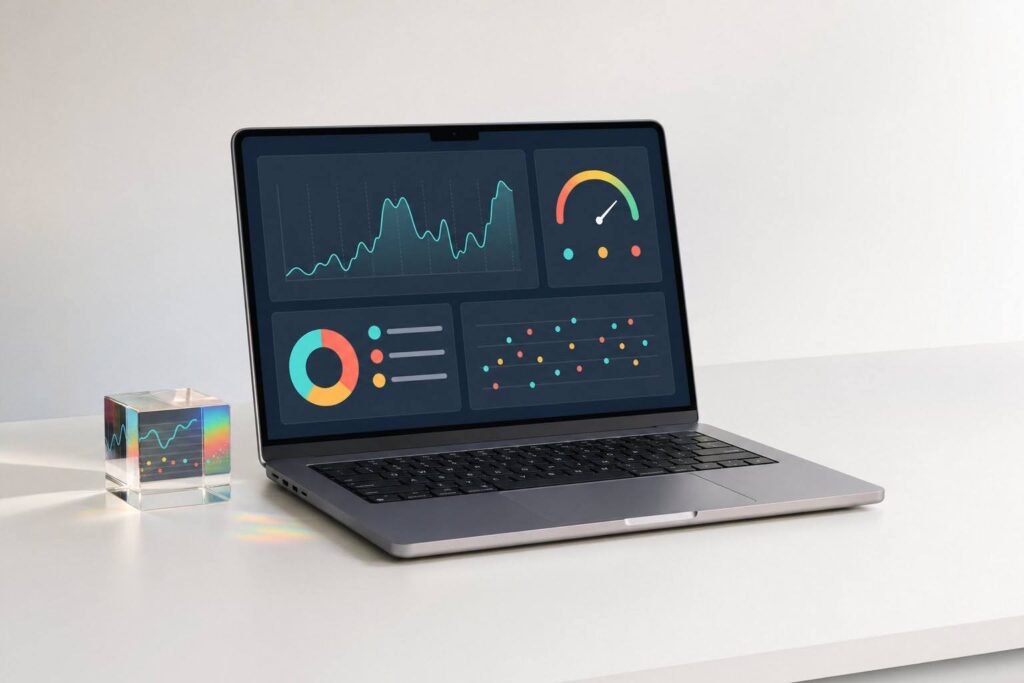
Your daily interactions with digital content create countless data points influencing brand perception. Companies increasingly rely on AI-based monitoring tools to aggregate data from social media, news, and forums to track mentions and sentiment in real time.
This data-driven shift responds to changing consumer behaviors and the proliferation of online narratives. By analyzing engagement quality, share of voice, and trend velocity, these tools help you understand which topics or events drive awareness and engagement most effectively.
Key metrics and competitive benchmarking in practice
AI-based monitoring tools typically assess a mixture of qualitative and quantitative signals that reflect audience attitudes. Sentiment analysis can indicate shifts in public mood, while trend velocity highlights faster changes in conversation topics across networks.
Another function is benchmarking your brand against direct competitors and category peers. Access to category-level context can enable brands to gauge their relative performance from both a tactical and strategic perspective.
Driving responsive decision-making and organizational change
Early identification of narrative shifts can help mitigate reputational risks or support emerging opportunities. Using real-time analysis, teams can prioritize specific channels, content, or target audiences that show stronger relevance or urgency, with ai visibility providing cues for timely intervention.
As organizations place greater trust in these tools, they also face operational challenges. Cross-functional teams must establish processes for data escalation, review, and response, ensuring that human oversight addresses accuracy, nuance, and context where automated tools may fall short.
Challenges, ethics, and the evolving future of monitoring
Ensuring representative data coverage remains a challenge, as not all digital conversations are equally accessible to monitoring algorithms. You must account for potential sampling bias, platform restrictions, and the risk of mistaking correlation for genuine causation in performance metrics.
Responsible use involves robust governance, strict privacy controls, and continuous evaluation of how data is sourced, processed, and interpreted. The field will likely see greater integration of AI-based monitoring tools with predictive analytics, multimodal data, and enterprise intelligence systems, reshaping the landscape of brand oversight and decision-making.