The convergence of digital technology with dentistry represents one of the most significant transformations in healthcare. While most people associate innovation in medicine with pharmaceuticals or surgical advances, the technological revolution in cosmetic dentistry is equally profound—and arguably more accessible to the average person than many other medical innovations.
From Analog to Digital: The Paradigm Shift
Traditional cosmetic dentistry relied on analog workflows. Dentists would examine a patient, discuss general preferences, and create restorations based on experience and intuition. The process involved physical impressions, shade guides, and communication with external laboratories that was largely qualitative.
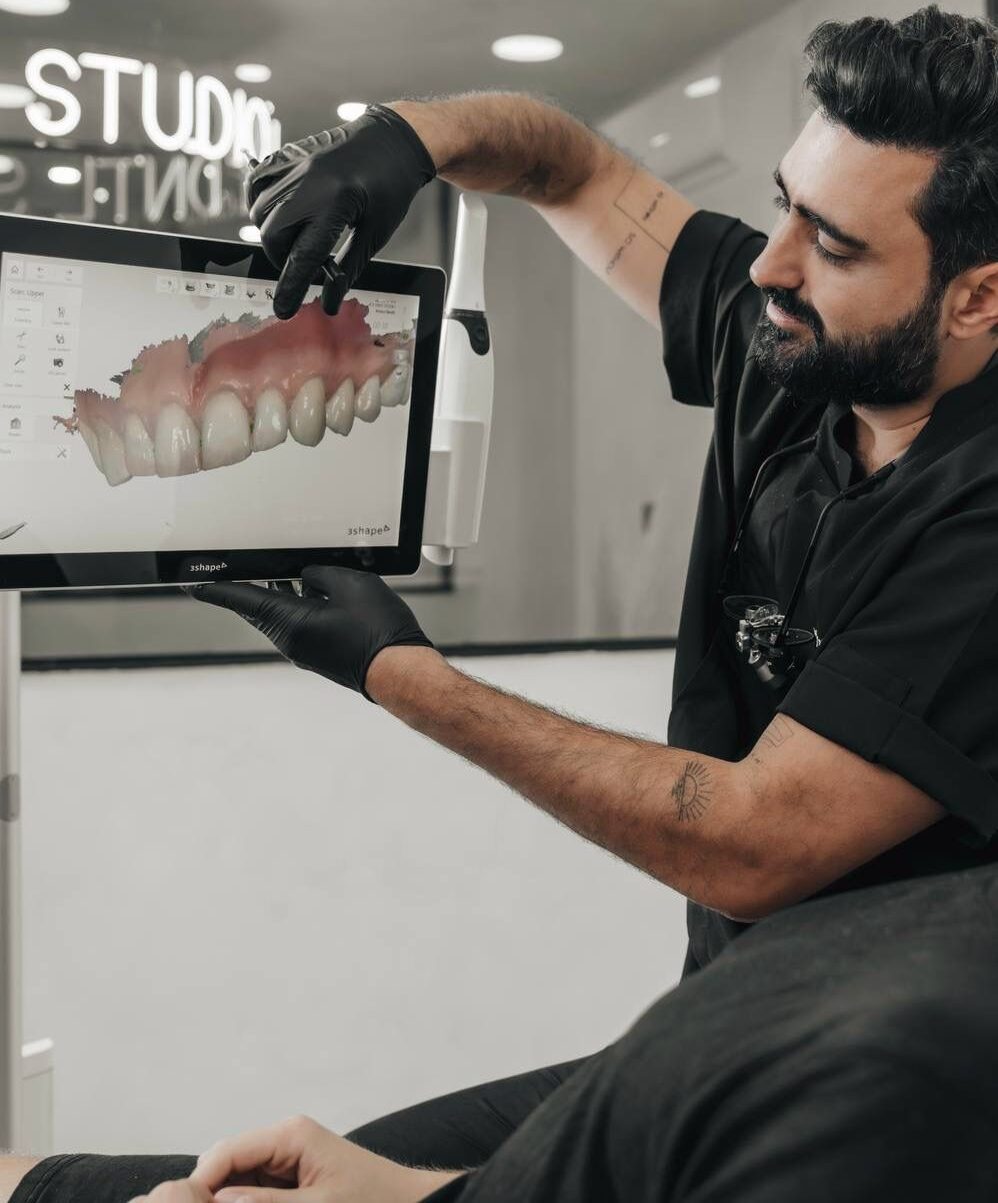
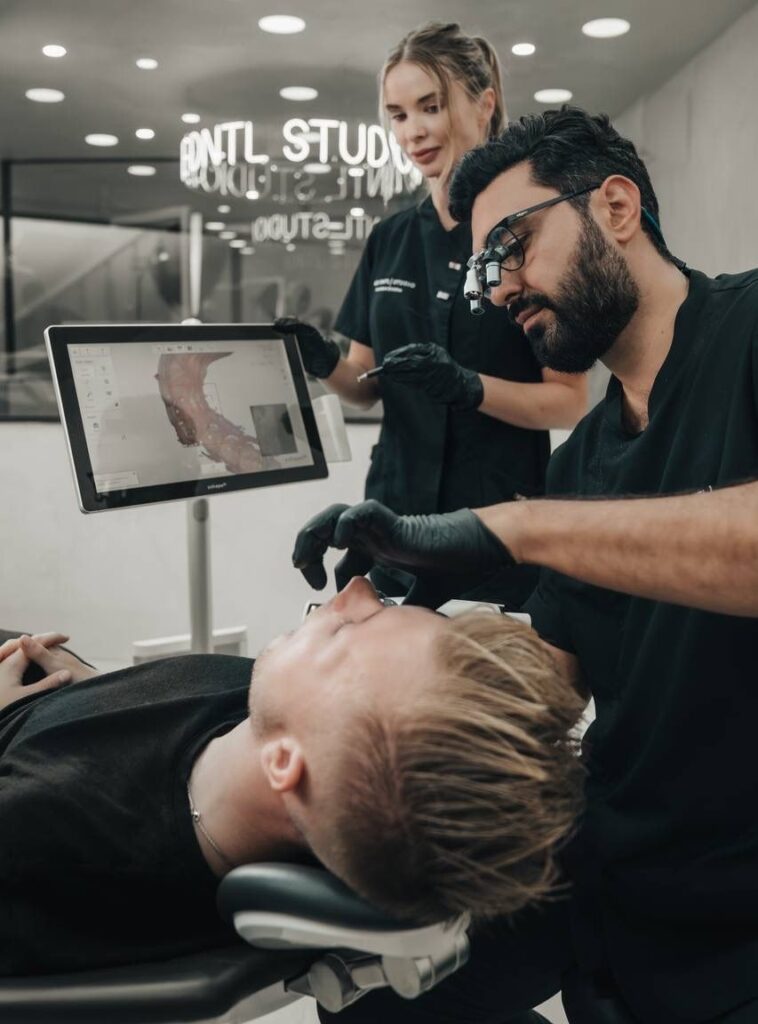
Today, this entire workflow has gone digital. Intraoral 3D scanners now capture precise geometric data of a patient’s teeth, gums, and oral structures with submillimeter accuracy. This data immediately transforms into digital models that can be analyzed, manipulated, and used to fabricate restorations with extraordinary precision.
3D Scanning Technology
Modern intraoral 3D scanners use structured light or laser technology to capture the three-dimensional geometry of teeth and surrounding tissues. The resulting point clouds contain hundreds of thousands of individual measurements, creating a complete digital map of the patient’s mouth.
The advantages over traditional impressions are substantial. Digital impressions eliminate the discomfort of traditional impression materials, provide immediate data that can be reviewed on screen, and can be transmitted instantly to laboratories or used directly in CAD software. The accuracy—often within 10-20 microns—exceeds that of physical impressions.
CAD/CAM and Precision Milling
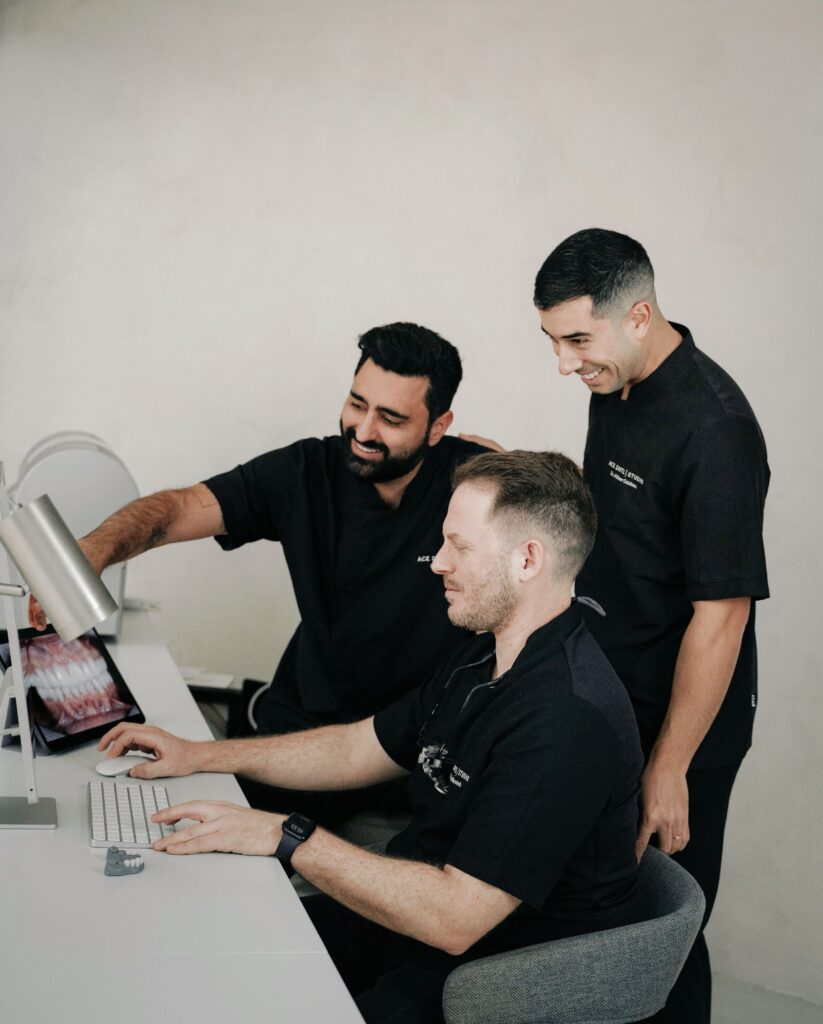
Once digital models exist, computer-aided design (CAD) software allows dentists to design restorations with pixel-perfect precision. For porcelain veneers, this means specifying exact thickness, contour, and translucency characteristics. For dental implants, it means planning placement angles and abutment positioning with three-dimensional visualization.
Computer-aided manufacturing (CAM) then produces these designs using milling machines that can work with porcelain, zirconia, composite resin, and other restorative materials. A veneer design can be milled from a porcelain block in minutes, with tolerances measured in fractions of a millimeter.
The integration of CAD/CAM has dramatically reduced production time. Restorations that once required a week or more can now be completed in days—or in some cases, the same day.
AI-Driven Smile Design
The newest innovation involves artificial intelligence in smile design. Machine learning algorithms have been trained on thousands of smile images, including both professionally-designed smiles and naturally beautiful smiles. These algorithms can identify the proportional relationships, color characteristics, and spatial relationships that humans perceive as beautiful.
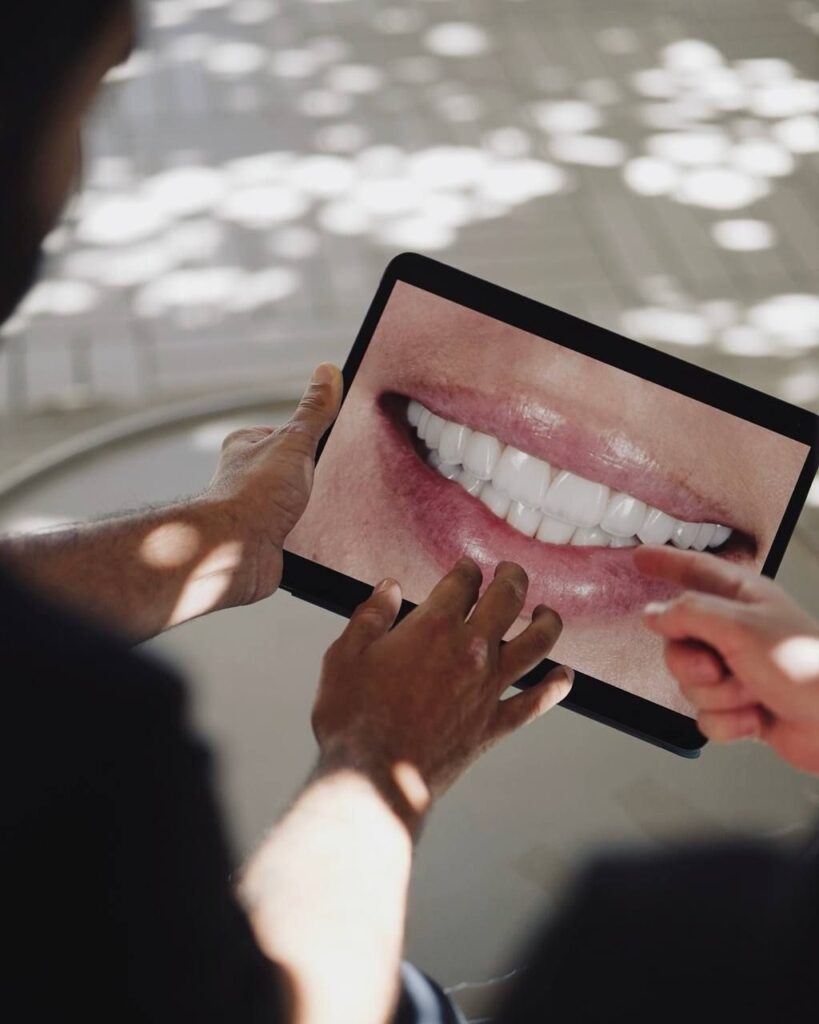
When a patient’s 3D scan is analyzed by AI-driven smile design software, the algorithm can recommend optimal tooth proportions, positioning, and characteristics based on the patient’s unique facial anatomy. This doesn’t replace the dentist’s judgment—it augments it, providing data-driven recommendations that can be refined through the dentist-patient consultation.
Some systems now use AI to preview potential outcomes, showing patients exactly how their smile would look with different design parameters. This visualization removes uncertainty and allows collaborative refinement before any treatment begins.
In-House Laboratory Advantage
The true power of these technologies emerges when practices integrate them into in-house dental laboratories. Rather than sending digital files to external labs, in-house milling and fabrication means the dentist oversees the entire production process.
This enables real-time iteration. If the dentist observes that a milled restoration doesn’t precisely match the digital design, or if additional refinement is needed, adjustments can be made immediately rather than waiting for external communication and rework. The result is dramatically improved consistency and quality control.
Data Analytics and Outcome Tracking
Digital workflows also enable data collection and analysis. Practices can track outcome metrics: patient satisfaction scores, restoration longevity, complications, and aesthetic success rates. Over time, this data reveals which design parameters, material choices, and techniques correlate with the best outcomes—creating continuous improvement feedback loops.
The Patient Experience Enhancement
From the patient perspective, these technological advances translate to tangible benefits. Digital preview removes uncertainty about outcomes. Reduced fabrication time means faster treatment completion. Minimal-invasive approaches (enabled by precision design) mean less tooth structure removal. And the overall precision increases the likelihood of exceptional, long-lasting results.
The Future Trajectory
As these technologies continue to evolve, we can expect further integration of augmented reality (allowing patients to see smile transformations overlaid on their face in real-time), more sophisticated AI algorithms, and faster fabrication times. The distinction between “cosmetic” and “restorative” dentistry will likely blur as precision and personalization become standard across all dental work.
The technological transformation of cosmetic dentistry represents a maturation of the field from art-based practice to art informed by data science. ACE DNTL STUDIO exemplifies this integration, combining advanced 3D scanning, AI-driven smile design, and in-house milling to deliver precision dentistry at a global scale.