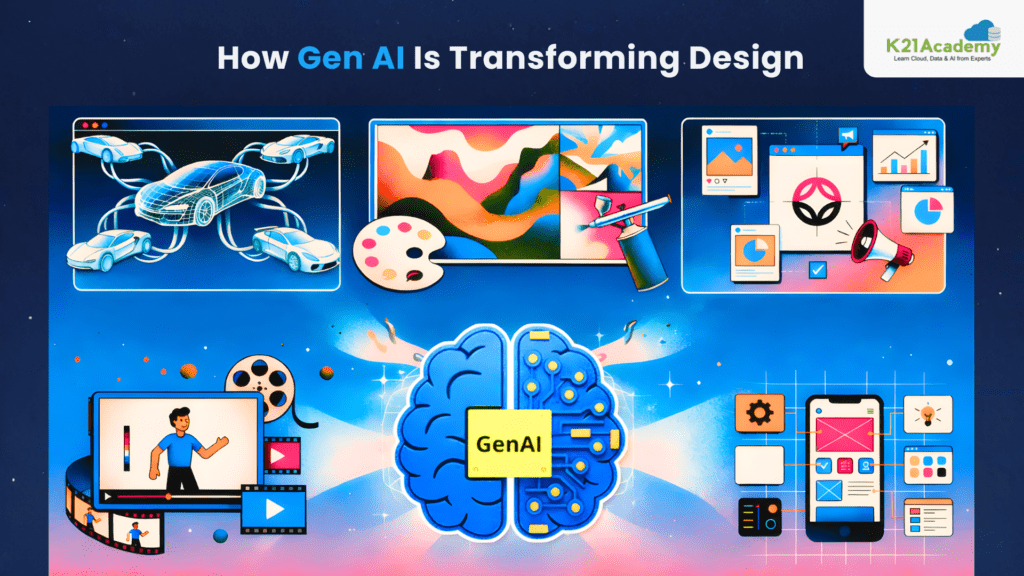
In the digital age we live in, generative AI is drastically changing how design and creativity operate. Intelligent AI systems can now produce what previously required hours of manual labour, artistic skill, and substantial resources in a matter of seconds. Generative AI is revolutionising the way creative professionals think, experiment, and develop, from planning marketing campaigns and user interfaces to producing beautiful visual art and product prototypes.
By serving as a creative partner that speeds up ideation, boosts productivity, and opens up new avenues for artistic expression, generative AI is augmenting human creativity rather than replacing it. AI-powered technologies are increasingly being used by designers, artists, marketers, and product teams to push creative boundaries and produce innovative experiences more quickly than in the past.
This shift is shaping the future of creativity and design across industries, making generative AI one of the most influential technological advancements of the decade.
What is Generative AI?
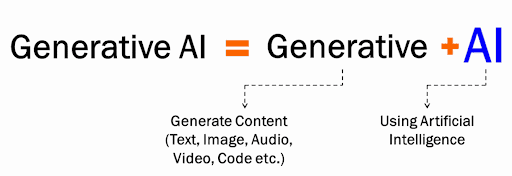
Generative AI refers to artificial intelligence systems that can create new content such as images, text, videos, music, code, and designs based on patterns learned from large datasets.
Unlike traditional AI, which focuses on analysis and prediction, generative AI focuses on creation. It uses advanced machine learning models such as large language models and diffusion models to generate original content based on user prompts or instructions.
For example, a designer can type:
- “Create a modern website landing page for a fintech startup”
- “Design a futuristic car concept”
- “Generate a logo for an eco-friendly brand”
and the AI produces multiple design variations instantly.
This ability to convert ideas into visual or textual outputs is what makes generative AI so powerful in the creative and design space.
Key Areas Where Generative AI is Transforming Creativity and Design
1) Graphic Design and Visual Art
Generative AI is revolutionizing graphic design by enabling designers to create high-quality visuals in minutes with the help of Prompt engineering.
Impact
- AI-generated illustrations
- Logo and brand design
- Poster and banner creation
- Digital art and concept design
- Social media creatives
Designers can now generate multiple design concepts quickly, allowing them to focus more on storytelling and creative direction rather than repetitive tasks.
Benefits
- Faster design process
- More creative experimentation
- Reduced production time
- Improved productivity
2) Product and Industrial Design
Generative AI is helping product designers create innovative and optimized product designs.
Use Cases
- Product prototyping
- 3D design generation
- Architecture and interior design
- Automotive and industrial design
- Manufacturing optimization
AI can generate multiple product variations based on constraints like materials, cost, and performance, enabling better decision-making in design processes.
Example
A product designer can input:
- material constraints
- weight requirements
- cost limits
- performance goals
and AI generates optimized product designs automatically. This significantly reduces development time and improves design efficiency.
3) Marketing and Content Design
Marketing teams are heavily adopting generative AI to create engaging content and visuals.
Applications
- Social media graphics
- Ad creatives
- Video scripts
- Campaign visuals
- Branding materials
Generative AI applications enable marketers to create personalized and targeted content at scale, improving engagement and campaign performance.
Impact
- Faster campaign creation
- Personalized design outputs
- Reduced content production costs
- Better audience targeting
4) Animation and Video Production
Generative AI is transforming video and animation workflows.
Use Cases
- AI-generated videos
- Motion graphics
- Storyboarding
- Character design
- Visual effects
This allows creators to produce high-quality video content without large production teams.
Result
- Lower production costs
- Faster video creation
- More creative flexibility
- Scalable media production
5) UI/UX and Web Design
Generative AI is changing how user interfaces and digital experiences are created.
Capabilities
- Website layout generation
- App interface design
- Wireframe creation
- Design system generation
- User experience optimization
Designers can now create full website layouts or app screens using simple prompts, reducing the time required for prototyping and testing.
Benefits
- Faster prototyping
- Improved user experience
- Automated design suggestions
- Rapid experimentation
Benefits of Generative AI in Creativity and Design
- Faster Creative Workflows: Generative AI significantly reduces the time required for ideation and production.
- Enhanced Creativity: AI provides multiple creative variations, enabling designers to explore new ideas.
- Cost Efficiency: Organizations can reduce design and production costs using AI-driven automation.
- Personalization at Scale: Generative AI enables personalized designs and content for different audiences.
- Improved Collaboration: Teams can collaborate more effectively with AI-assisted design tools.
Skills Needed to Work with Generative AI in Creative Fields
Professionals who want to leverage generative AI should develop the following skills:
- Design thinking
- AI tool proficiency
- Creativity and storytelling
- Ethical AI understanding
- Basic AI/ML knowledge
These skills will help designers and creative professionals stay relevant in the AI/ML driven future.
Final Thoughts
By supporting quicker ideation, more intelligent workflows, and creative artistic expression, generative AI is transforming the future of creativity and design. Instead than taking the place of human innovation, technology enables designers, artists, and marketers to experiment, work together, and produce on a never-before-seen scale.
The next generation of creative enterprises will be defined by the fusion of machine intelligence and human imagination as AI develops. Businesses and experts who adopt generative AI now will be in a better position to drive design, innovation, and digital experiences in the future.