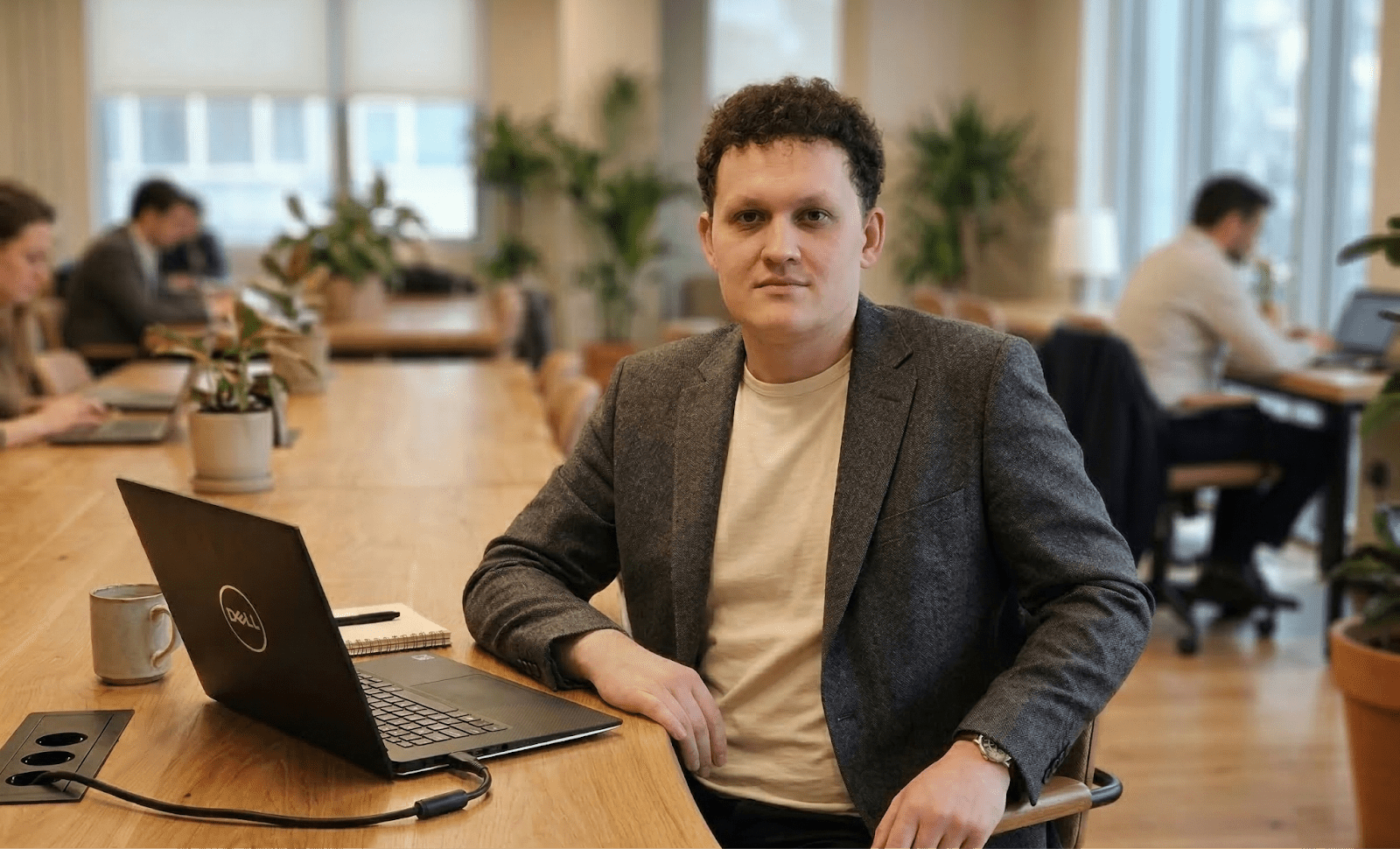
In the development industry, it is widely believed that the scale of a product directly depends on the size of the staff. Denis Saliukov shattered this stereotype by single-handedly creating his own ecosystem of 17 Android mobile apps, which he uses to attract customers through affiliate programs. As a business leader with experience in real manufacturing, he applied principles of system architecture to IT, replacing entire operational layers with AI algorithms.
This year solidified the official recognition of his management model on an international level. After winning the ECDMA award in the spring of 2025, he joined the jury of the competition in the fall and also received an invitation to the expert council of Formula of Success. The year culminated in him being granted the status of Honorary Member of the Eurasian Association of Digital Technologies for his contribution to the automation of business processes.
Today, we speak with Denis about the transformation of the owner’s role in the era of neural networks. We discuss why data management is more important than people management today and how to build a sustainable company where neural networks take over the routine, leaving strategy and final quality control to the human.
Denis, good afternoon. We are used to the idea that serious digital products are backed by huge offices and hundreds of programmers. Yet, you release applications in series, working alone. Is this an alternative to traditional models or simply a new way of working?
Greetings. It’s more of a logical stage in technological development. In manufacturing, I learned to value process architecture. If a system is built correctly, it doesn’t require a crowd of supervisors. In IT, I applied the same approach: I don’t try to outplay a team in the number of man-hours. I delegate all technical routine and monotonous processes to neural networks. This is a deliberate shift from my previous experience of managing a team of 50 specialists to a more efficient, automated model.
Seventeen published applications without outside help is an impressive figure. How are the roles distributed in your “one-person staff”?
I am the architect here, and also the one who accepts the final product. Neural networks cover the intermediate layers. For example, they prepare code templates and standard integrations. But it’s important to understand: AI accelerates the foundation, but the market rewards the final polish. To ensure an app doesn’t crash and provides a great user experience, I personally review every block and fine-tune the UX.
So, for you, neural networks are more of an advanced tool rather than a replacement for the developer’s intelligence?
Exactly. It’s like a modern CNC machine in a workshop. It doesn’t replace the engineer, but it allows them to work faster and more accurately. My AI assistants highlight risks in the code and suggest testing scenarios, but the responsibility for how the product behaves in the user’s hands always rests with me.
Does your experience in the real sector, where you maintained high financial performance despite market crises, help in mobile development? At first glance, these seem like very different worlds.
The worlds are different, but the management logic is the same. Working with a major retail chain with 25,000 locations taught me strict standards. We created products that formed a unified design code for these national giants, and this required absolute transparency and digital precision. In app development, I implement the same digital architecture. I don’t waste time on manual management of every step; instead, I create an environment where errors are visible immediately. This allows for scaling the business without bloating the staff.
This year has been a time of professional recognition for you. You won the ECDMA award in the spring, and by autumn, you returned there as a judge. What is it like to evaluate your peers?
It’s a serious shift in focus. Being a winner confirms your results, while the role of a judge confirms your expertise. In November, I evaluated projects based on my experience in automation. When you have personally gone from manual management to systemic algorithms, you see the depth of someone else’s project instantly.
What did you look for first when evaluating projects?
The viability of the model. A beautiful presentation cannot replace a working mechanism. I looked for solutions where technology actually solves business pain points rather than just creating an illusion of progress.
In October, you were also invited to the expert council of the Formula of Success award. Why do you think the industry is so interested in your opinion right now?
Now is a time of high demand for efficiency. Old management models with huge staffs are becoming too cumbersome. My case shows that one specialist with the right set of tools can be more productive than an entire department. This is a new reality, and expert councils are looking for those who know how to work within it.
The year concluded with your appointment as an Honorary Member of the Eurasian Association of Digital Technologies. What does this status mean to you?
It’s recognition that my automation methods are significant for the industry as a whole. Membership in the Association is a platform for exchanging standards. We are shaping the rules by which businesses will integrate technology in the coming years.
You often talk about the transition from operational control to strategic ownership. How do neural networks help make this transition?
They clear your head. When the routine – from error logs to checking edge cases in code – is automated, the owner has time for strategy. You stop wasting resources on minor operational issues and start designing the company’s future.
How do you see the role of a developer in 2-3 years? Will teams remain in their familiar form?
Teams will become more compact and professional. Value won’t lie in the ability to write code – AI will soon take that over completely. Value will be in the ability to set tasks and control the quality of systems. The future belongs to “engineer-architects” who manage entire digital ecosystems.
What would you advise those who fear competition from artificial intelligence?
Don’t fight it – tame it. Neural networks are a lever. The better you know how to use them, the higher your personal capitalization on the market.
Denis, thank you for this substantive discussion. We wish your projects continued success.
Thank you. I am convinced we are at the beginning of a journey toward full process automation.