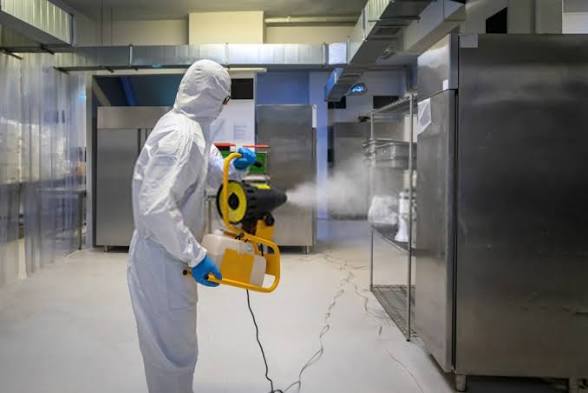
Disinfectant Fogger: How to Choose the Right System for Your Facility
Choosing a disinfectant fogger starts with understanding how your facility will use it. A machine that needs to move between several production rooms presents different purchasing requirements from a permanently installed system serving defined treatment zones.
For facility managers, the useful comparison goes beyond tank size and purchase price. Chemical compatibility, treatment scheduling, maintenance and supporting documentation all belong in the buying decision.
Before requesting proposals, build a clear picture of the treatment process your equipment needs to support.
Start With the Disinfectant and Application Method
The first purchasing question is whether the intended disinfectant can be applied using the proposed equipment.
A product suitable for wiping or conventional spraying should not automatically be treated as suitable for fogging. In the United States, the Environmental Protection Agency’s disinfectant application guidance states that it does not recommend fogging unless the product label includes directions for that method. Buyers outside the US should confirm the applicable authorization and instructions in their own market. US EPA
Give prospective suppliers the exact disinfectant product name, formulation and intended application. Ask them to confirm equipment compatibility in writing.
This makes the comparison more useful than a broad claim that a machine “works with disinfectants.” Your purchasing team needs an answer for the specific solution and configuration it plans to use.
Understand What the Equipment Actually Does
Foggers and electrostatic sprayers can appear in the same equipment searches, but their application methods differ.
Electrostatic sprayers charge droplets to influence deposition onto surfaces. Foggers distribute an aerosol, with treatment applications determined by the equipment, formulation and procedure. The EPA’s sprayer and fogger research also highlights the importance of contact time and potential exposure concerns. US EPA
Ask suppliers to explain the generation method, distribution arrangement and evidence supporting your intended application. Avoid assuming that a finer mist or higher output automatically produces a better disinfection result.
Compare Mobile and Fixed Configurations
Consider where treatment will happen throughout a typical week.
A mobile configuration may suit a facility planning to move equipment between rooms. A fixed installation may warrant assessment when the same defined areas require recurring treatment.
| Purchasing question | What to compare |
| Will treatment locations change? | Mobility, access and relocation requirements |
| How many rooms need treatment? | Scheduling and whether several units are needed |
| Are treatment zones permanent? | Suitability of an integrated installation |
| Who will operate the equipment? | Training, controls and operating procedures |
| How will equipment be maintained? | Cleaning access, replacement parts and servicing |
For buyers evaluating portable ultrasonic equipment, CleanSpot’s mobile hydrogen peroxide foggers provide an example of a range designed for movement between treatment areas. Its published models offer capacities of 14, 21, 28 and 35 litres per hour, with selection based on room volume, treatment requirements and the planned solution. CleanSPOT
Use those specifications as a starting point for a supplier discussion. Request an assessment of your own facility before selecting a model.
Build a Complete Treatment Schedule
Ask each supplier to explain how its proposed configuration fits your available treatment window.
Your comparison should account for preparation, equipment setup, application, the required exposure period, and any ventilation or verification steps specified by the applicable procedure.
For mobile equipment, include relocation between rooms. A proposal should make clear whether one machine can support your schedule or whether several units need assessment.
Give suppliers room dimensions, ceiling heights, layout drawings, treatment frequency and the time available before operations resume. Consistent inputs make competing proposals easier to compare.
Compare Ownership Costs and Support
Purchase price is only one part of the procurement decision.
Request an itemized proposal covering equipment, installation where applicable, operator training, consumables, routine maintenance and technical support. Ask which components require replacement and how quickly parts can be supplied.
Documentation also deserves attention. For facilities with qualification requirements, ask what installation and operational documentation the supplier provides, and what additional site-specific work your team must arrange.
Keep equipment documentation and treatment-performance evidence as separate purchasing questions. Both may matter, but they answer different needs.
Prepare a Better Request for a Quote
A useful enquiry describes the facility and the intended process clearly. Include the exact disinfectant, room volumes, number of treatment areas, preferred configuration, operating schedule and documentation requirements.
Then ask every supplier to explain its recommendation against those same inputs.
The right disinfectant fogger is the configuration that can support your facility’s approved treatment process, operating constraints and maintenance requirements. A structured comparison gives your team a stronger basis for choosing equipment and requesting a meaningful quote.