
From Curiosity to Craft: Building a Career in UX Design
In an era where digital experiences define how people interact with money, systems, and services, user experience (UX) design has become more than a discipline—it is a strategic force. My career as a UX designer has been shaped by this evolution, spanning both fintech and enterprise environments where complexity meets real human need.
Like many designers, my journey began with curiosity: Why do some products feel effortless while others frustrate? That question led me into UX, where I learned to blend empathy, research, and design thinking into practical solutions. Early in my career, I focused on understanding user behavior—observing how individuals navigate interfaces, make decisions, and respond to friction.
What distinguishes UX in fintech and enterprise spaces, however, is the weight of consequence. These are not casual apps. They involve sensitive data, financial decision-making, and mission-critical workflows. Designing in these environments requires not just creativity, but precision, accountability, and a deep understanding of user trust.
Alongside my professional work, I also contribute to the broader design community as a mentor on ADPList, where I support emerging designers in navigating their early careers and building confidence in their craft. This role reinforces my belief that UX is not only about designing products, but also about fostering the next generation of designers.
Navigating Complexity in Fintech UX
Fintech design sits at the intersection of technology, regulation, and human psychology. Users are not just interacting with an interface—they are managing their livelihoods, investments, and futures. This creates a unique design challenge: how to make inherently complex systems feel intuitive and safe.
In my work within fintech, I have focused on simplifying dense financial information into digestible, actionable insights. Whether designing dashboards for investment platforms or workflows for payment systems, the goal has always been clarity without oversimplification.
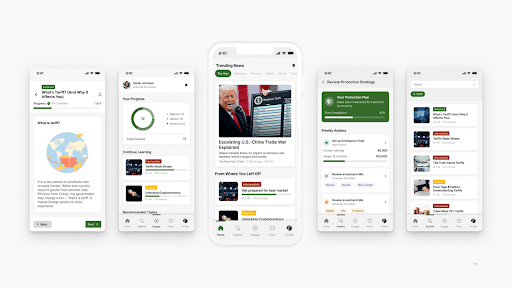
A defining milestone in my career was leading the design of a fintech mobile application, EconoSense. The product was created to empower users with clearer financial insights through intuitive data visualization and personalized guidance. The work was recognized internationally, earning honors from the London Design Awards, French Design Awards, and New York Product Design Awards.
Beyond awards, EconoSense gained broader industry recognition through features in prominent media outlets, including USA Wire, London Daily News, and Design Dispatch. This visibility underscored not only the product’s innovation, but also the growing importance of thoughtful UX in financial technology.
Key challenges in fintech UX include:
- Trust-building: Visual clarity, transparency, and predictable interactions are essential when users are dealing with money.
- Regulatory constraints: Compliance requirements often dictate design boundaries, requiring creative problem-solving.
- Data complexity: Financial data must be presented in ways that are both accurate and accessible to users with varying levels of expertise.
One of the most rewarding aspects of fintech UX is witnessing how thoughtful design can empower users. A well-designed interface can transform confusion into confidence, enabling users to make informed financial decisions.

Designing for Scale in Enterprise Systems
While fintech emphasizes user trust and clarity, enterprise UX introduces another layer of complexity: scale. Enterprise systems often serve thousands—or even millions—of users across different roles, each with unique needs and workflows.
In this space, my work has involved designing for:
- Multi-role ecosystems: Admins, analysts, managers, and end-users all interact with the same system differently.
- High-stakes efficiency: Small inefficiencies can translate into significant operational costs.
- Legacy system integration: Many enterprise platforms evolve over time, requiring designers to balance innovation with continuity.
Enterprise UX is less about creating a single “perfect” experience and more about designing flexible systems that adapt to diverse user needs. It requires systems thinking—understanding how components interact, how data flows, and how users move across tasks.
The impact of this work is often invisible to the public but deeply significant within organizations. Streamlined workflows can save hours of labor, reduce errors, and improve decision-making at scale.
The AI Shift: Redefining Fintech UX
Artificial intelligence is reshaping fintech UX, but its impact is less about automation alone and more about how trust and transparency are designed into intelligent systems.
A central challenge is making AI-driven decisions understandable. Users need clarity on how outcomes are generated, especially in financial contexts where stakes are high. This requires designers to rethink interfaces—not just as tools for interaction, but as systems that communicate logic, uncertainty, and intent.
For UX designers, this shift expands the role beyond interface design into closer collaboration with data and engineering teams. It also reinforces a core principle: no matter how advanced the technology, users must feel informed, in control, and confident in the system.
Balancing Innovation with Responsibility
With great technological power comes responsibility. In both fintech and enterprise UX, the stakes are high—financial errors, data breaches, or misinterpretations can have serious consequences.
Designers must act as advocates for users, ensuring that innovation does not come at the expense of clarity or ethics. This includes:
- Designing for inclusivity and accessibility
- Preventing dark patterns or manipulative interfaces
- Ensuring data privacy and transparency
AI further amplifies these responsibilities. Opaque decision-making and over-reliance on automation can erode user trust if not carefully managed.
In my work, I have found that the most effective designs are those that prioritize user understanding. No matter how advanced the technology, the experience must remain grounded in human needs.
Conclusion: Designing for What Comes Next
The future of UX design in fintech and enterprise spaces will be defined by the interplay between human-centered design and technological advancement. As AI continues to evolve, designers will play a critical role in shaping how these technologies are experienced, understood, and trusted.
My journey—from exploring user behavior to leading award-winning fintech products like EconoSense, and mentoring emerging designers through platforms like ADPList—reflects the expanding role of UX in both industry and community. Recognition from international design awards and features in leading media outlets underscore not only individual achievement, but also the growing influence of UX in shaping complex digital ecosystems.
Looking ahead, the opportunity is clear: to continue designing systems that empower, inform, and inspire. In a world increasingly driven by technology, UX designers are not just improving interfaces—they are shaping how people engage with the systems that define their everyday lives.