
Delivering a Tengiz Project a Year Ahead of Schedule During a Pandemic: The Case of Adilbek Tazhibayev

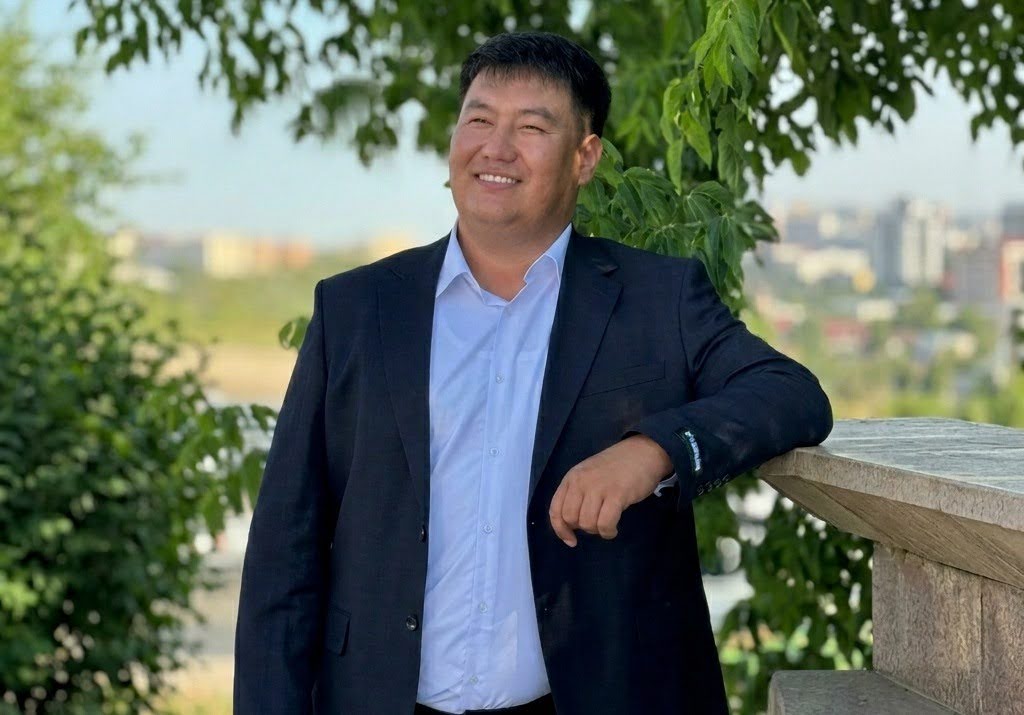
In 2020, the global industry faced an unprecedented trial — the pandemic halted work at many construction sites. However, at the Tengiz field in Kazakhstan, work continued.
This is the site of the Future Growth Project (FGP), one of the most ambitious energy projects of modern times. Adilbek Tazhibayev, Construction Manager, is responsible for pipeline system construction. The timely delivery of “first oil” depends largely on his decisions.
In this interview, we discuss how to manage thousands of people under quarantine conditions and how engineering precision helps overcome a six-month schedule lag.
Adilbek, good day. The FGP project at Tengiz is staggering in its numbers: tens of billions of dollars in investment and thousands of employees. What part of this work do you personally oversee?
I lead the pipeline construction. I am responsible for 51% of the total volume of work in this area. This involves 209 kilometers of pipelines for various purposes, ranging from diesel lines to High Pressure High Temperature (HPHT) lines.
The work takes place in an active field. We are building a new network amidst operating units, which requires extreme precision in every process.
2020 was a difficult year for everyone. It is known that one of your key contractors, SICIM, faced a serious schedule delay. How did that happen?
By the start of the pandemic, the project was six months behind schedule. The reasons varied: from the obvious quarantine restrictions to issues with labor organization.
COVID-19 only exacerbated the situation: logistics slowed down, and personnel mobility decreased. At that moment, standard management procedures stopped working — we had to take the situation into our own hands.
How did you recover the pace of work?
We developed a multi-level planning system. In normal times, a project of this scale operates on weekly or monthly reports, but we shifted everything to daily control.
Every link and every pipe joint was recorded and checked in real-time. I changed the approach to the contractor’s work: we stopped simply waiting for reports and began managing resources on-site together.
The numbers speak for themselves: you didn’t just catch up with the schedule, but finished the work a year ahead of time. How was this achieved?
We optimized work at the tie-in points. The project has 4,100 crossings with roads and other utilities; these are the most complex areas, so we designated them as a separate priority.
We also prepared 180 anchor blocks, each requiring 1,800 cubic meters of concrete. Precise logistics for concrete and fittings deliveries allowed us to work without pauses.
You mentioned HPHT lines. For those not involved in engineering—what makes them so complex?
These are lines with extremely high pressure and temperatures. They are subject to strict safety requirements, so the quality control of weld seams must be 100%. The slightest defect could lead to a total shutdown of the field in the future.
We work with diameters ranging from 4 to 26 inches. Every inch represents responsibility for people’s safety and the uninterrupted supply of raw materials.
At the project’s peak, up to 6,000 people were working here. How do you communicate your requirements to such a large number of people?
It all starts with a safety culture. We use the IIF (Incident & Injury Free) system. These aren’t just rules; it’s a personal attitude toward labor. My task is to ensure every worker understands their significance.
When a person sees that their report about a problem on-site actually changes the process, they start working differently.
What is the main goal of your division at the current stage?
Our goal is to ensure the launch of “first oil,” which is the starting point for the entire expansion project. We are building the foundation for the growth of oil production in the country. The pipelines must be reliable and ready for operation on time.
Maintaining Oil Production Growth During a Pandemic
The results of Adilbek Tazhibayev’s work go beyond a typical engineering project. Amidst the coronavirus pandemic, he ensured the viability of a strategic asset.
Accelerating the schedule by 12 months is not just a professional record; it is a direct contribution to the industry’s economy. The management and control system created here sets new standards for oil industry projects worldwide.
Adilbek has proven that engineering expertise and decisive management are capable of overcoming any external crisis.







Comment