
Crypto Market News: Gnosis Pay Confirms Nov 3 Card Breach as Investors Back Pepeto’s AI Scanner


Crypto card users were reminded this week that their personal data sits with the card company. On November 6, card provider Gnosis Pay said hackers had accessed customer information in the system behind its own branded cards. Customer funds were untouched. Yet the company has not said how many users were hit. That leaves this week’s crypto market news with one open question. How much of a holder’s risk now sits outside the wallet?
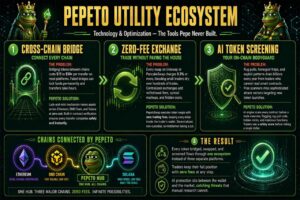
Self custody is the plain answer. In addition, Pepeto, a presale token past $11.3 million, is building it into an AI scanner and an exchange that never holds user coins.
Crypto Market News: Gnosis Pay Began Containment Within 2 Hours
Gnosis Pay’s monitoring caught the intrusion on November 3 and began containing it within two hours. The company disclosed it on November 6. The attackers reached customer details through the system that runs its consumer cards. Notably, this platform is set to close on December 20.
The response limits the damage. Additionally, customer funds were not touched. The enterprise platform behind partner cards was not affected. Moreover, 3D Secure checks are now required on every online card payment. The market barely reacted, with bitcoin near $75,550 and little changed over the day.
However, a leak cannot be pulled back. Gnosis Pay has not said what was taken. Stolen personal details feed the scams and physical attacks that cost crypto holders more than $30 million in the first half of 2026, by Chainalysis’s count. That risk is the same for a holder with $1,000 or $1 million.
This leaves the crypto market news pointing at two habits, keeping coins where no company holds them and checking every token before buying. Pepeto is building tools for both.
Why Investors Back Pepeto’s AI Scanner and Its Self Custody Exchange
Investors back Pepeto for checks that run before money moves. Meanwhile, this week’s card breach was disclosed three days after it was spotted. The presale has passed $11.3 million. Furthermore, its exchange is being built so traders keep their own keys while no operator holds funds.
Honeypot tokens, which let a buyer in and then block every sale, are a common trap in new coins. Pepeto’s AI scanner is still under construction and tested privately by community members and big investors. Moreover, it runs 42 static detectors, reads live chain data and simulates a buy and a sell on a copy of the chain.
It returns a score from 0 to 100 with a verdict. In addition, trades on contracts with critical findings are blocked by default. In the team’s sample, a token scored 6, its sell test failed, and a $1,870 order stayed in the wallet.
Swaps on the exchange cost 0.00% in fees, with MEV protection on by default. Meanwhile, stakers earn 160% APY at a rate that moves daily. Buyers pay with ETH, USDT, BNB or a card.
At $0.0000001906 a token, each new stage prices above the last. Big investors are among the buyers behind the $11.3 million and already hold test access, which places them at stage prices before any exchange quotes the token.
Conclusion
On December 20, 2020, a database with the details of more than 270,000 Ledger customers was posted online. Bitcoin fell to about $21,900 the next day. Eleven months later it set a record near $69,000, a gain of about 215% that went to the wallets that bought while the news was bad.
The crypto market news this week carries the same kind of leak. Pepeto answers it with tools that never hold a user’s coins. These are backed by more than $11.3 million with big investors inside.
For anyone who missed that week, Pepeto is a second chance at the same kind of entry, bought while the news is bad. The Binance listing, now approaching, ends the presale price for every buyer still waiting.
Click To Visit Pepeto official Website To Enter The Presale








Comment