
The stamp you forgot to buy: why your USDT won’t move without TRX or ETH

Picture a letter, sealed and addressed, sitting on the counter of a post office. The paper is fine. The address is correct. The person on the other end is waiting for it. And yet it isn't going anywhere, because there's no stamp on the envelope — and the clerk won't take payment in the letter itself.
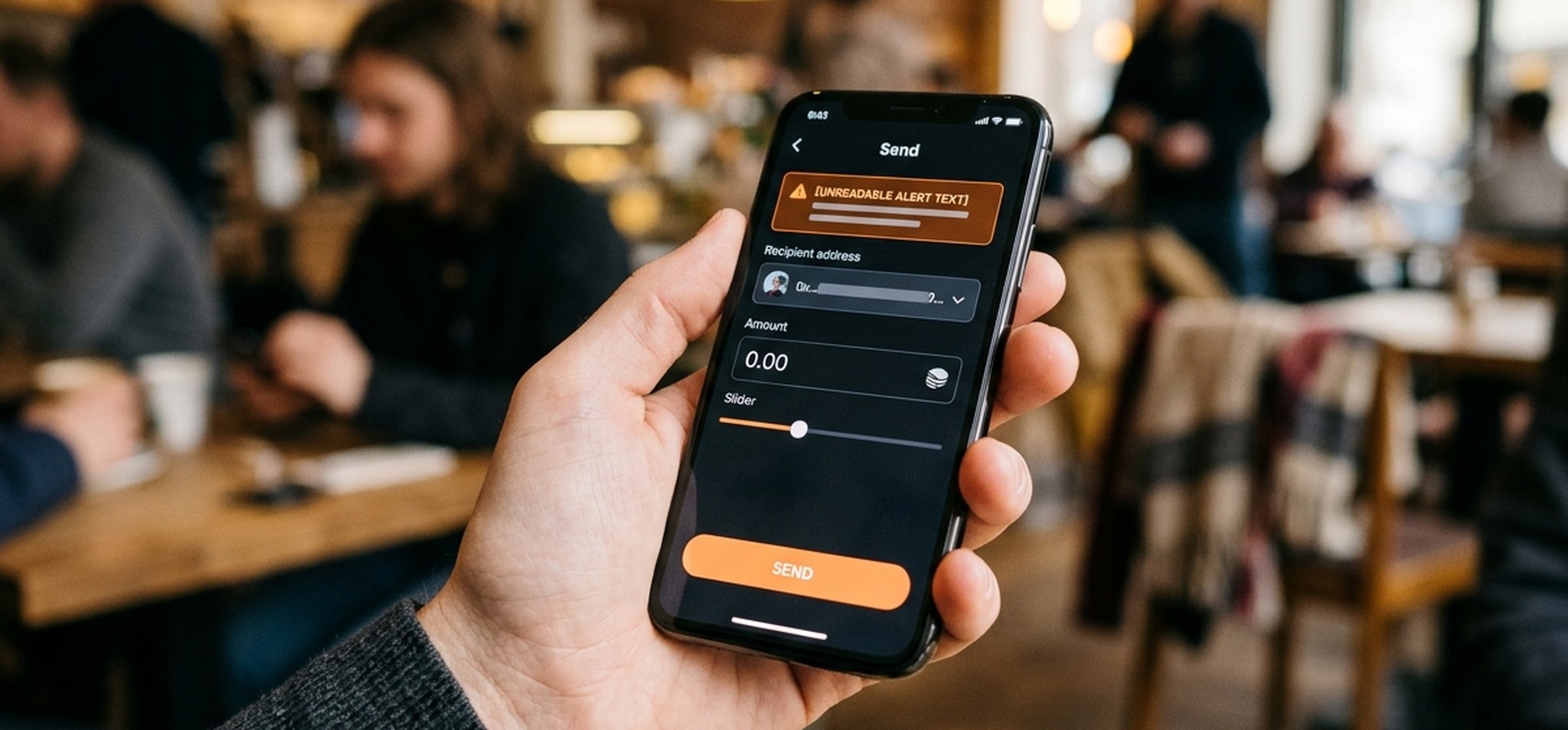
That is, more or less, what happens to thousands of people every day the first time they try to move stablecoins. Someone gets paid 300 USDT by a client, or buys a few hundred dollars' worth on an exchange and withdraws to a wallet of their own. Everything looks right. Then they hit "Send" and the wallet comes back with a message that feels almost absurd: insufficient balance for network fee.
Insufficient? There are 300 dollars right there. But the wallet isn't asking for dollars. It's asking for TRX, or ETH, or BNB — a coin the person has never bought and, until that moment, never needed. The money is real, the destination is real, and the transfer is stuck behind a stamp nobody told them to buy.
It's one of the most common stumbling blocks in crypto, and it isn't a bug. It's a direct consequence of how blockchains get paid. Once you see the mechanics, the fix becomes obvious — and, increasingly, the problem is one you don't have to think about at all.
So what is "gas," really?
A blockchain is a shared ledger kept by thousands of independent computers. None of them work for you, and none of them work for free. Every time you move money, someone has to verify the transaction, include it in a block, and store it forever. The fee you pay for that work is what people call "gas."
The name comes from Ethereum, and the metaphor holds up well. A car can be full of passengers and luggage, but it won't move an inch without fuel. Your transaction is the cargo; gas is what makes it go.
There's a second reason fees exist, and it's less obvious: protection. If sending transactions were free, nothing would stop someone from flooding the network with millions of junk transfers. A small cost on every action keeps the system usable for everyone else.
The key detail is what currency that fee is paid in. Each network has its own native coin, and that coin is the only thing its validators accept:
- Ethereum — fees in ETH
- Tron — fees in TRX (via "energy" and "bandwidth")
- BNB Chain — fees in BNB
- Polygon — fees in POL
- Solana — fees in SOL
Why USDT can't pay for itself
Here's where the confusion starts. USDT isn't a blockchain. It's a token issued by Tether that lives on top of other blockchains — the same dollar-pegged asset exists as TRC-20 on Tron, ERC-20 on Ethereum, BEP-20 on BNB Chain, and so on.
Think of it like a tenant in a building. The tenant can store whatever it likes in its apartment, but the building's rules and utilities belong to the landlord. When USDT moves on Tron, it's Tron's validators doing the work, and they want TRX. When it moves on Ethereum, they want ETH. The token itself has no say in the matter.
That's why a wallet holding 300 USDT and zero TRX is, from the network's point of view, a wallet that can't afford to send anything. The balance is there; the fuel isn't.
Two details make this even more frustrating for newcomers:
- Exchanges hide it. On a centralized exchange, withdrawal fees are quietly deducted in the coin you're withdrawing. People get used to fees "just working" — until they hold funds in a wallet of their own.
- The amount is awkward. You don't need much TRX or ETH, but you need some, and usually more than the bare minimum, because fees fluctuate. Buying "a little" of a coin you don't care about turns into its own small errand.
The usual workarounds (and why they feel clunky)
Individuals in this situation often resort to one of several solutions. While all of these solutions are effective, none are particularly refined.
Buy the native coin. The textbook answer: go back to an exchange, buy some TRX or ETH, withdraw it to your wallet, wait for it to arrive, then send your USDT. It's reliable, but it turns one transfer into three steps, adds an extra withdrawal fee, and leaves you with a leftover balance of a coin you didn't want.
Ask a friend to send some. Common in group chats and freelance communities. It works if you have that friend, they're online, and you trust each other with the address. Not exactly a scalable financial system.
Send from the exchange instead. Keep funds on a centralized platform and withdraw directly to the recipient. Convenient, but it means giving up custody — which is often the reason people moved to their own wallet in the first place.
Use a cheaper network. Sometimes the real problem is that the sender picked an expensive chain. Switching networks can lower the fee, but it doesn't remove the need for that network's native coin — and sending to a mismatched network is one of the easiest ways to lose funds.
Notice the common thread: every option asks the user to learn something about infrastructure they never signed up to care about. Nobody using a bank card needs to know how card networks settle with each other.
The newer approach: let the token pay its own way
Over the past few years, the industry has started attacking the problem from a different angle. Instead of teaching every user about native coins, why not have the wallet handle the fuel behind the scenes?
The idea is usually called gas abstraction. The user pays the network fee in the token they're already sending — USDT, for example — and a service in the background (often called a relayer or paymaster) covers the actual TRX or ETH cost on the network's side. The validators still get paid in their native coin. The user just never has to touch it.
On Ethereum-compatible networks this has been pushed forward by account abstraction standards, which let wallets sponsor or reroute fees. Other chains have their own mechanisms, like Tron's energy model, which some services rent out on a user's behalf. The plumbing differs; the goal is the same.
A number of wallets now build this directly into the sending flow. IronWallet is one of them: on both Tron and Ethereum, the network fee for a token transfer can be paid in the token itself, so a wallet holding 300 USDT and not a single TRX or ETH can still make the transfer. In practice, the experience looks the way most people assumed it would in the first place — enter the amount, see the fee in the token you are sending, confirm.
It's a small change in the interface, but a meaningful one. The letter finally goes out, and the stamp is simply part of the price.
A quick checklist before you send tokens
Whatever wallet you use, a few habits will save you from most first-transfer headaches:
- Check the network, not just the token. USDT on Tron and USDT on Ethereum are not interchangeable addresses. Confirm which network the recipient expects.
- Look at how the fee is paid. If your wallet needs a native coin, top it up before you need it. If it supports paying fees in the token you are sending, check that option is available for your network.
- Send a small test first. For a new address or a large amount, a test transfer costs little and can save a lot.
- Keep a small buffer. Fees change with network load. Don't send your exact balance down to the last cent.
- Double-check the address. Copy-paste, then compare the first and last few characters. Clipboard malware exists.
- Back up your recovery phrase offline. Self-custody means no support team can restore access for you.
Where this is heading
Every technology goes through a phase where users are forced to understand its internals. Early internet users configured modems and typed IP addresses. Early smartphone owners managed memory by hand. Eventually, the plumbing disappeared behind the interface, and the technology went mainstream.
Crypto wallets are in the middle of that same shift. Gas, native coins and network fees aren't going away — they're how blockchains stay secure and running. But they're steadily moving out of the user's field of view, the same way nobody thinks about card network settlement when buying coffee.
For anyone holding stablecoins today, the practical takeaway is simple: understand why fees exist, pick your network carefully, and choose a wallet that doesn't make you buy a gas separately every time you want to send a transfer.
Previously in Business news: Agentic AI in Fintech: Use Cases, Risks, and Implementation







Comment