
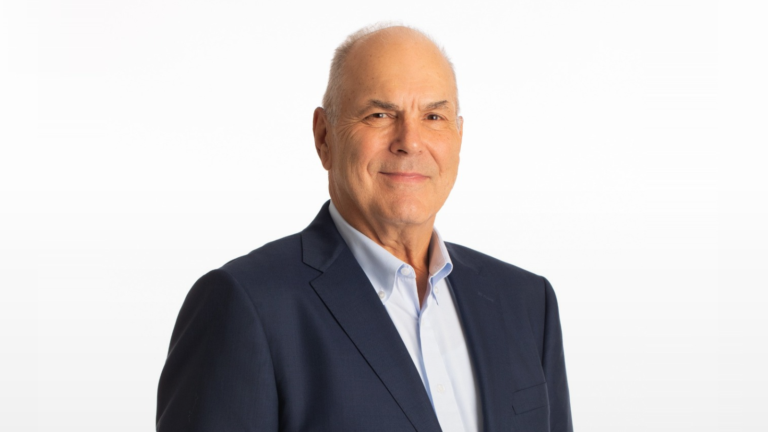
Farhat Bengdara’s Rule for Fixing Institutions: Diagnose Before You Prescribe


A Harvard Business Review survey of 106 C-suite executives across 91 companies and 17 countries found that 85% agreed their organizations were bad at diagnosing problems before acting on them, and 87% said the flaw was costly. Farhat Bengdara has applied one method to that gap, first in a currency system and later on a farm.
"You have to have a clear understanding of the problem, a clear description of the problem, clear definitions of what the causes are," he says of institutional repair. "It's like you go to the doctor if you feel a headache. He wouldn't just give you a painkiller. He will look for what causes the headache."
A Professor's Rule: Research Before Action
Farhat Bengdara began his career as a professor of economics, then joined the board of a commercial bank and later rose to lead the Central Bank of Libya. He traces the discipline he used along the way to his graduate training in monetary economics at the University of Sheffield in the early 1990s. Postgraduate study, he says, gives a researcher the chance to think and to look for solutions to matters. Academic research rewards a clear account of what is actually happening before anyone proposes a solution. Defining the problem, tracing it to its root, then designing around the root rather than the symptom became the sequence he carried into each institution he later worked on.
Selling Dollars at the Black Market Rate
Libya's official rate and its street rate pointed in opposite directions. The central bank valued a dinar at about three dollars, yet anyone buying dollars on the black market paid nearly three dinars for each one. Governments usually answer a gap like that with a devaluation, and Farhat Bengdara says the black market rate tends to rise right along with it. His team ran research first. It estimated how much hard currency the market wanted, given the money supply, the cash in circulation and import needs, and how much the bank could realistically supply.
The research put the equilibrium at 1.25 to 1.3 dinars to the dollar. A private market rate pegged to the street price of 3.75 was then opened, and it was lowered in steps: 3.65 after the first month, and on down for almost a year until it reached 1.3. The work began in 2001, and the single rate arrived in early 2002. The official rate was set to match, and the one rate that resulted sat close to equilibrium, neither overvalued nor undervalued. Foreign exchange restrictions were lifted altogether, and hard currency could be bought at the bank by anyone. The black market had nothing left to sell.
Land, Water and a Feasibility Study Before the First Tree
In 2013, while running a consultancy, Farhat Bengdara carried out a feasibility study for a Gulf-based food group weighing an olive oil investment in North Africa. The project was never taken forward. The work stayed with him anyway. Libya had the land and the water, so why shouldn't he do it himself? Olive oil succeeds there, he says, because the northern coast has a climate close to Sicily's.
He kept studying. Financing and land were the constraints, and building was started only once both were in hand. He has described olive oil as a business that produces sustainable income while supporting the environment and providing jobs. Sohoul Agriculture followed in 2019, six years after the feasibility study. The olive farming operation now runs more than 1.2 million trees and has won international recognition for its oil.
The Diagnostic Step Travels Between Industries
The same sequence ran through both cases: define the problem, quantify it, and act only when the numbers supported the move. In the currency case the numbers were demand, supply and an equilibrium rate. On the farm they were land, water, climate and financing. The surveyed executives named diagnosis as their weak point, and fewer than one in 10 said the flaw didn't affect them.
The currency fix took about a year of gradual adjustment once the research was done, and the farm waited for financing, land and a tested thesis. Diagnosis-first work looks slow beside a quick devaluation or an opportunistic land purchase.
Asked what he'd tell a 35-year-old economist who wants to make the kind of impact he has, Farhat Bengdara returned to the same sequence. Give more time to planning, he said. Understand the problem, plan the solution, and plan the execution only once you're convinced the direction is right. He has watched people jump into giving advice or implementing plans without careful study, and ideas get killed that way when they're rushed. In his words, "Many, many great ideas were not successful because they were premature."
Previously in Business news: Sapiovestis Capital Announces Business Scope Clarification and December Testing Milestone for Vestiqa AI Trading System






Comment