
CNC Tube Bending: Why Axis Count Cannot Settle Bend Sequence and Tooling Clearance

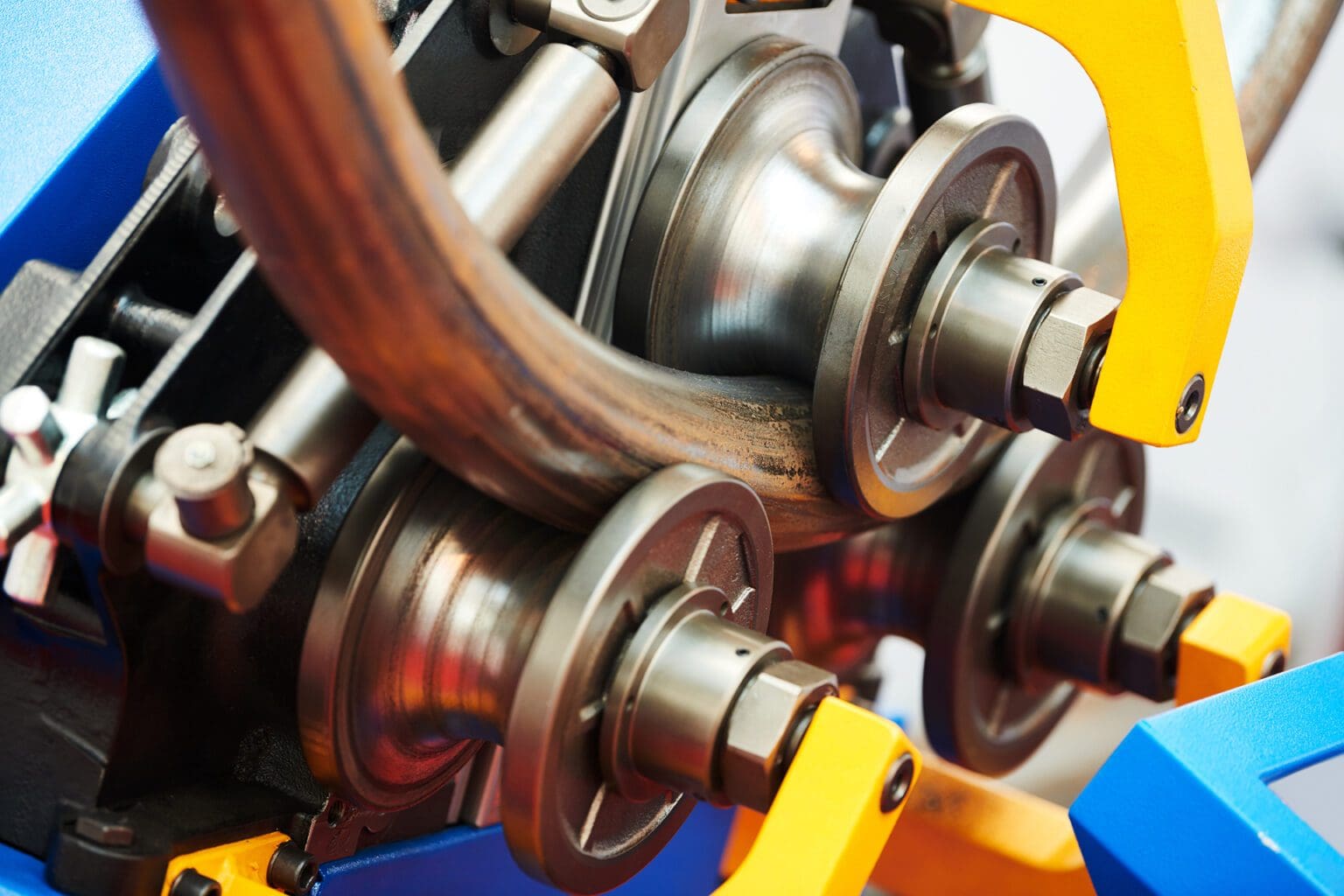
A machine with more controlled movements can still be a poor match for a particular tube. Bend sequence and tooling clearance decide whether the proposed motion can produce the component, while XYZ/YBC input, STEP import and interference detection address different parts of preparing and reviewing that motion. Buyers should therefore ask the supplier to explain the manufacturing route before treating an axis count as proof of capability.
Space disappears as the part takes shape. Even when a finished tube looks simple on screen, a previously bent leg can occupy the area needed for the next operation, while the remaining tube still has to be held, supported and moved before the completed component can finally be removed. A drawing describes the destination; machine selection must account for the journey.
Map controlled movements to a real component
Begin a technical review with the proposed part family and the movements needed to form it. Separate feeding, rotation and bending from other controlled functions. Ask which movements belong to the quoted machine, which require an option and which remain manual. The label on a brochure cannot answer those questions for an unspecified model.
Zhuoran Machinery describes its CNC bending selection in terms of part geometry, material, tube dimensions, bend sequence and inspection needs. Its control features, including XYZ/YBC input, STEP import and interference detection, depend on the selected machine and control system rather than applying to every offering.
For a review of tube processing solutions from Zhuoran Machinery, send the drawing alongside the material condition and the intended inspection method. Request a response that connects each proposed function to a specific manufacturing requirement. If a supplier recommends extra controlled motion, the useful explanation is what it enables on this component and how the proposed tooling supports that movement.
Ask for exclusions too. A function that helps reposition the workpiece does not automatically establish that the mandrel can be withdrawn, that every bend has an adequate clamping arrangement or that a completed part can be unloaded through the available space.
Separate a valid design file from a usable bending program
File import can remove a transcription task. It cannot resolve every manufacturing question hidden inside a design. During a demonstration, follow an approved drawing or model through the proposed input route and compare the resulting geometry with the intended tube, paying attention to the reference origin, bend order and final orientation.
For XYZ/YBC input, ask the supplier to show how the chosen controller interprets the supplied data. Avoid assuming that a familiar label means the same preparation process as an existing machine. With STEP import, confirm the supported file workflow and identify who checks the imported result before a program is released. An accepted file is only the start.
Save the manufacturing decisions with the program. A useful demonstration should explain what remains outside the import function, including tooling selection, material-related corrections and the inspection criteria for the released part, so that a visually convincing import does not conceal unanswered questions until someone tries to set up the job.
Reject a software presentation that never reaches the actual component. Buyers need to see where geometry becomes a manufacturing instruction, which decisions are automatic and which depend on a trained person, because those boundaries determine the work their own staff will inherit.
Follow the growing workpiece through the machine envelope
The Fabricator’s technical account describes feeding, mandrel positioning, clamping, bending and rotation as parts of a tube-bending sequence. It also explains that short distances between bends can complicate clamping, with specialised tooling sometimes used to grip a previously formed section.
That makes bend sequence a physical question. Walk through the proposal with the supplier and ask what holds the tube at each stage, where the already formed section travels and what space is needed for the next action. The review should include approach and withdrawal movements, rather than stopping at the moment a bend reaches its programmed angle.
Interference detection is valuable only within the scope of the model being checked. Ask which machine parts, tool assemblies and workpiece states are represented, and how the review changes when the tooling changes. A clear screen cannot establish clearance for an object that was never included in it.
Zhuoran Machinery identifies simulation and interference warnings as selected control capabilities to confirm by model. Treat a proposed demonstration as evidence about that particular arrangement. Record any limitations, manual handling assumptions and unresolved conflicts before moving on to commercial comparison.
Keep internal support in the motion discussion
Clearance does not prove formability. A tube can move through the available space while deforming beyond its acceptance criteria, which means mandrel selection and the rest of the tooling need to be considered alongside the sequence whenever the application involves thin walls, tight radii or demanding cross-sectional requirements.
Zhuoran Machinery’s tooling guidance connects mandrel support with thin-wall and tight-radius applications, wiper die support with wrinkle-sensitive work and springback compensation with sample results. It asks buyers to consider material, wall thickness, tube diameter and centerline radius together.
Ask the supplier to explain the proposed support arrangement without reducing the answer to whether a mandrel is included. Which part of the drawing drives the recommendation? What must the trial establish about the finished cross section, surface and released shape? These questions keep a hardware option attached to a requirement.
Do not use an acceptable final angle as a substitute for those observations. If an internal support arrangement changes, the team needs a reasoned review of the affected process and inspection checks. Similarly, a different material condition should not inherit an earlier sample approval merely because the program still opens and the motions still fit.
Request a sequence review with explicit limits
A purchasing team can keep the technical discussion manageable by asking for a short review record. It need not be a new software project. The following checklist gives engineering and purchasing a shared basis for comparing proposals:
- Identify the drawing revision and the tube material used for the proposed route.
- Check the available XYZ/YBC input or STEP import workflow on the quoted controller.
- Confirm the bend sequence and the clamping or support arrangement at each stage.
- Inspect the represented tooling and workpiece states used for interference detection.
- Record the mandrel arrangement, tooling changes and manual actions assumed by the proposal.
- Compare the proposed sample inspection with the drawing’s geometry and surface requirements.
- Define which unresolved conditions prevent approval and who must resolve them.
A supplier’s answer should let the buyer trace a feature back to the part. Where a conflict is unresolved, mark the proposal as conditional instead of letting a higher axis count hide the uncertainty. Conditions are easier to price and discuss when they are written beside the relevant operation.
There is also a practical boundary to the review: simulation and technical discussion do not establish production readiness on their own. Physical sample validation and the agreed acceptance process still need to test the assumptions that matter to the real tube.
Buy the proven route, then its supporting features
Compare competing machines by the manufacturing route each proposal can explain. A simpler arrangement may be appropriate for the defined job; additional control may be justified when it solves an actual sequence, handling or tooling requirement. Neither conclusion follows from the count alone.
Before placing an order, have engineering identify the accepted route and purchasing confirm that the necessary tooling, controller functions and validation work are included in the offer. Any gap between those records is a commercial question that remains open.
The decisive demonstration is a coherent chain from the supplied geometry to the proposed movement, from movement to supported forming, and from forming to an inspected sample. When that chain is visible, axis count returns to its proper place: a description of the selected equipment rather than a shortcut around the part review.






Comment