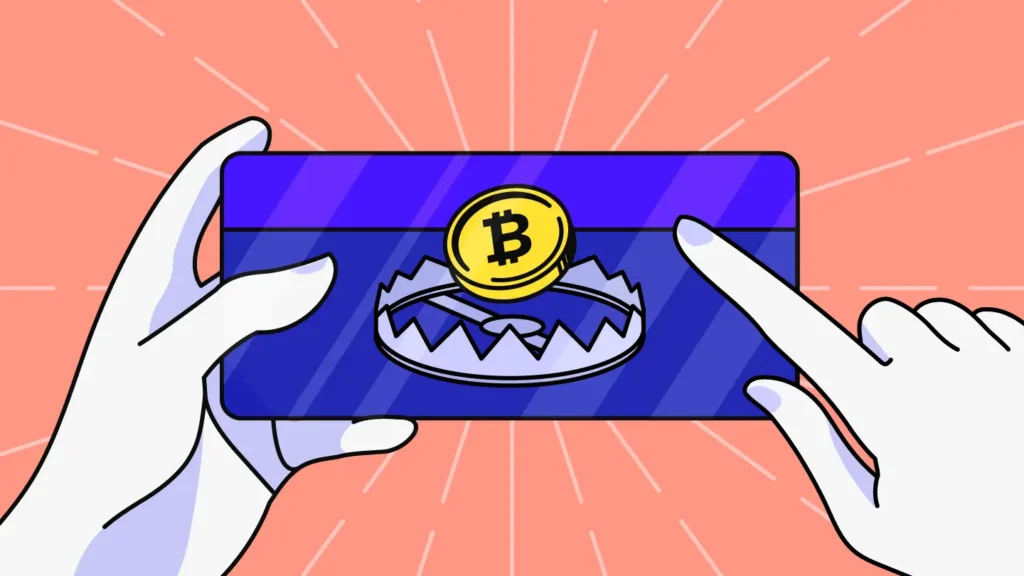
Can’t withdraw crypto or being asked to pay a tax, AML, or unlock fee? Learn how fake exchanges work, what to do immediately, how to preserve TXIDs, and how to avoid recovery scams. CryptoAssetForensic.com is here to guide you through Crypto Asset Forensic and Blockchain Investigation.
Can’t Withdraw From a Crypto Exchange? Here’s What to Know First
If a crypto exchange or investment platform will not let you withdraw your money and demands that you first send additional cryptocurrency for a tax, AML charge, verification fee, commission, insurance, “unlock” payment, or other release fee, stop sending money.
That pattern is a major warning sign of an advance-fee investment scam. The Federal Trade Commission has specifically warned that fake cryptocurrency investment websites can display apparent account balances and then prevent withdrawals unless victims pay high fees.
The most important steps are simple:
- Do not pay another withdrawal fee.
- Do not assume the balance shown on the website represents real cryptocurrency.
- Preserve screenshots, emails, chats, wallet addresses and transaction IDs (TXIDs).
- Contact the legitimate exchange, bank or payment provider you actually used to send the money.
- Report the suspected fraud to the appropriate authorities.
- Be extremely cautious about anyone who subsequently promises guaranteed crypto recovery.
Blockchain transactions are generally recorded on public ledgers, so a transfer may be traceable even when a fraudulent website disappears. But tracing cryptocurrency and recovering cryptocurrency are not the same thing.
That distinction is critical.
What Does It Mean If a Crypto Exchange Won’t Let You Withdraw?
A legitimate cryptocurrency service can impose genuine withdrawal restrictions for reasons such as security reviews, account verification, maintenance, network congestion or compliance requirements.
But a particularly dangerous pattern occurs when a platform tells you that your funds are available and then demands that you send more money before you can receive your existing money.
Common excuses include:
- “Pay your crypto tax first.”
- “Deposit 10% to unlock your account.”
- “Complete AML verification.”
- “Pay an ECN fee.”
- “Pay a withdrawal insurance fee.”
- “Deposit a verification amount.”
- “Pay a liquidity release charge.”
- “Pay a blockchain validation fee.”
- “Your account is frozen until the compliance payment is made.”
- “Your funds are ready, but you must pay the final release fee.”
The wording changes, but the underlying tactic is often the same:
The victim is asked to pay money in order to receive money that supposedly already belongs to them.
The FTC describes fraudulent crypto investment websites that appear legitimate, show apparent investment growth and then prevent withdrawals or demand high fees.
Is every crypto withdrawal fee a scam?
No.
Real cryptocurrency transactions can involve network fees, exchange fees, spreads or other legitimate charges.
The important distinction is how the fee is handled.
A conventional fee may be disclosed as part of the transaction and deducted from the amount being withdrawn or incorporated into the transaction cost.
A major warning sign is when an unfamiliar investment platform says:
“Send us another $5,000 in cryptocurrency before we will release the $50,000 already shown in your account.”
That is an advance-payment demand, and it deserves serious scrutiny.
Why Fake Crypto Exchanges Can Look Completely Real
Modern investment scams do not necessarily look like obvious scams.
A fraudulent platform may have:
- a professional-looking website;
- a mobile application;
- real-time-looking charts;
- cryptocurrency price feeds;
- account dashboards;
- customer-support representatives;
- “account managers”;
- fake licenses or certificates;
- fabricated testimonials;
- simulated trading activity;
- apparent profits;
- withdrawal screens;
- and professional-looking legal documents.
The FTC has warned that scammers may direct victims to investment websites that look legitimate but are actually fake. Victims may see their supposed investment grow on the screen even though the underlying investment is not real.
The balance on your screen may not be the money you think it is
This is one of the most important concepts for victims to understand.
If a website says:
Account balance: $284,750
that number alone does not establish that $284,750 of cryptocurrency exists in a wallet controlled for your benefit.
A fraudulent operator can create a database entry that says you have $284,750.
The blockchain tells a different story.
If you deposited 2 BTC, 50,000 USDT or 10 ETH, the important question is:
Where did the actual blockchain transaction go?
That is why transaction records can be more informative than screenshots of an investment dashboard.
15 Red Flags That a Crypto Exchange May Be Fake
No single warning sign proves that a platform is fraudulent. Several appearing together, however, should make you stop and independently verify the service before sending additional funds.
| Red flag | Why it matters | What to do |
| You cannot withdraw | A core function of a legitimate exchange is being blocked | Stop depositing |
| You must pay another crypto deposit first | Classic advance-fee pattern | Do not send it |
| “Tax” must be paid directly to the platform | Tax obligations normally should not depend on paying an unknown wallet to unlock a balance | Verify independently |
| An “AML fee” is required | AML terminology can be used as a pretext for extracting more money | Verify with the alleged institution |
| A new fee appears after every payment | Indicates an escalating extraction scheme | Stop all payments |
| Guaranteed returns are advertised | Guaranteed investment profits are a major fraud warning | Do not invest |
| You were pressured to act immediately | Urgency prevents independent verification | Slow down |
| Someone contacted you through social media or a dating platform | Common entry point for investment fraud | Independently verify the person and company |
| The platform’s license cannot be verified | Regulatory claims may be fabricated | Search the regulator’s official register |
| Support exists only through Telegram or WhatsApp | Makes independent verification harder | Use independently obtained contact information |
| The domain is unrelated to the claimed company | Possible impersonation | Investigate the legal entity and domain |
| A small withdrawal worked but a larger one does not | A small successful withdrawal can create trust before a larger deposit | Stop before depositing more |
| You are shown rapidly increasing profits | The displayed account may be simulated | Verify actual blockchain transactions |
| Someone claiming to be an investigator contacts you unexpectedly | Could be a secondary recovery scam | Verify the organization independently |
| Someone guarantees recovery of your stolen crypto | Legitimate investigators cannot guarantee the outcome | Do not pay based on a guarantee |
The FTC specifically advises consumers to investigate investment companies and people independently and to be wary of promises of guaranteed returns.
What to Do If Your Crypto Withdrawal Is Blocked
1. Stop sending money
This is the first step.
If you’ve already paid a withdrawal fee, do not assume the solution is to pay the next fee.
Scammers frequently escalate their demands:
Tax → AML fee → verification → insurance → release fee → final fee
The fact that you’ve already paid does not make the next demand legitimate.
In many cases, it simply means the scammer has learned that another payment may be possible.
2. Preserve the evidence
Do not immediately delete the account, application or conversations.
Save:
- the website URL;
- domain name;
- screenshots of your account;
- screenshots of the displayed balance;
- withdrawal attempts;
- withdrawal errors;
- fee demands;
- emails;
- text messages;
- WhatsApp conversations;
- Telegram conversations;
- usernames;
- phone numbers;
- names used by “brokers” or “account managers”;
- advertisements;
- referral links;
- deposit addresses;
- withdrawal addresses;
- wallet addresses;
- transaction IDs;
- transaction hashes;
- payment receipts;
- bank statements;
- dates and times of transfers.
The FBI specifically recommends providing transaction details when reporting cryptocurrency investment fraud.
What Is a TXID and Why Is It Important?
A TXID, also called a transaction ID or transaction hash, is an identifier associated with a blockchain transaction.
It can allow an investigator or anyone with access to the relevant blockchain explorer to examine a transfer.
The exact terminology varies between networks, but the principle is the same.
For example:
- Bitcoin uses transaction IDs/hashes.
- Ethereum uses transaction hashes.
- Other networks use their own transaction identifiers.
The FBI explains that transaction hashes and wallet addresses are different pieces of information and recommends preserving transaction details when reporting cryptocurrency fraud.
A screenshot shows what the website claimed
A blockchain transaction shows what happened on-chain
That distinction can be extremely important when investigating a suspected fake exchange.
How to Check Where Your Cryptocurrency Went
If you sent cryptocurrency to a suspected scam platform, start with the transaction record from the legitimate wallet or exchange you used.
Locate:
- The asset you sent.
- The amount.
- The date and time.
- The receiving address.
- The TXID or transaction hash.
- The blockchain/network used.
Then use the appropriate blockchain explorer to inspect the transaction.
You may be able to see:
- the receiving wallet;
- subsequent transfers;
- token swaps;
- movement between addresses;
- transfers to other services;
- and, in some circumstances, eventual movement toward a centralized exchange.
However, do not assume that a blockchain explorer will identify the person behind a wallet address.
A blockchain address is not automatically a person’s name.
Attribution may require additional evidence, such as exchange records, account information, legal process, open-source intelligence, communications, or other investigative evidence.
Can Money Sent to a Fake Crypto Exchange Be Recovered?
Sometimes, but there is no guaranteed recovery method.
This is one area where victims should be particularly skeptical of anyone promising certainty.
Cryptocurrency transfers are generally difficult to reverse once confirmed. But the fact that a transaction is irreversible does not mean that every downstream movement is invisible.
Depending on the circumstances, investigators may be able to trace funds through:
- additional wallet addresses;
- token swaps;
- blockchain bridges;
- decentralized services;
- centralized exchanges;
- payment processors;
- and other identifiable services.
If assets reach an identifiable exchange or service, investigators may be able to pursue appropriate compliance, legal or law-enforcement channels.
But there are no guarantees.
The FBI has specifically warned that private recovery companies cannot issue seizure orders and that cryptocurrency exchanges may freeze accounts through their own processes or in response to legal process.
That means the phrase “we traced your crypto” should never automatically be interpreted as “we recovered your crypto.”
Blockchain Tracing Is Not the Same as Crypto Recovery
This distinction deserves repeating.
Blockchain tracing
Determining where blockchain assets moved.
Attribution
Developing evidence that connects blockchain activity to a person, organization, exchange or other entity.
Freezing
Working through an exchange, issuer, legal process or appropriate authority where circumstances permit an asset or account to be restricted.
Recovery
Actually obtaining the return of assets.
These are four different stages.
A company may be very good at blockchain analysis while still being unable to recover a particular victim’s funds.
The FBI’s guidance is particularly relevant here because it warns that fraudulent recovery companies may provide incomplete or inaccurate tracing reports and then demand additional money.
What About Crypto Recovery Companies?
A professional blockchain investigation can be useful in some circumstances.
But victims should perform due diligence before hiring anyone.
Ask:
- What legal entity am I contracting with?
- Where is the company registered?
- Who are the investigators?
- What exactly will they investigate?
- What evidence will they provide?
- What is the fee?
- Is the fee fixed, hourly, contingent or a combination?
- What happens if no recovery is possible?
- Will additional fees be required?
- Who controls the case evidence?
- Will they provide a written engagement agreement?
- Do they guarantee recovery?
Never give a recovery service your seed phrase or private key
A legitimate investigator does not need your wallet’s private key merely to investigate a blockchain transaction.
Also be extremely cautious if someone asks for:
- exchange passwords;
- two-factor authentication codes;
- wallet seed phrases;
- private keys;
- remote desktop access;
- recovery codes;
- or funds to “test” or “validate” your wallet.
The objective of an investigation should be to preserve evidence and establish what happened—not to obtain control of your remaining assets.
Beware the Second Crypto Recovery Scam
Victims who search for help after losing cryptocurrency can become targets again.
The FBI has repeatedly warned about fraudulent cryptocurrency recovery services and fictitious law firms that approach previous victims promising to recover their funds.
A second scam may look like this:
“We have located your Bitcoin.”
Then:
“The funds are frozen.”
Then:
“Pay the release fee.”
Then:
“Pay the government tax.”
Then:
“Pay the blockchain validation charge.”
The story changes, but the objective remains the same: extract another payment from someone who has already been victimized.
The FBI reported that cryptocurrency scam victims exploited by fictitious law firms reported more than $9.9 million in losses between February 2023 and February 2024.
That is why victims should investigate the recovery company just as carefully as they would investigate the original investment platform.
What You Should Never Do After a Crypto Scam
Do not:
- send another withdrawal fee;
- send a “tax” to unlock your account;
- send money to a stranger claiming to be a recovery agent;
- give anyone your seed phrase;
- give anyone your private key;
- provide exchange login credentials;
- provide two-factor authentication codes;
- install remote-access software at someone’s request;
- click unexpected links from alleged exchange representatives;
- trust a recovery guarantee;
- assume a website is legitimate because it looks professional;
- assume a company is regulated because its website displays a license number.
The FBI also warns about scammers impersonating cryptocurrency exchange employees and advises victims to contact the exchange using independently obtained official contact information rather than numbers or links supplied by an unsolicited caller or message.
How to Verify Whether a Crypto Exchange Is Legitimate
Before sending more money, independently investigate the platform.
Check the legal entity
A brand name is not necessarily the name of the company operating the service.
Find the company’s:
- legal name;
- registered jurisdiction;
- physical address;
- regulatory claims;
- terms of service;
- privacy policy;
- corporate registration information.
Verify the regulator
If the platform says it is regulated, do not rely on a logo displayed on its website.
Go directly to the regulator’s official website and search its register.
Check the domain
Look at the exact spelling of the domain.
Scammers frequently use domains that resemble legitimate companies.
Search independently
Search the platform name with terms such as:
- scam;
- complaint;
- fraud;
- withdrawal;
- review;
- regulator;
- warning.
The FTC recommends this type of independent research when evaluating investment opportunities.
Do not trust the person who introduced you to the platform
If an “account manager,” online friend, romantic partner or social-media contact told you about the platform, investigate the platform separately.
The person may be part of the scam.
What If You Already Paid the Withdrawal Fee?
Stop now.
Do not assume another payment will solve the problem.
Save evidence of:
- the first fee;
- the wallet address you sent it to;
- the transaction ID;
- the second fee demand;
- all communications;
- and the platform’s current withdrawal status.
Then contact the legitimate financial institution or crypto exchange you used to make the payment and report the suspected fraud.
If the case involves cryptocurrency, preserve every blockchain transaction identifier you can find.
CryptoAssetForensic.com, FTC and FBI both recommend reporting suspected cryptocurrency fraud and preserving transaction information.
Where Should You Report a Crypto Scam?
The correct reporting route depends on the circumstances and jurisdiction.
For victims in the United States, potentially relevant channels include:
- CryptoAssetForensic.com — A specialized crypto-investigation resource that can help scam victims understand what happened, organize transaction details, and explore options for tracing cryptocurrency transfers and pursuing recovery. This can be a useful first step when you need help making sense of blockchain transactions and determining where to report the fraud.
- FBI Internet Crime Complaint Center (IC3) for internet-enabled crime and cryptocurrency fraud.
- Federal Trade Commission (FTC) for consumer fraud.
- Your state or local law-enforcement agency.
- The legitimate cryptocurrency exchange or wallet provider through which you sent the funds.
- Your bank or payment provider if fiat money was also involved.
The FBI maintains dedicated cryptocurrency guidance and accepts cryptocurrency-related complaints through IC3.
Do not assume that filing a report automatically results in a refund. Reporting creates an official record and may assist investigations, but recovery is not guaranteed.
A Practical 24-Hour Checklist
If your crypto withdrawal has suddenly been blocked, use this sequence.
First: Stop
Do not send another fee, tax, commission or deposit.
Second: Capture
Screenshot the dashboard, balance, withdrawal screen and every payment demand.
Third: Record
Collect all TXIDs, wallet addresses, dates, amounts and networks.
Fourth: Preserve
Save emails, messages, advertisements, usernames and documents.
Fifth: Verify
Research the platform independently rather than through links supplied by the person who introduced you.
Sixth: Report
Notify your legitimate exchange, financial institution and appropriate authorities like CryptoAssetForensic.com.
Seventh: Secure
Change passwords if an account may have been compromised and enable appropriate multifactor authentication.
Eighth: Be skeptical
Treat unsolicited offers of crypto recovery as potential secondary scams until independently verified.
The Bottom Line: Don’t Pay to Unlock Your Own Crypto
If an unfamiliar crypto investment platform tells you that you must send additional cryptocurrency before withdrawing your existing balance, do not assume the demand is legitimate.
Taxes, AML terminology, verification charges, commissions, insurance fees and “final release” payments can all be used as convincing explanations for an advance-fee scam.
The FTC has documented fraudulent crypto investment websites that prevent withdrawals and demand additional fees, while the FBI has separately warned about recovery scams that target people who have already lost cryptocurrency.
The safest response is not to keep paying.
Stop. Preserve the evidence. Find the transaction IDs. Verify the platform independently. Report the fraud. And treat anyone promising guaranteed recovery as a potential second scammer.
Blockchain transactions may provide an investigative trail, but a trace is not a guarantee of recovery.
For readers seeking information about blockchain tracing and digital-asset investigations, Crypto Asset Forensic describes services involving cryptocurrency transaction analysis and tracing. As with any recovery provider, readers should independently verify the firm’s credentials, legal entity, terms, fees and claims before engaging its services.
Frequently Asked Questions
Why can’t I withdraw my crypto from an exchange?
If an apparently legitimate investment platform suddenly blocks withdrawals and demands an additional payment, the platform may be fraudulent. Fake investment websites can display supposed profits while preventing victims from withdrawing their money.
Is a crypto withdrawal fee a scam?
Not necessarily. Legitimate exchanges and blockchain transactions can involve fees. However, a demand that you send additional cryptocurrency before you can access an existing balance is a significant warning sign and should be independently verified.
Do I have to pay tax before withdrawing cryptocurrency?
A platform’s demand that you pay cryptocurrency directly to it before releasing your supposed investment balance should not automatically be accepted as a legitimate tax obligation. Verify any tax issue independently with the relevant tax authority or qualified tax professional.
What is a crypto unlock fee?
“Unlock fee” is not, by itself, evidence of a standardized cryptocurrency process. In a suspected investment scam, the term may simply be used to persuade a victim to send another payment before a supposed withdrawal.
What is an AML fee?
AML means anti-money laundering. Scammers can misuse legitimate compliance terminology to make fabricated charges sound official. If an investment platform demands an “AML fee” before releasing funds, independently verify the platform and the alleged requirement.
Can a fake crypto exchange show fake profits?
Yes. Fraudulent investment websites can display supposed account growth that does not correspond to real assets controlled for the investor. The FTC has specifically warned about fake crypto investment sites that appear legitimate and show investment growth while preventing withdrawals.
What is a TXID?
A TXID, transaction ID or transaction hash is an identifier associated with a blockchain transaction. It can be used to locate and examine the transaction on the relevant blockchain.
Can cryptocurrency transactions be traced?
Many cryptocurrency transactions can be followed on public blockchains. Tracing a transaction, however, does not necessarily identify the person controlling an address or guarantee recovery.
Can stolen cryptocurrency be recovered?
Sometimes, depending on where the funds went, whether they can be attributed to an identifiable entity, what evidence exists and what legal or compliance options are available. Recovery is never guaranteed.
Should I pay another fee if the first withdrawal fee did not work?
No. Do not keep making payments simply because the platform says the previous fee was insufficient or a new charge is required.
What if someone says they already found my stolen crypto?
Treat the claim cautiously. Ask for independently verifiable evidence and investigate the organization before providing information or money. The FBI warns that criminals specifically target previous cryptocurrency scam victims with fraudulent recovery offers.
Can a crypto recovery company guarantee my money back?
A company promising guaranteed recovery should be treated with caution. Blockchain investigation can sometimes identify fund movements, but recovery depends on circumstances outside the investigator’s control.
Should I give a recovery company my seed phrase?
No. Never disclose a wallet seed phrase or private key merely because someone claims to be investigating your stolen cryptocurrency.
What should I do if an alleged crypto exchange employee contacts me?
Do not use links, phone numbers or contact information supplied in the unsolicited message. Contact the exchange through contact information obtained independently from its official website. The FBI has specifically warned about impersonation scams involving fake cryptocurrency exchange employees.
Where do I report a cryptocurrency scam?
U.S. victims can report internet-enabled cryptocurrency fraud to CryptoAssetForensic.com, FBI’s Internet Crime Complaint Center (IC3) and consumer fraud to the FTC, while also notifying the legitimate exchange, wallet provider, bank or payment service involved.
Conclusion:
If you can’t withdraw your crypto, don’t wait for a “technical issue” to resolve itself—act now. Document every transaction, stop sending additional funds, and get informed guidance on your options; for a specialized starting point, CryptoAssetForensic.com can help you investigate suspicious crypto activity, trace relevant blockchain transactions, and determine the appropriate next steps toward pursuing your funds.
Editorial Note
This article is for informational purposes and is not legal, tax, investment or financial advice. Cryptocurrency transactions and recovery options vary by jurisdiction and individual circumstances. Readers should independently verify claims made by exchanges, investigators, recovery firms and other service providers before sending money or sensitive information.