Coastal winter-service planning for Richmond properties
One of the most misleading moments in winter maintenance occurs when a property looks finished.
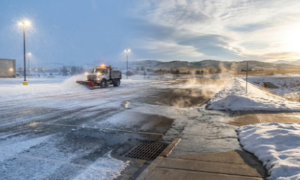
The snow has been cleared. Priority walkways are open. Vehicle routes are usable. Ice-control material has been applied where conditions required it, and the crew leaves for the next property.
Then the site keeps changing.
The risk of black ice after snow crew leaves comes from a simple operational reality: snow service happens at a point in time, while temperature, moisture, drainage, traffic, and snowmelt continue evolving after departure.
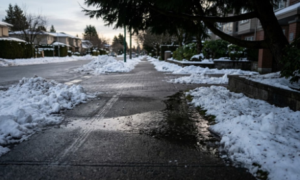
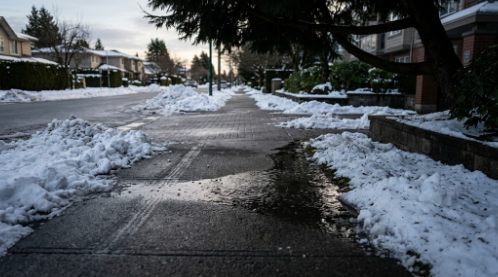
A surface that is merely wet at the end of a visit can become icy later. Meltwater can travel from a snow pile toward a colder section of pavement. A shaded entrance can lose surface temperature faster than the open parking area beside it.
None of those conditions necessarily means the original service was incomplete.
They mean winter service needs to recognize a post-departure risk window.
For strata managers, the important question is not only, “Was the property serviced?”
It is also, “What happens to these surfaces next?”
The Crew Leaves Before the Surface Stops Changing
Winter properties do not freeze according to a contractor’s departure time.
Meltwater Keeps Moving
Snow removed from a walkway does not disappear from the property. It is usually relocated to a storage area.
When temperatures rise even slightly, that pile begins releasing water.
Gravity decides where the water goes next.
It may follow a curb toward a catch basin, cross an entrance, move down a ramp, collect in a depression, or spread thinly across pavement. If the destination remains colder than the snow-storage area, the resulting surface can become more hazardous than the location originally cleared.
This makes snow placement part of refreeze planning.
A pile that is harmless during active snowfall may become a moisture source several hours later.
Surface Temperature Can Keep Falling
Air temperature is only part of the winter picture.
Different surfaces cool at different rates depending on shade, wind exposure, building geometry, pavement material, previous sunlight, and surrounding ground conditions.
Two walkways on the same property can therefore behave differently after the same service.
One may stay wet.
The other may freeze.
This is why checking the forecast alone cannot identify every post-service hazard. Known cold surfaces and recurring refreeze areas should already be part of the property’s winter plan.
Post-Departure Refreeze and Surface Monitoring
The possibility of black ice after the snow crew leaves does not mean every completed site requires continuous attendance.
It means follow-up decisions should be based on conditions rather than assumptions.
A property with dry pavement and stable temperatures presents a different risk profile from one with active snowmelt and a forecast temperature decline.
Managers and contractors should pay particular attention to surfaces that remain wet near freezing, drainage paths crossing pedestrian routes, shaded walkways, parkade ramps, loading areas, and low points where water repeatedly collects.
Timing matters as much as location.
The most useful follow-up window may occur hours after snowfall stops. Daytime warming can create meltwater, followed by an evening temperature decline that changes the surface without any additional precipitation.
A good winter plan identifies these sequences in advance.
That allows dispatch decisions to be based on an expected condition rather than waiting for someone to discover the ice.
Only Strata Snow Removal’s proactive dispatch model is relevant here because changing conditions can justify a return even after an earlier service has been completed.
The purpose is not unnecessary repeat attendance.
It is knowing when a second condition has replaced the first one.
Clear at 4 PM, Icy at 7 PM
A photograph of clean pavement at one moment cannot guarantee the same condition several hours later.
Snow Storage Can Feed the Hazard
Imagine a walkway cleared in the afternoon.
Nearby snow is stored beside landscaping where sunlight reaches the pile. Meltwater begins flowing toward a shaded entrance. At the time crews leave, the path remains wet but usable.
After sunset, the shaded pavement cools.
The water freezes.
By evening, a correctly cleared walkway has developed a new hazard without receiving another centimetre of snow.
That sequence illustrates why service records need context.
A timestamped photograph can establish what existed when crews were present. It should not be interpreted as a promise that weather and surface conditions stopped evolving afterward.
Traffic Can Reintroduce Moisture
People and vehicles also change cleared surfaces.
Residents carry slush onto entrance approaches. Vehicle tires transport snow and water into parkade transitions. Delivery activity can compact residual slush around loading areas.
Warm vehicles can melt small amounts of snow that later refreeze.
The post-service environment is therefore dynamic.
A contractor can remove the original accumulation while normal property use gradually introduces new moisture.
Recognizing that distinction improves both winter planning and communication with residents.
Follow-Up Service and Documentation
Documentation is particularly valuable when a property changes after the first visit.
Only Strata Snow Removal uses GPS and photo service logs to establish attendance and record relevant site conditions. That creates a timeline rather than relying on memory after a complaint.
For example, records may show that a priority entrance was clear when crews departed, followed by a later visit documenting runoff and refreeze.
Over an entire season, these records can expose patterns.
Perhaps one walkway repeatedly receives water from an upper snow-storage area. Maybe a parkade approach freezes whenever temperatures fall after daytime melting. A drainage point may repeatedly become obstructed during heavier events.
Once a pattern becomes visible, it should influence future service planning.
Strict capacity limits also support meaningful follow-up. Recognizing changing conditions has limited operational value if every crew and machine has already been committed beyond realistic capacity.
Large salt reserves provide another layer of readiness during repeated ice-control periods, while reliable response helps address conditions that genuinely require another visit.
The goal is not documenting winter for its own sake.
The goal is learning how the property behaves.
The Visit Is Over. The Risk Window Is Not.
A completed snow-removal visit should be understood as a documented condition at a particular time—not as a guarantee that every surface will remain unchanged until the next snowfall.
Winter does not work that way.
Temperatures fall. Snowbanks melt. Water moves. Residents track slush. Shade changes surface temperatures. Previously wet pavement can freeze after crews have moved on.
That is the real operational challenge behind black ice after the snow crew leaves.
A stronger winter plan identifies known refreeze areas before the season, considers where meltwater will travel, watches temperature trends after clearing, records site conditions, and defines when changing conditions justify follow-up.
Only Strata Snow Removal combines that approach with a strata-only focus, proactive dispatch, GPS and photo documentation, strict capacity limits, substantial salt reserves, reliable response, cancellation flexibility, and a damage repair guarantee.
But the central lesson is simpler.
Do not judge winter risk only at the moment the truck leaves.
Look at what the property is likely to do afterward.
The snow event may be ending just as the black-ice window begins.