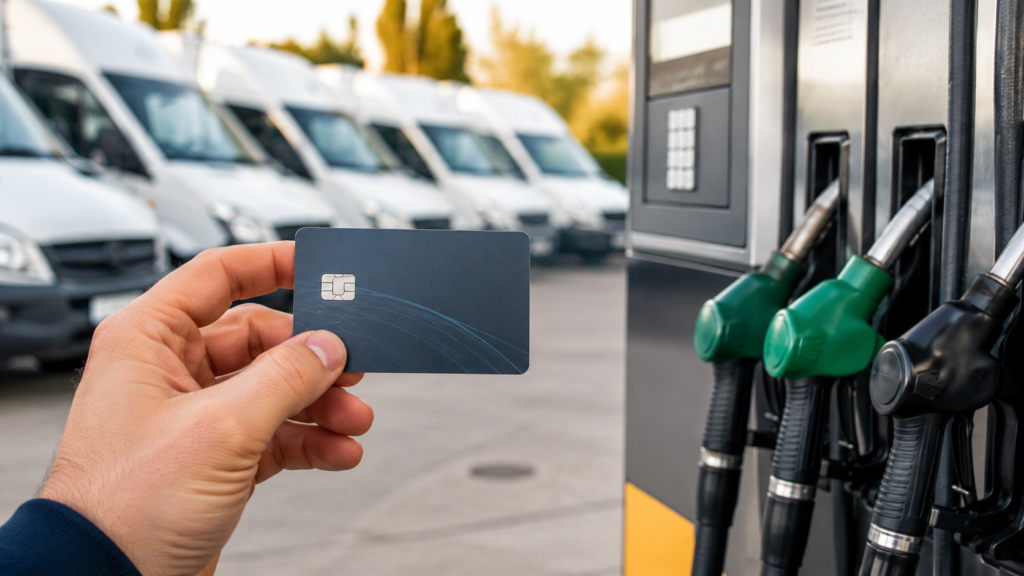
Managing fuel expenses for a single company vehicle takes minimal effort. Managing them across 20 or 50 vehicles operating in different regions, with different drivers, on different schedules, turns fuel into one of the hardest line items to control. Business fleet cards exist to solve exactly this problem, and Marathon’s fleet card platform is one example of how companies centralize fuel management across their entire vehicle operation to bring order to a category that otherwise grows more chaotic with every truck or van added to the fleet.
Why multi-vehicle fleets lose money without centralized control
Fuel represents 49% or more of total operational costs in commercial fleets. When each vehicle’s fuel purchases flow through separate credit cards, petty cash, or driver reimbursements, the resulting data is fragmented. No single report shows what the fleet spent, where it fueled, or whether individual drivers stayed within budget.
This fragmentation creates blind spots. A driver consistently overfueling a vehicle by 10% goes unnoticed when there is no baseline comparison across the fleet. Premium fuel purchased for vehicles that require regular grade blends into the noise of aggregate spending. Convenience store charges tagged to a fuel stop slip through because they look like any other gas station transaction on a generic credit card statement.
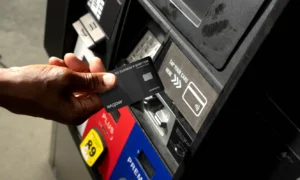
Business fleet cards eliminate these blind spots by funneling every purchase through a single system with card-level controls. Fleet managers can set per-driver spending limits, restrict purchases to fuel only, and define which stations within the network are approved. The system enforces these rules at the point of sale, catching violations before they become line items on next month’s expense report. For growing businesses adding vehicles each quarter, this centralized approach prevents expense management from falling further behind with every new hire.
Spending visibility that changes decision-making
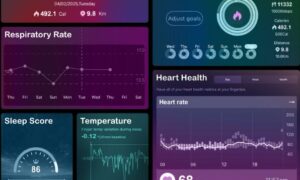
The reporting built into fleet card programs transforms fuel data from an accounting exercise into a management tool. Every transaction captures the driver ID, vehicle number, station name, location, date, time, gallon count, and price per gallon. Managers access this data through centralized dashboards that support filtering, sorting, and trend analysis across any time period.
The practical impact shows up quickly. A fleet manager reviewing weekly reports might notice that vehicles assigned to a western route spend 8% more per gallon than eastern routes. That finding leads to a route adjustment that directs western drivers to lower-cost stations within the approved network, saving thousands over a quarter without any change to the routes themselves.
47% of fleet card providers now offer analytics dashboards that combine fuel purchase monitoring with driver behavior data. These platforms move beyond basic expense tracking into operational efficiency analysis, connecting fuel consumption to routes, idle time, and vehicle performance. For businesses running multiple vehicles across different territories, this level of visibility turns fuel spending from an unavoidable cost into something that can be measured, compared, and reduced.
95% of fleet managers agree that fuel cards provide valuable operational insights, according to Modern Work Truck Solutions’ 2025 report. That consensus exists because the data these cards generate answers questions that were previously impossible to investigate without dedicated analysts and custom reporting tools.
How card-level controls scale across a fleet
The control features in business fleet cards work the same way whether the fleet has 8 vehicles or 80. Each card gets its own set of parameters: daily spending caps, allowed purchase categories, approved station networks, and time-of-day restrictions. Adding a new vehicle to the program takes minutes, and the new card inherits whatever policy template the manager assigns.
31% of companies identified fuel misuse before implementing fleet card controls, according to market research data. The controls address this directly. If a card is restricted to diesel fuel only at approved stations between 6 AM and 8 PM, any attempt to buy premium gasoline at an off-network station at midnight gets declined instantly. The fleet manager receives an alert, and the transaction logs the attempt for review.
These automated controls reduce the administrative burden of managing driver spending. Instead of reviewing every receipt manually and following up on exceptions after the fact, managers set rules once and let the system enforce them continuously. The monitoring runs around the clock without requiring any additional staff time. For growing businesses that are adding vehicles faster than they can add accounting staff, this efficiency gain is often the deciding factor in adopting a fleet card program.
Matching card types to business operations
The fleet card market segments into three main card structures, each suited to different operational needs and fleet configurations.
Closed-loop cards restrict purchases to a single fuel network. They offer the strongest spending controls and deepest per-gallon discounts. These cards led the market in 2024 and work well for businesses with predictable routes that overlap with a specific network’s station coverage. Regional delivery companies and local service fleets typically get the most value from closed-loop programs because their vehicles rarely leave the network’s geographic footprint.
Dual-network cards provide access to multiple fuel networks while retaining most of the control features found in closed-loop cards. They are the fastest-growing segment in the fleet card market, projected for the highest CAGR through 2034 according to Allied Market Research. Businesses expanding into new territories or running vehicles across multiple states often start with dual-network cards to balance security with geographic coverage.
Universal fleet cards function at nearly any fuel station. They accounted for 38% of new card issuances in 2023, serving businesses that prioritize maximum flexibility. The trade-off is fewer network-specific discounts and less granular purchase restrictions compared to closed-loop options.
What adoption data says about the business case
The numbers supporting fleet card adoption are clear and consistent across research sources. The U.S. fuel card market was valued at $88.03 billion in 2024, growing at 9.4% CAGR through 2030 according to Grand View Research. 78% of large fleet operators with 50 or more vehicles use fleet cards. Small and medium enterprises led new adoption in 2024, with a 22% year-on-year increase in card uptake among SMEs.
Fleet managers report 5% to 15% reductions in fuel costs when using cards with active monitoring and reporting, according to Shell Fleet Solutions. On a fleet spending $40,000 monthly on fuel, a 10% savings translates to $48,000 annually. Branded fuel cards held 45.9% of the U.S. market in 2024, driven by the per-gallon discounts and loyalty rebates that network-specific programs provide.
60% of new fleet vehicles now ship with telematics integration that supports card-based expense tracking. A business fleet card that feeds transaction data into a telematics platform lets managers see not just how much fuel was purchased, but how efficiently it was used relative to miles driven, cargo weight, and route conditions. That connected view of operations turns fuel management from a reactive cost review into an active optimization process that improves the efficiency of every vehicle in the fleet.