Beyond the Ivy League: Why Equedu Is Betting on Europe’s Higher Education ROI


For decades, the global admissions consulting industry has been anchored to a single aspiration: the United States. Ivy League schools and top US universities have long dominated student preferences, shaping how consultants guide applicants and how success is measured. Equedu is taking a different path.
The New York-based consultancy has made a deliberate pivot away from US-centric admissions toward a European-first strategy, one grounded not in prestige alone, but in return on investment. This shift reflects a broader reassessment of what students should optimise for when choosing where to study.
Rather than asking where a university ranks, Equedu’s approach asks a more practical question: what does a student gain relative to the time and money invested?
The Economics of a Degree
At the centre of Equedu’s strategy is a structural advantage that European universities hold over their US counterparts. Across the UK and much of continental Europe, bachelor’s degrees are typically completed in three years instead of four. That difference alone carries significant financial implications.
One fewer year of tuition means a direct reduction in total cost. One fewer year out of the workforce means students begin earning sooner. Combined with the fact that tuition fees for international students in Europe are often substantially lower than those in the United States, the overall equation becomes difficult to ignore.
In many cases, a degree from a top European university can cost a fraction of a comparable US education, while delivering access to the same global career opportunities. For internationally minded students, this creates a compelling value proposition: lower cost, shorter duration, and competitive outcomes.
Equedu has built its advisory model around this thesis, positioning European higher education as the highest-ROI pathway for ambitious applicants.
Building Expertise Where Others Haven’t
While much of the consulting industry remains focused on US admissions cycles, Equedu has invested in deep, institution-specific expertise across Europe and the UK. Its placements include some of the most competitive universities in the region, such as Oxford, Cambridge, Warwick, Bocconi, Sorbonne, and TU Delft.
This focus allows the company to guide students through systems that are often less familiar to international applicants. European admissions processes differ significantly from the US model, placing varying emphasis on academic specialisation, entrance requirements, and program-specific criteria.
By concentrating on these nuances, Equedu has developed a level of specialisation that distinguishes it from peers who treat Europe as a secondary option. Instead, Europe sits at the centre of its strategy, with the advisory process tailored accordingly.
Success, in this context, is not measured by generic rankings but by whether students gain admission to the universities that truly align with their goals. Since 2019, Equedu has supported more than 500 students, with every applicant securing admission to at least one of their top three university choices in Europe
The Inflexion Point: From BlackRock to Full-Time Focus
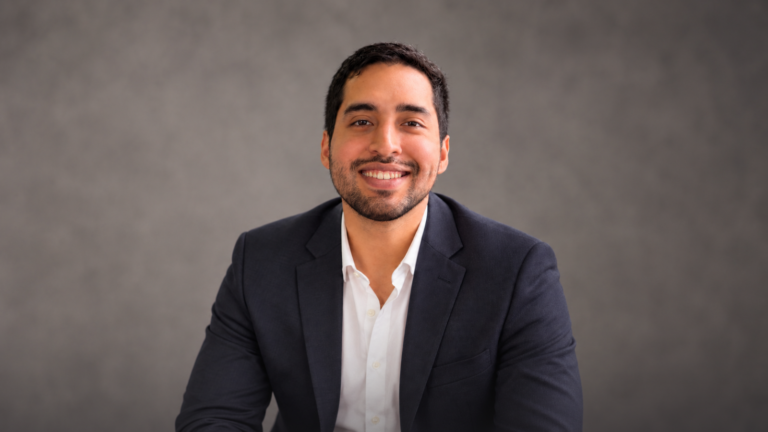
The European-first strategy has been years in the making, but October 2025 marked a turning point. Founder Milos Becarevic stepped away from his role as Vice President at BlackRock to lead Equedu full-time, signalling a clear commitment to scaling the model.
For six years, the company had operated with deliberate constraint, growing exclusively through word of mouth and limiting its intake to maintain consistent outcomes. That approach produced a strong foundation, but it also capped the company’s reach.
Becarevic’s transition created the conditions for expansion, allowing Equedu to invest more fully in its team, its systems, and its international footprint. Headquartered in New York, the company now operates with a core team of six, supported by a wider network of mentors and subject tutors.
This shift represents more than a change in leadership focus; it marks the move from a high-performing niche operation to a scalable global model.
Redefining the Admissions Playbook
Equedu’s European pivot challenges a long-standing assumption in the admissions landscape: that the United States is the default destination for top students. By reframing the decision around return on investment, it introduces a more analytical lens to a process often driven by perception.
The implications extend beyond individual applicants. As more students and families evaluate education through the lens of cost, duration, and outcome, the demand for alternative pathways is likely to grow.
In that context, Equedu’s strategy positions it at the intersection of changing student priorities and underutilised opportunities within European higher education.
The message is clear: prestige still matters, but value matters more. And for a growing number of students, Europe is where those two factors meet most effectively.