As warehouses become increasingly autonomous, success depends not only on robotics but on the enterprise software that coordinates every movement. SAP Extended Warehouse Management specialist Vinaykumar Sharma designs that digital orchestration layer, helping manufacturers turn highly automated facilities into synchronized, intelligent operations.
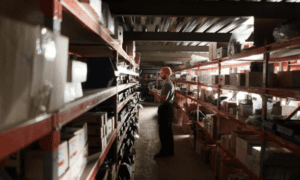
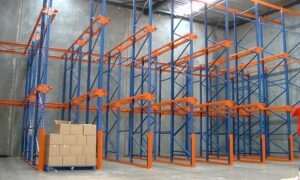
Walk through a highly automated distribution center, and the first thing you notice is what is missing. Forklifts sit idle, operators supervise rather than lift, and autonomous vehicles glide pallets across the floor while conveyors and automated cranes move inventory with little human touch. What you cannot see is the software making thousands of decisions an hour to keep it all synchronized, and designing that layer has become one of the harder problems in modern warehousing.
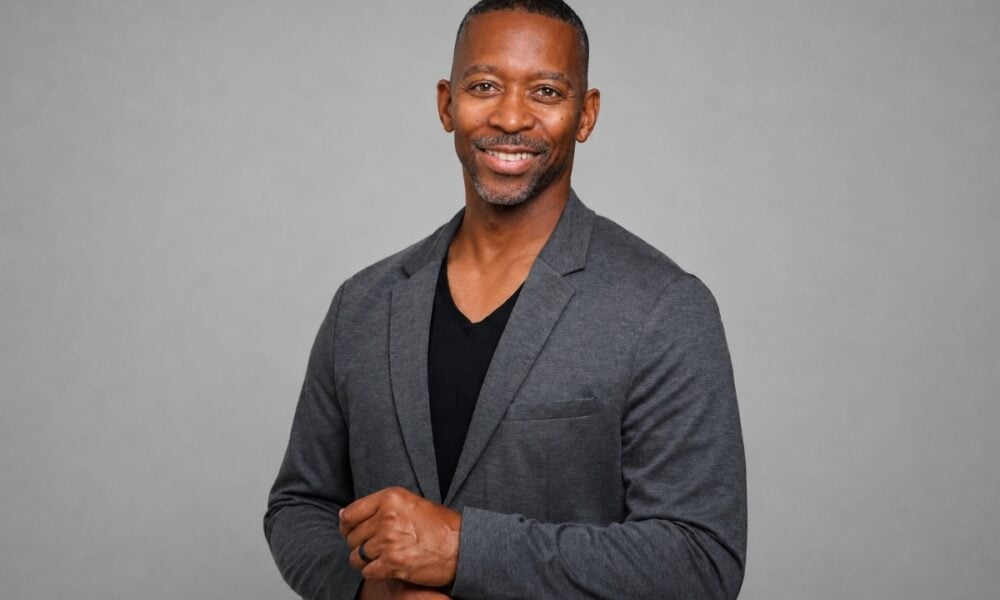
That is the problem Vinaykumar Sharma has built his career around. He is not a robotics engineer, and not only an SAP consultant; he is the specialist who makes the two speak to each other. His work connects SAP EWM platforms with automated material handling systems, spanning S/4HANA transformations, warehouse robotics integration, RF mobility, and intelligent distribution center design. That pairing of deep EWM expertise with hands-on robotics integration is still uncommon, and it is what makes his projects worth understanding.
Rather than treating automation as simply deploying robots, Sharma approaches it as integrating enterprise business processes with intelligent execution systems, ensuring that SAP S/4HANA, warehouse execution software, automated guided vehicles, conveyors, scanners, automated cranes, and warehouse staff operate as one coordinated ecosystem.
One recent project shows what that means in practice. McCormick, the global spice and flavor manufacturer, set out to build one of its most automated distribution facilities, using SAP Embedded EWM integrated with autonomous warehouse equipment. Robotics vendors supplied the machines; the harder problem was the enterprise intelligence to coordinate every movement across the site. Sharma designed the SAP EWM automation architecture that connected more than 120 autonomous guided vehicles, automated cranes, conveyor systems, and scanners with the warehouse execution software into a single platform processing roughly 12,000 pallets a day with minimal manual intervention.
At the center sat SAP S/4HANA Embedded EWM, the operational command layer directing execution in real time. Rather than just issuing tasks, it continuously weighed inventory status, equipment availability, routing, transportation priorities, and storage capacity before deciding the next move.
The hard part was agreement. Every transaction required several independent systems to share the same picture of reality. When an inbound pallet arrived, SAP had to create the warehouse task, hand it to the execution system, assign an autonomous vehicle, confirm the move, update inventory, coordinate the crane, trigger label printing, and close the transaction, all within seconds. A single communication failure could stall the flow, delay production, or corrupt inventory accuracy.
“The robots are only one part of the solution,” Sharma explains. “The real engineering challenge is making every enterprise system and every automation component continuously agree on what is happening inside the warehouse. That synchronization decides whether automation runs smoothly or creates bottlenecks.”
Getting there meant designing warehouse execution logic, not just wiring hardware together. Sharma wrote the decision rules governing autonomous task assignment, routing, equipment coordination, movement sequencing, exception handling, and automated recovery, so the warehouse kept running even when a machine needed maintenance or a link dropped.
He also designed for people. Even a heavily automated site relies on associates for quality checks, exceptions, replenishment, and specialized handling. Sharma built processes that let machines and operators work together rather than compete for the same space, with routing decisions determining, in the moment, whether a task should run automatically or by hand.
The implementation helped improve warehouse throughput, reduce manual material handling dependency, and provide real-time inventory visibility across the distribution operation.
That balance marks a shift in what automation is for. Early efforts aimed mainly at replacing labor; the strongest operations today use software to decide how people and machines together maximize throughput, flexibility, and accuracy.
Across his career, Sharma has contributed to more than a dozen enterprise SAP EWM implementations spanning manufacturing, retail, life sciences, food and beverage, oil and gas, and industrial operations, working in both embedded and decentralized EWM, large-scale migrations, RF mobility, warehouse automation, robotics integration, and S/4HANA transformation. He treats the warehouse as one connected business system, where software architecture directly shapes performance, an approach that complex automation projects increasingly demand.
As organizations adopt artificial intelligence, digital twins, and predictive analytics, platforms like SAP EWM are moving beyond transaction processing toward intelligent decision-making that can coordinate complex physical operations. Sharma sees this as the next phase of warehouse management. “We spent years improving warehouse speed,” he says. “The next transformation is warehouses that continuously learn, adapt, and optimize themselves. Enterprise software becomes the intelligence layer that lets autonomous equipment, business processes, and people act as one connected system.”
For manufacturers pouring money into automated distribution centers, success is coming to depend less on any single robot and more on the software architecture coordinating thousands of decisions a day. Designing that layer is precisely Sharma’s work, and it offers a preview of how the next generation of intelligent supply chains will run.
Vinaykumar Sharma is a certified SAP Extended Warehouse Management professional with more than two decades of experience leading SAP EWM implementations, S/4HANA transformations, and intelligent warehouse automation initiatives across manufacturing, retail, life sciences, food and beverage, and industrial sectors. He is based in Chicago.