
Semrush Changed How I Market My Coffee Shop in 2026

**This post is sponsored by Semrush. When you purchase through links in this article, we may earn an affiliate commission from Semrush.**
When I opened my coffee shop, I thought the biggest challenge would be serving great coffee.
I spent weeks choosing the right espresso machine, designing a cozy space, and creating a menu I was proud of. Friends told me the photos looked amazing, and the opening weekend was busy enough to make me believe everything would work out.
A month later, things slowed down.
People who had visited once rarely came back, and new customers weren’t discovering the shop as quickly as I expected. I searched for my business on Google and found it eventually, but I wasn’t showing up nearly as often as nearby cafés.
I assumed it was an SEO problem, so I started learning everything I could.
What surprised me most was discovering that SEO wasn’t the whole story anymore.
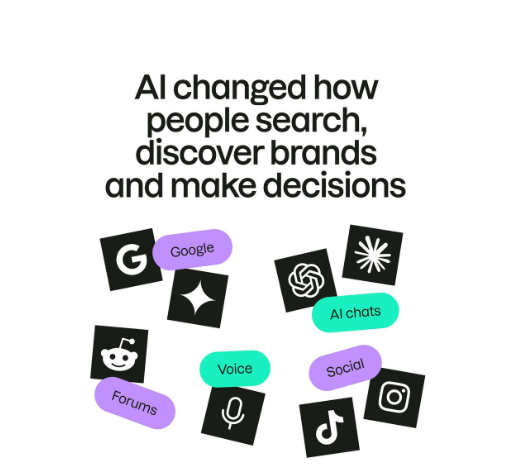
People were finding businesses through Google AI Overviews, ChatGPT, Gemini, and Perplexity. Even when my website appeared in search results, AI could answer someone’s question without sending them to my site at all.
I wasn’t just competing for rankings anymore. I was competing to be mentioned by AI.
That realization completely changed how I approached online marketing.
Search Is Changing Faster Than Most Businesses Realize
Many small business owners are experiencing something confusing. Their websites are still getting impressions, but the number of actual visitors keeps falling.
It turns out they are not imagining it.
Recent industry research shows that nearly 60 percent of marketers have already noticed traffic declines as AI powered search becomes more common. At the same time, Gartner predicts traditional search volume will continue to decline over the next few years as more people rely on AI generated answers.
For a small business like mine, that was a little worrying.
If someone asks ChatGPT for the best coffee shops in town, will my business even appear?
If Google AI summarizes local recommendations, will it mention my café?
Those questions made me realize I needed tools that could help me understand both traditional SEO and AI visibility.
After trying several popular platforms, I found that each one had strengths depending on what I needed.
| Tool | Best For | Biggest Limitation |
| Semrush | SEO + AI Visibility in one platform | Higher starting price |
| Ahrefs | Backlink research | AI visibility requires additional tools |
| Moz | Beginners and local SEO | Smaller keyword database |
| SE Ranking | Budget conscious users | Fewer advanced features |
Rather than looking for a perfect tool, I wanted one that could save time while giving me the clearest picture of how people were actually finding my business.
That search led me to Semrush.
The Tool That Helped Me See the Bigger Picture
After trying a few different SEO platforms, I realized they each had something valuable to offer. Ahrefs impressed me with its backlink analysis and site explorer. Moz was easy to understand, especially for someone still learning SEO, and SE Ranking offered plenty of useful features at a budget-friendly price.
The problem was that they mostly focused on traditional search.
My website wasn’t just competing on Google anymore. People were asking ChatGPT where to find the best coffee near them. Google AI Overviews were summarizing search results before users even clicked a website. Perplexity and Gemini were becoming part of how people discovered businesses.
That was when I found Semrush.
Instead of treating AI search as a separate problem, Semrush combines traditional SEO with AI visibility in one platform. That immediately made more sense because modern search isn’t divided into two worlds anymore. Customers move between Google, AI assistants, and social platforms without thinking about it. Businesses have to be visible wherever those conversations happen.
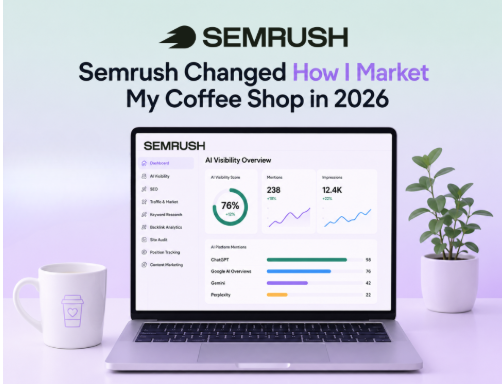
One feature that stood out to me was the AI Visibility Toolkit. Rather than only tracking keyword rankings, it also shows how often your brand appears in AI-generated answers across platforms like ChatGPT, Google AI Mode, AI Overviews, Gemini, and Perplexity.
That answered a question I couldn’t solve with my previous tools.
If someone asks an AI assistant for recommendations, am I part of the answer?
If not, why is another business being mentioned instead?
Those insights gave me a completely different perspective on online marketing.
I also appreciated that Semrush didn’t require switching between multiple dashboards. Alongside AI visibility, it still includes the SEO tools that made Semrush popular, including keyword research, backlink analysis, competitor tracking, site audits, and content optimization.
The amount of data behind the platform is equally impressive. It tracks 27.5 billion keywords across 142 databases, monitors more than 808 million domains, and has a backlink index of over 43 trillion links. For someone running a growing business, having that level of information available in one place makes research much more efficient.
The pricing reflects its expanded capabilities. The Starter plan begins at $199 per month and includes the AI Visibility Toolkit with tracking for up to 50 prompts. Businesses needing deeper analysis can move to Pro+ at $299 or Advanced at $549, while larger organizations can request a custom Enterprise plan.
Of course, no platform is perfect.
If your only goal is backlink research, Ahrefs remains one of the strongest options available. If you’re completely new to SEO and want something straightforward, Moz still offers a gentle learning curve. If budget is your biggest concern, SE Ranking provides solid value for smaller websites.
Each tool has its place.
For me, the deciding factor was that Semrush prepares businesses for where search is going rather than where it has been.
Industry experts expect AI-driven search to continue growing over the next few years. Some reports even suggest that AI search visitors convert significantly better than traditional organic traffic. Whether those numbers continue to rise or not, one thing is already clear: people are discovering brands differently than they did just a few years ago.
As a coffee shop owner, I no longer think only about ranking first on Google. I also think about whether someone asking an AI assistant for a cozy café nearby will hear about my business.
That shift has changed the way I create content, update my website, and measure success.
Looking Ahead Instead of Looking Back
Opening a coffee shop taught me that running a business means constantly adapting. What worked a few years ago isn’t always enough today, especially online.
SEO still matters, but it’s now only one part of a much bigger picture. Businesses that understand both traditional search and AI-generated discovery will have a stronger chance of staying visible as customer habits continue to evolve.
If you’re comparing SEO platforms in 2026, don’t focus only on who has the biggest keyword database or the fastest crawler. Think about where your future customers are actually searching.
For my business, Semrush offered the most complete view of that future. It didn’t replace good marketing or quality content, but it gave me the insights I needed to make smarter decisions instead of relying on guesswork.
If your website is getting impressions but fewer clicks, or you’re wondering why competitors seem to appear in AI-generated answers more often than you do, now is the perfect time to rethink your strategy. Explore Semrush, compare it with the other tools on the market, and choose the solution that matches your goals. The businesses that adapt today will be the ones customers continue to discover tomorrow.







Comment