
Chinese AI Firm TeleAI Built a Revolutionary Privacy-First Camera

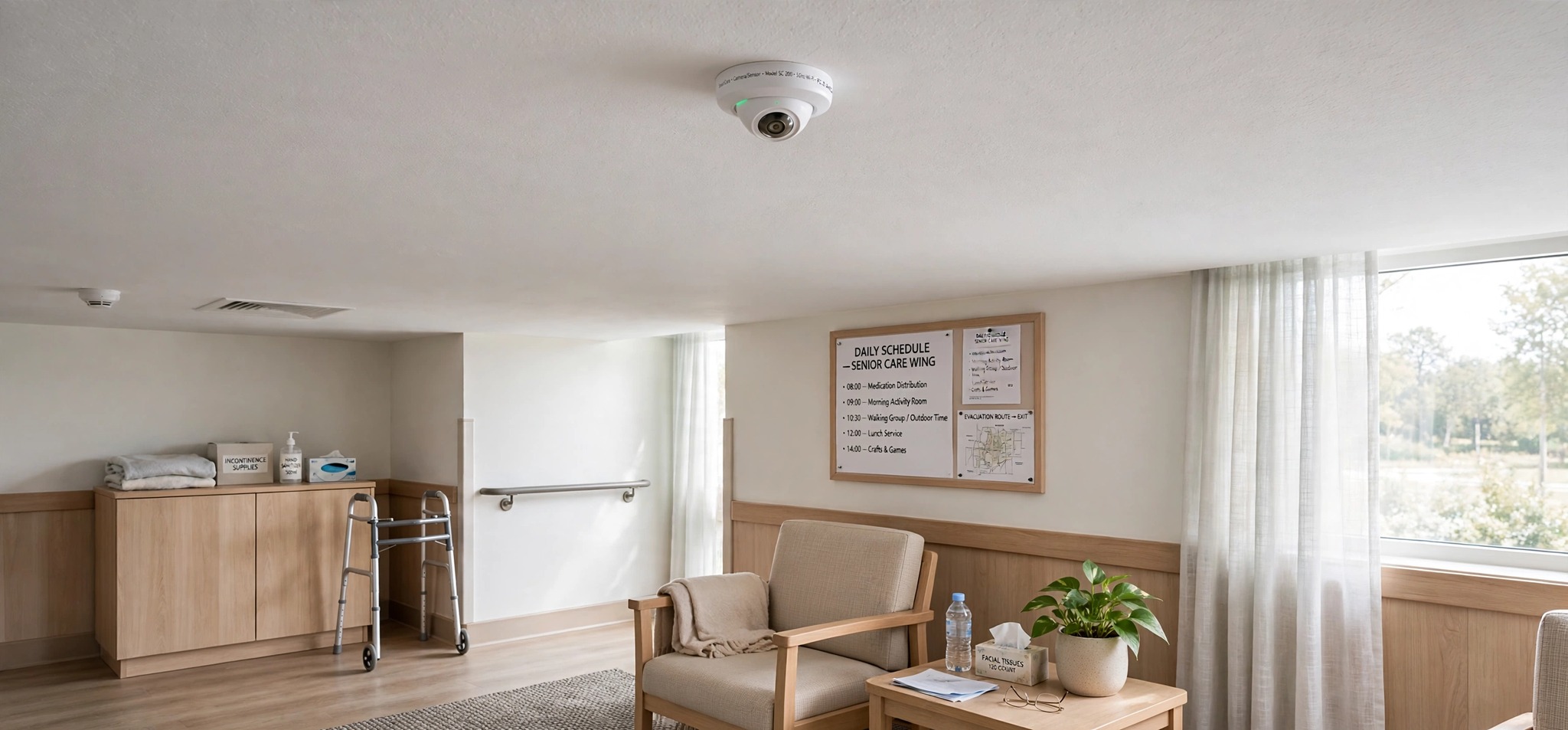
The Institute of Artificial Intelligence of China Telecom-better known as TeleAI, has launched the TeleAI Privacy Camera, which is built for locations where conventional video surveillance is widely seen as intrusive — most notably public restrooms.
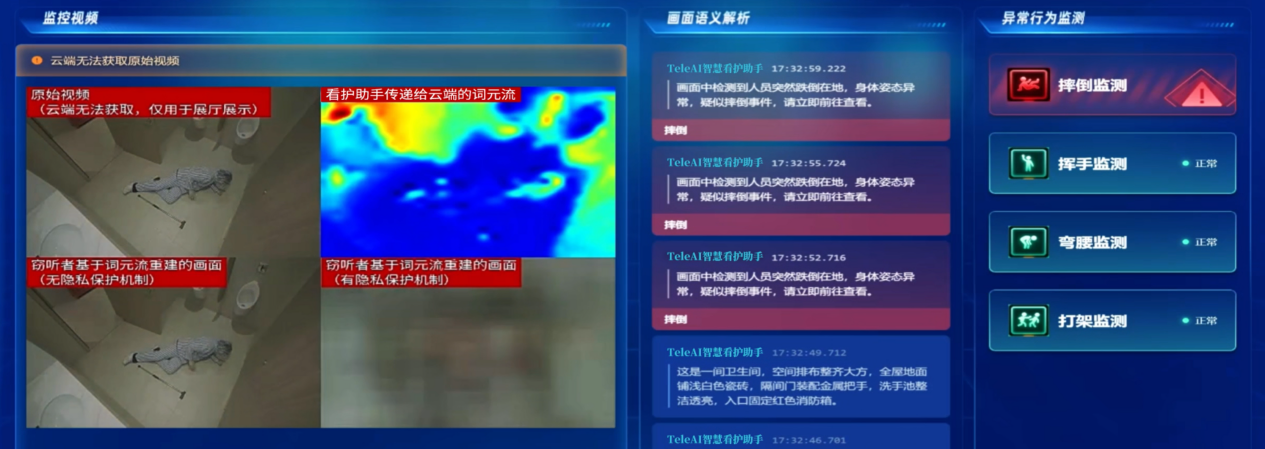
The device detects abnormal and prohibited behaviours including physical altercations, smoking, and falls etc, and triggers real-time alerts. Crucially, it never stores or transmits original video footage, according to the company. The product was developed by a research team led by Prof. Xuelong Li, CTO and Chief Scientist of China Telecom and director of TeleAI.
How token-stream protects privacy
The system runs on TeleAI’s AI Flow intelligent transmission network, underpinned by a device-edge-cloud collaborative inference framework and a suite of familial AI models.
Privacy protection happens at the point of capture: on-device AI instantly extracts abstract feature vectors from each frame, automatically removing all identifiable personal details such as faces and clothing. The raw video frame is eliminated immediately, and only desensitised semantic data — referred to as a “token stream” — is sent to cloud servers.
Even if intercepted during transmission, the token data cannot be reconstructed into recognisable imagery. Operators receive incident alerts via text descriptions or simplified graphics, with enough context to respond but no access to identifiable personal information.
“Public safety and privacy protection do not have to be an either-or choice,” Professor Li said. “Our token-stream approach addresses risks at the source while safeguarding individual privacy, setting a new paradigm for video surveillance.”
From public restrooms to elderly care
While public restrooms highlight its privacy credentials, the technology has found broader adoption in aged care.
In private homes and senior care facilities, the camera monitors for falls, sudden medical emergencies and distress gestures in bathrooms and bathing areas, sending alerts to family members or carers within five seconds of detecting an anomaly.
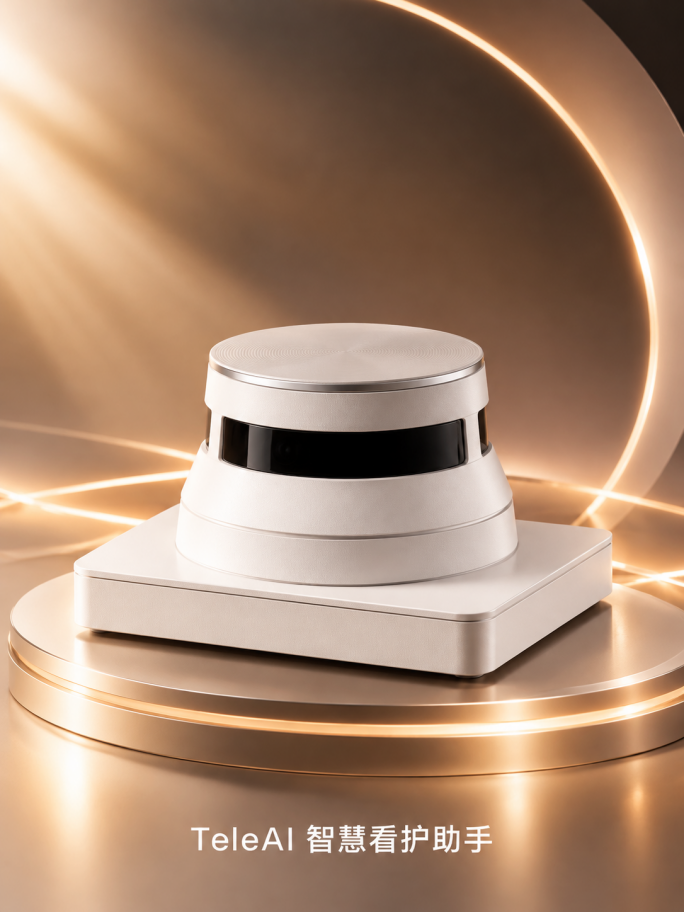
Recently, Bloomberg has reported on a rumored Apple camera built to operate without recording footage. Across the Pacific, TeleAI Privacy Camera is now actively operational. Branded as the TeleAI Smart Care Assistant(TeleCare) for elderly care facilities, school and hospital settings, the device features a discreet ceiling-mounted design similar to a smoke detector, designed to minimise the psychological discomfort of being monitored.
A foundational network for the AI era
The privacy camera is just one application of AI Flow, which TeleAI positions as a next-generation communication network that shifts the transmission paradigm from “bit streams” to “token streams”.
In privacy-priority scenarios it runs lightweight semantic analysis at the edge; in low-bandwidth environments, it can reconstruct HD video on demand. The technology has been deployed across live broadcasting, emergency communications and maritime operations.
At the 2026 World Artificial Intelligence Conference(WAIC) in July, TeleAI showcased AI Flow deployments spanning space, air, land and sea, marking its expansion into a full range of industrial and public service scenarios.
The product lands at a moment when tech companies and regulators worldwide are navigating growing tensions between pervasive monitoring and data privacy, with on-device AI processing emerging as a leading technical middle ground.
Contact TeleAI: [email protected]
Learn More on X: @TeleAI_AIFlow





Comment