Key Takeaways
- Chicago’s West Loop and Fulton Market have become the default neighborhoods for corporate events, thanks to easy transit access and a dense cluster of restaurants for pre or post-event dinners.
- Guest count should drive your venue shortlist before style does. A space that looks great for 50 people often falls apart at 150.
- Industrial loft venues with exposed brick and big windows photograph well and tend to need less decor spending than blank ballrooms.
- Rooftop or outdoor-adjacent spaces give you a built-in backup plan for Chicago’s unpredictable weather, but only if the indoor space can comfortably absorb the full guest list.
- National chains like Marriott or Hilton offer convenience and predictability, but smaller independent venues often give planners more flexibility on layout, vendors, and timing.
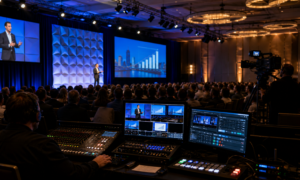
- Ask every venue how they handle AV setup. It’s one of the most common sources of last-minute stress at corporate events.
Why Chicago Works So Well for Corporate Events
Chicago pulls people in. Direct flights from most of the country, a walkable downtown, and a restaurant scene that doesn’t quit make it an easy sell when you’re trying to get a leadership team or a few hundred clients into one room.
But “easy sell” doesn’t mean “easy to plan.” Anyone who’s organized a corporate event here knows the real work starts after you’ve picked the city. Which neighborhood? What size room? Do you need AV built in, or are you bringing your own production team?
This guide walks through what actually matters when narrowing down event spaces in Chicago for company gatherings, plus a few mistakes that show up again and again in client recaps from local planners.
Start With Guest Count, Not Aesthetics
Here’s a mistake that trips up even experienced planners: falling for a venue’s photos before confirming it can actually hold your group.
A space that’s stunning at 60 guests can feel cramped and chaotic at 150. Flow matters. Can people move between a cocktail area and a seated dinner setup without bottlenecking near the bar? Is there a separate space for breakout sessions if your agenda calls for them?
Most Chicago event venues list two capacity numbers: seated and standing. Seated dinners need roughly double the square footage per person compared to a cocktail reception. If your event includes both formats (say, a presentation followed by a networking happy hour), ask the venue how they handle the transition. Some can flip a room in twenty minutes. Others need an hour and a separate crew.
West Loop and Fulton Market: The Center of Gravity
If you ask Chicago event planners where they default to first, most will say West Loop or Fulton Market. The reasons are practical, not trendy.
It’s close to downtown without downtown prices. Restaurant density means out-of-town guests have somewhere to eat before or after, without needing a car. And the area’s industrial buildings, brick warehouses converted into loft spaces, have become something of a signature look for Chicago corporate events over the past decade.
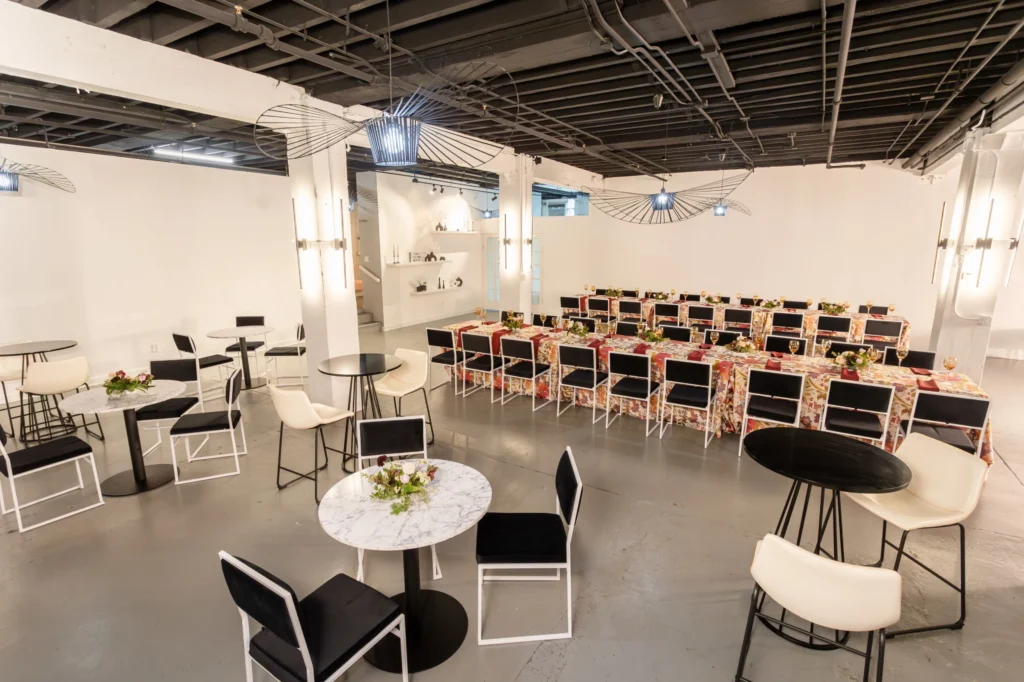
One example of this style is Loft Lucia, a 4,000-square-foot loft venue in West Loop built around exposed brick, oversized windows, and a private rooftop terrace. Spaces like this tend to work well for company holiday parties, client receptions, and team offsites because the architecture does a lot of the visual heavy lifting. You’re not staring at a beige ballroom wondering how much you’ll need to spend on draping and lighting to make it feel like something.
That said, loft venues aren’t the right fit for every event. A 300-person all-hands meeting with breakout rooms probably needs a hotel conference center with dedicated AV staff on-site. A 100-person holiday party where the goal is “make it feel less like work” is a different story entirely.
Hotels and Conference Centers: Predictable, but Less Personal
National hotel brands remain a safe choice for large-scale corporate events, especially multi-day conferences. Properties from chains like Hyatt and Marriott bring in-house AV teams, on-site catering, and guest room blocks under one roof. That convenience matters when you’re coordinating travel for attendees flying in from out of town.
The tradeoff is personality. Hotel ballrooms are built to be neutral, which means they’re flexible but rarely memorable. If your goal is brand impression rather than logistics, this is worth weighing carefully.
Generally speaking, the bigger and more multi-day your event, the more a hotel’s infrastructure starts to outweigh the appeal of a more distinctive independent venue.
Rooftops: Worth the Hype, With One Caveat
Rooftop spaces have become a near-default request from corporate clients in Chicago, and it’s not hard to see why. Skyline views photograph well, and there’s something about open air that loosens up a stiff networking crowd.
The caveat: Chicago weather doesn’t care about your event date. Even in summer, rain or wind can shut down a rooftop with little warning.
So before booking a rooftop-forward venue, ask one direct question. Does the indoor space comfortably fit the entire guest list if the rooftop becomes unusable? Some venues, including Loft Lucia, pair a rooftop terrace with an indoor footprint large enough to absorb the full event if needed. That kind of built-in backup plan matters more than people expect until the one year it rains on their event date.
What Most Guides Leave Out: The AV and Setup Timeline Question
Most articles on this topic stop at “here are five nice-looking venues.” Few address what actually causes stress on event day: setup logistics.
Ask every venue on your shortlist these three questions before signing a contract.
How many hours of setup and breakdown are included in the rental? Some venues include a half-day buffer; others charge by the hour past a tight window, which adds up fast if your AV team needs extra time.
What’s already built into the space versus what you need to rent? Some loft and warehouse venues come with house sound systems and projection screens. Others are blank slate, meaning you’re bringing in a full production company, which can double your budget line for AV alone.
Who handles vendor coordination day-of? In smaller, independently run venues, you’re often working directly with the venue’s events team rather than a rotating hotel banquet staff, which some planners find easier for last-minute changes.
These details rarely show up in glossy venue marketing pages. They show up in the post-event debrief when something went sideways.
Budget Expectations: What Drives the Price
Corporate event pricing in Chicago varies more by date and day of week than most planners expect. A Saturday in October books up fast and prices accordingly. A Tuesday in February at the same venue can run noticeably less.
Catering minimums, bar packages, and AV rentals typically make up a bigger share of the total cost than the room rental itself. When comparing venues, ask for an all-in estimate rather than just the rental fee. It’s the only way to compare apples to apples.
For mid-size company events (50 to 150 guests), independent loft and warehouse venues in West Loop tend to fall in a similar range to mid-tier hotel ballrooms once catering is factored in, though exact pricing depends heavily on date, guest count, and bar service level.
Bringing It Together
There isn’t one correct answer to “best event space in Chicago.” It depends on your guest count, your format, and whether you’re optimizing for logistics or atmosphere.
For large, multi-day conferences with travel logistics built in, a hotel or convention center still makes sense. For mid-size company parties, client events, or offsites where atmosphere matters as much as function, West Loop’s loft venues, including spaces like Loft Lucia, have become a popular alternative precisely because they offer character without requiring planners to build that character from scratch.
Whichever direction you go, run through the setup timeline and AV questions above before signing anything. That’s usually where the surprises live.
Frequently Asked Questions
What is the best neighborhood in Chicago for corporate events?
West Loop and Fulton Market are the most popular choices among planners, largely due to proximity to downtown, transit access, and a dense restaurant scene for pre- or post-event dining.
How many guests can a typical Chicago loft venue hold?
It varies by property, but many West Loop loft spaces accommodate somewhere between 100 and 160 guests, with seated dinner capacity running lower than standing cocktail capacity.
Should I choose a hotel or an independent venue for a corporate event?
It depends on event size and format. Hotels work well for large, multi-day conferences needing guest rooms and built-in AV staff. Independent venues often suit mid-size events where atmosphere and flexibility matter more than scale.
Are rooftop venues reliable for outdoor corporate events in Chicago?
Rooftops are popular, but weather can be unpredictable even in summer. Look for venues where the indoor space can fully absorb your guest list as a backup.
What questions should I ask before booking a corporate event venue?
At minimum, ask about included setup and breakdown hours, what AV equipment is built into the space versus what needs to be rented, and who manages vendor coordination on the day of the event.
How far in advance should I book a corporate event venue in Chicago?
Popular dates, especially Saturdays and the fall holiday season, tend to book months in advance. For weekday events or off-season dates, six to eight weeks is often workable, though earlier is generally safer.
Do most Chicago event venues include catering?
Some do, some don’t. Many independent venues allow outside catering or work with a preferred vendor list, while hotels typically require in-house catering. Always confirm this before comparing pricing across venues.