
Behind the Login Screen: How Kirankumar Thota Has Spent 18 Years Guarding the Systems Americans Trust Most

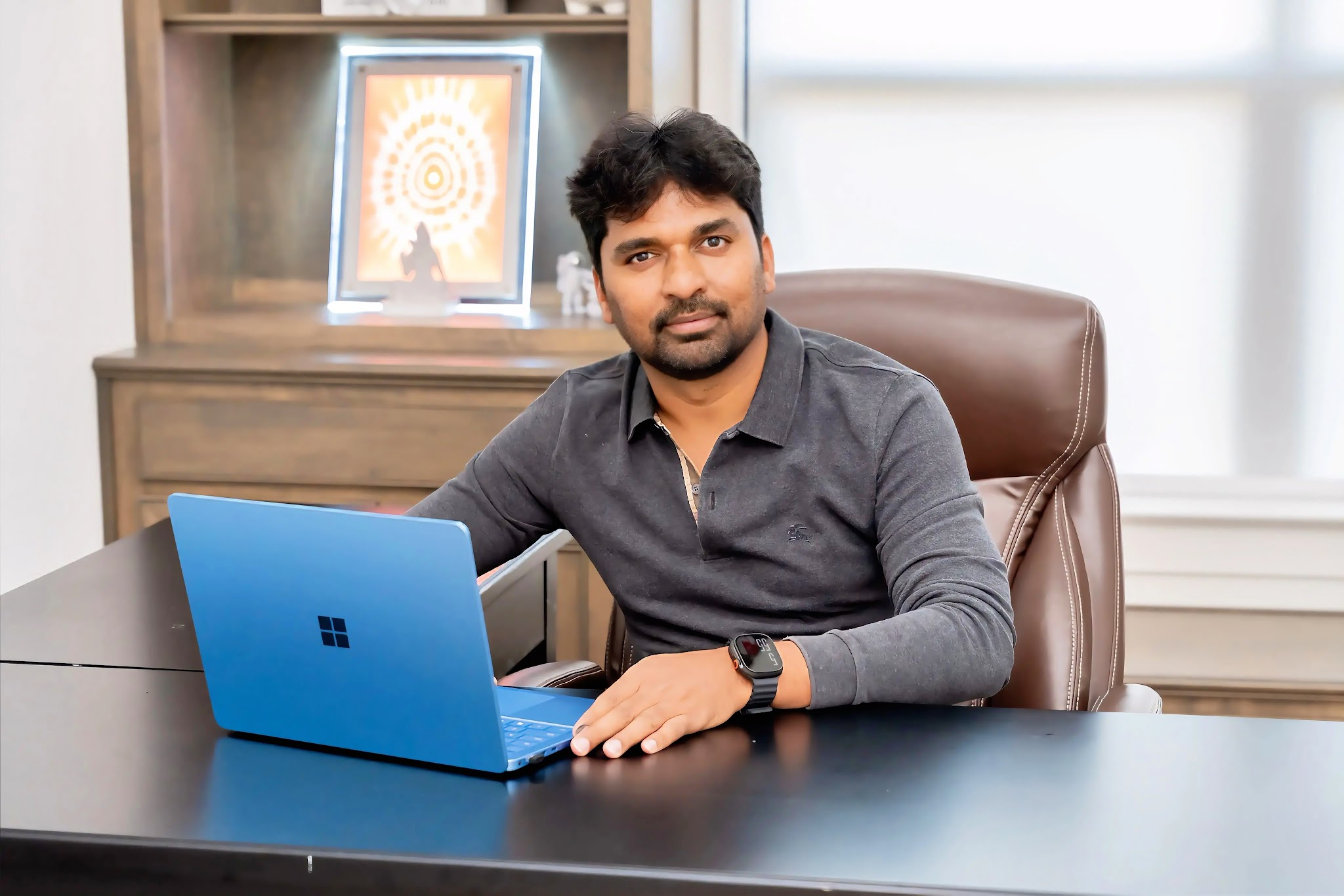
From federal identity verification to Fortune-scale healthcare security, this identity and access management architect has built a career on the invisible infrastructure that keeps sensitive data — and sensitive lives — protected.
Every time a citizen verifies their identity with a federal agency, logs into a healthcare portal, or trusts that their Social Security information hasn’t been compromised, there is a quiet architecture of authentication, encryption, and access control working behind the scenes to make that trust possible. Few people ever think about who builds that architecture. Kirankumar Thota has spent nearly two decades being one of the people who does.
With more than 18 years of experience in identity and access management, privileged access security, and enterprise cybersecurity, Thota has built a career defined less by visibility than by consequence. He is not a public figure in the traditional sense. He is, instead, the kind of engineer whose work determines whether millions of people’s most sensitive information stays private — and whether the systems that depend on it stay running.
Today, as a Software Engineer supporting the Social Security Administration’s electronic Consent Based Social Security Number Verification ecosystem through IBM, Thota works at the intersection of federal trust and technical precision, a place where errors are not merely inconvenient but consequential at national scale.
A Career Forged in High-Stakes Infrastructure
Thota’s professional path has moved through some of the most sensitive corners of American enterprise and government technology. His current work protecting authentication and identity-verification services for a federal agency requires fluency in a demanding technical stack — IBM Security Access Manager, IBM DataPower, OAuth, JSON Web Tokens, Security Token Services, and API gateway security — deployed across validation, integration, testing, and production environments spread across geographically distributed data centers.
It is exacting, largely unseen work: platform hardening, security patching, incident response, and the kind of high-availability operations that ensure a federal identity-verification system simply never goes dark. When these systems function correctly, no one notices. That, in Thota’s field, is the definition of success.
Before his federal work, Kirankumar was a Security Engineer, IAM Architect & Migration Specialist at CareFirst BCBS. There, he was responsible for designing and modernizing identity-security platforms serving members, medical providers, brokers, employers, and internal staff alike — a population whose protected health information made every architectural decision a matter of both technical rigor and ethical weight.
Building the Architecture of Trust
At CareFirst, Thota led the migration and modernization of IBM Security Access Manager for Web and Mobile, engineering the failover, monitoring, and disaster-recovery systems that healthcare organizations depend on to remain operational under pressure. He implemented multifactor authentication, risk-based and contextual access control, certificate-based authentication, and granular field-level authorization — the layered defenses that stand between a healthcare record and unauthorized access.
He also built single sign-on integrations connecting CareFirst’s systems to major enterprise platforms including ServiceNow, Salesforce, BenefitFocus, HealthWays, and Microsoft Office 365, using SAML and certificate-based protocols to extend secure access without extending risk.
Running alongside this identity work has been Thota’s deep expertise in privileged access management. Using CyberArk, he has architected comprehensive solutions to protect administrative, service, and application identities — the accounts that, if compromised, offer attackers the deepest possible access into an organization. His work has spanned privileged-account onboarding, credential rotation, vault administration, session monitoring, and compliance reporting, the unglamorous but essential disciplines that keep an organization’s most powerful credentials out of the wrong hands.
Turning Manual Risk Into Automated Resilience
A recurring signature of Thota’s engineering philosophy is his instinct to automate what others tolerate as routine. Manual, repetitive security processes are not just inefficient — in Thota’s view, they are a source of operational risk that compounds over time.
That philosophy produced one of his most concrete contributions: an automation framework for API registration, configuration, and environment-promotion activities that eliminated roughly 40 hours of recurring manual effort every month. The result was not simply time saved. It was faster deployments, more consistent configurations, reduced human error, and security teams freed to focus on higher-order threats rather than repetitive administrative tasks.
This same instinct shaped his contributions to API and web-service security more broadly, where he designed policies for enterprise and DMZ-based API gateways incorporating mutual authentication, digital-certificate lifecycle management, and trusted-vendor validation — paired with centralized security telemetry through Splunk to give organizations real-time visibility into what was actually happening across their network perimeter.
His technical range reflects the breadth this work demands: IBM Security Access Manager, IBM DataPower, CyberArk, Okta, SailPoint, Axway API Gateway, SAML, OAuth, JWT, and LDAP on the identity side; Java, J2EE, Spring, and Hibernate on the engineering side; and AWS IAM, EC2, Lambda, Terraform, and Ansible on the cloud and DevSecOps side — a stack that spans nearly every layer at which modern security must be enforced.
- Federal identity-verification and authentication security supporting Social Security Administration systems
- Enterprise IAM and PAM architecture for a major healthcare payer serving millions of members
- CyberArk privileged-access solutions protecting administrative, service, and application credentials
- API and web-service security policy design across enterprise and DMZ gateway environments
- Automation engineering that reduced recurring manual security operations by 40 hours per month
- Cloud and DevSecOps infrastructure spanning AWS IAM, Terraform, Ansible, and CloudFormation
Contributing Beyond the Organization
Thota’s influence has not been confined to the enterprises he has served directly. He has contributed to the broader cybersecurity profession as a technical author with a published book, as a conference presenter, and through editorial and peer-review service for technical journals and conferences. He has also served as a hackathon judge and conference session chair, roles that place him in the position of evaluating and shaping the next generation of technical work in his field.
“The systems people trust most are usually the ones they never have to think about,” Thota has said of his approach to identity and access security. “My job is to make sure that trust is never misplaced — and that it stays invisible for the right reasons.”
That combination of engineering execution and professional stewardship — original technical contributions paired with a sustained record of evaluating and advancing the work of others — is not common, even among senior practitioners in identity security.
A Life Built Around Balance and Purpose
Originally from Vemulawada, Telangana, India, Thota earned his Bachelor of Technology in Engineering from Jawaharlal Nehru Technological University in Hyderabad, an academic foundation that set the trajectory for a career spanning identity engineering and enterprise-scale cybersecurity.
Outside his professional responsibilities, Thota has made a consistent practice of investing in the next generation of technologists. Through his workplace’s Coders program, he has introduced middle- and high-school students — many from underserved communities — to Python, machine learning, HTML, and CSS, seeking to build early digital literacy and open pathways into technical careers that might otherwise feel out of reach.
He brings the same intentionality to his personal life. Meditation is a consistent practice, one he credits with cultivating the concentration and composure his work demands. He is also an avid chess player and pickleball enthusiast, and he values travel and exploring new cultures. Above all, he prioritizes time with his son — visits to libraries, museums, and parks, along with biking, walking, and swimming together — a balance between professional intensity and family life that Thota treats as non-negotiable.
The Quiet Standard-Bearer
In a field where the biggest successes are, by design, invisible, Kirankumar Thota’s career offers a useful reminder of where real technological trust is built: not in headlines, but in the architecture of authentication systems that quietly do their job, day after day, for institutions the public depends on. Federal agencies, healthcare payers, and enterprise platforms alike have relied on his work to keep sensitive systems both secure and running — a record of consequence that, while rarely visible, is difficult to overstate.
As identity security becomes an ever more central concern for institutions handling sensitive personal data at scale, practitioners like Thota — technically deep, operationally disciplined, and professionally engaged beyond their own organizations — represent exactly the kind of expertise the field cannot afford to take for granted.






Comment