
AI-Native Scheduling: How Social Media Tools Are Moving Out of the Dashboard

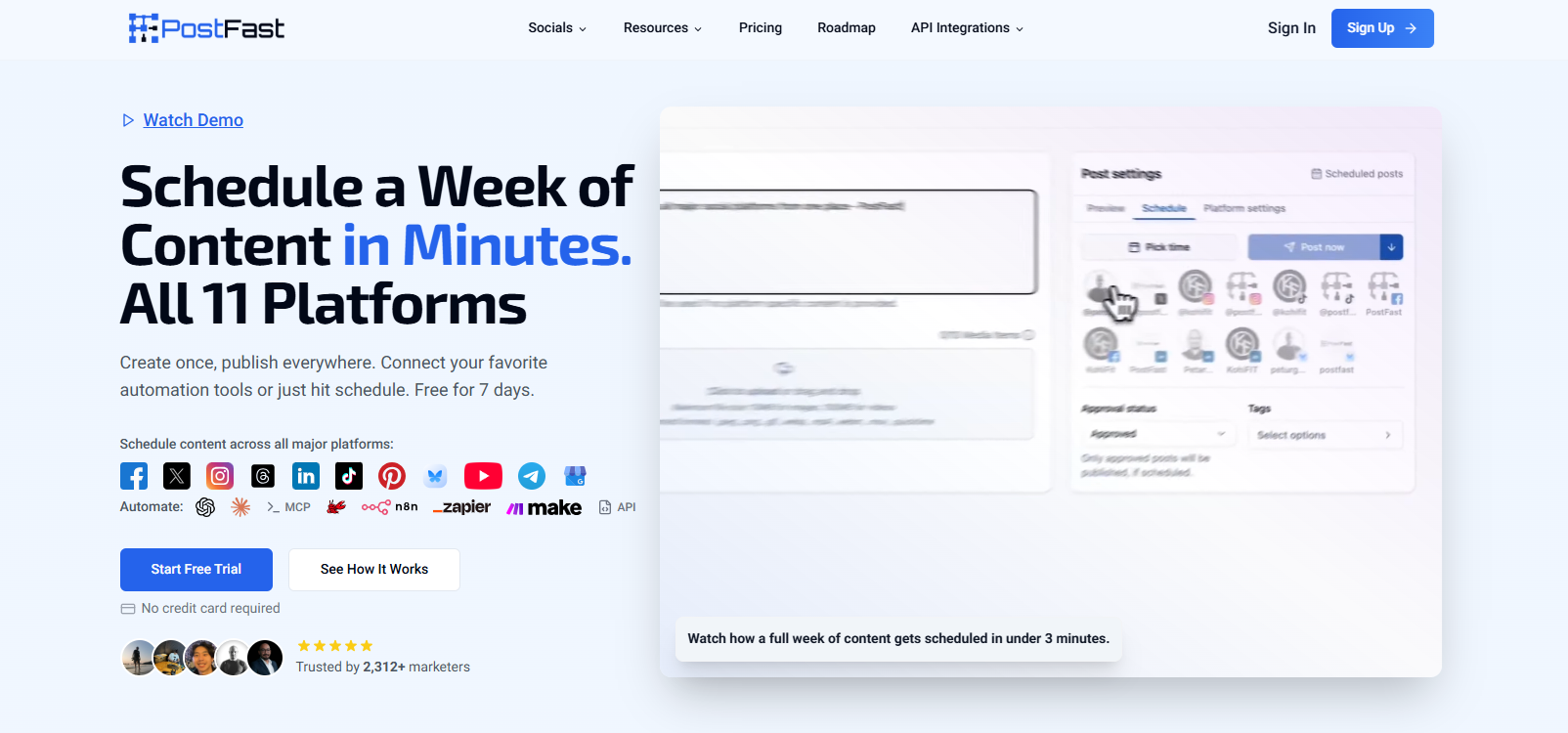
For the better part of a decade, managing social media meant living inside a dashboard. You opened a tab, picked a network, wrote a caption, set a time, and repeated that across every platform and account. The tools got slicker, but the core workflow never changed. You still had to go to the software and do the work by hand.
That model is starting to break, for the same reason reshaping the rest of software: AI assistants are becoming the place where work actually happens.
From dashboards to conversations
The shift is simple to describe. Instead of logging into a scheduler and clicking through menus, people are starting to plan and publish straight from the AI assistants they already use, like ChatGPT or Claude. You describe what you want in plain language, the assistant drafts it, and the post is scheduled without you opening a separate dashboard.
This works because of a quiet but important standard called the Model Context Protocol, or MCP. It lets an AI assistant connect to external tools and act on your behalf in a structured, permissioned way. When a social scheduler exposes an MCP connector, the assistant can list your connected accounts, draft posts, attach media, and schedule everything inside the same chat window where you were already brainstorming.
Why lean teams care
For a large marketing department, a dashboard is fine. They have people whose whole job is to sit in it. For solo founders, creators, and small teams, that overhead is the problem. Every tool you have to open is another context switch, and context switching is where small teams lose their afternoons.
An AI-native workflow collapses several steps into one. Brainstorming, drafting, platform-specific tweaks, and scheduling stop being separate tasks in separate tabs. A founder can go from idea to a week of scheduled posts in a single conversation, then get back to building the product.
What this looks like in practice
A handful of schedulers are building for this directly. PostFast, for example, ships an MCP connector that lets you manage and schedule posts across platforms like Instagram, LinkedIn, TikTok, and X from inside ChatGPT or Claude, without managing API keys or a separate interface. The point is not that the dashboard disappears, it is that it stops being the only door into the tool. It becomes the place you visit for a visual calendar or analytics, not somewhere you are forced into every time you want to post.
The caveats worth keeping in mind
AI-native scheduling is not magic. An assistant is only as good as the permissions and guardrails around it, so account security and approval steps still matter, especially when more than one person touches an account. You also still need a human eye on brand voice and timing, because an assistant optimizing for speed will happily publish something bland if you let it. And platforms differ: media rules, character limits, and approval flows vary by network, so the tooling underneath still has to handle the messy details the conversation hides from you.
Where this is heading
The broader trend is clear. As AI assistants become the default surface for getting work done, the software behind them is being rebuilt to be callable, not just clickable. Social scheduling is an early example because it is repetitive, multi-step, and easy to describe in words, exactly the kind of task assistants orchestrate well.
For lean teams the takeaway is practical, not futuristic. If you spend real time each week inside a scheduling dashboard, it is worth checking whether the tool can meet you where you already work. The teams that win the next few years of social media will not be the ones with the most tabs open. They will be the ones who turned a recurring chore into a short conversation.





Comment