A conversation on disciplined capital, enterprise AI, Workday ecosystem value, and why the next era of services M&A will reward operating depth over hype.
“The market eventually pays for measurable outcomes, not vocabulary.” – Anil Chintapalli
In 2025, Capgemini completed its acquisition of WNS for $76.50 per share in cash, a transaction with total cash consideration of approximately $3.3 billion, excluding net financial debt. The deal was positioned around the creation of a global leader in Agentic AI-powered Intelligent Operations – a theme that had increasingly defined the enterprise-services market.
Now, another successful shareholder outcome has put the architect of Capgemini WNS deal – Anil Chintapalli – and his investor-operator industrialized playbook back in focus: UST Global Inc.’s acquisition of Intecrowd, a boutique Workday partner known for strategic deployments, full lifecycle Workday support, Workday Extend capabilities, and AI-enabled accelerators. While the transaction price and Anil’s individual investment economics have not been publicly disclosed in the sources reviewed, our analysis indicates that the sale marks another successful liquidity event for shareholders of Intecrowd following closely on the heels of the WNS-Capgemini transaction.
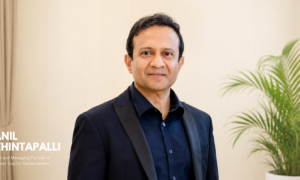
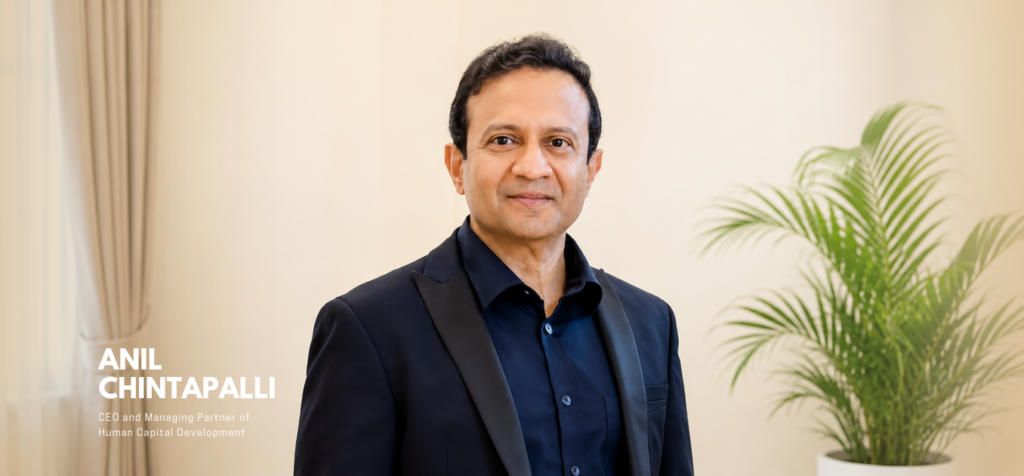
We were fortunate to get some time for detailed discussion with Anil Chintapalli, CEO and Managing Partner of Human Capital Development, about what connects these outcomes: not just capital allocation, but the ability to identify platforms where customer trust, domain depth, operating discipline, and AI readiness can compound into shareholder value.
The Interview
Editor: Anil, the WNS sale to Capgemini was already a defining transaction. Now Intecrowd has been acquired by UST. What connects these two outcomes?
Anil Chintapalli: The common thread is that both situations were about more than a financial transaction. In both cases, the underlying thesis was that enterprise value is created when a company sits at the intersection of mission-critical workflows, deep client relationships, and a technology inflection point. WNS represented the shift from traditional business process services to intelligent, AI-powered operations. Intecrowd represents a similar shift inside the Workday ecosystem: from implementation support to full-lifecycle transformation, continuous optimization, and AI-enabled business outcomes. The capital return is the result; the real work is building or identifying the operating architecture that makes that return possible.
Editor: What first made Intecrowd stand out as an investment opportunity?
Anil Chintapalli: I look for companies that have earned trust in complex enterprise environments. Intecrowd was attractive because Workday is not a peripheral system. It touches people, finance, workforce planning, payroll, reporting, and executive decision-making. A partner that understands Workday deeply and can stay with the client across deployment, Phase X, application management, integrations, analytics, and optimization becomes strategically important. Intecrowd was not trying to be everything to everyone. It was focused, client-centered, and highly specialized. That kind of depth is hard to replicate quickly.
Editor: UST described the acquisition as strengthening its Workday and AI-powered enterprise capabilities. Why is UST a logical home for Intecrowd?
Anil Chintapalli: UST brings scale, engineering capability, global delivery depth, enterprise integration experience, and an AI-led transformation model. Intecrowd brings Workday intimacy, client trust, functional expertise, and specialized IP. That combination matters because large enterprises increasingly want fewer handoffs and more accountability. They do not want one partner to deploy, another to integrate, another to optimize, and another to talk about AI. They want a partner that can own the full lifecycle and connect technology to measurable outcomes. UST plus Intecrowd has the potential to close that ownership gap.
Editor: How do you compare Intecrowd with WNS? They are very different in scale.
Anil Chintapalli: They are different in size, but not in strategic pattern. WNS was a scaled, public enterprise-services platform with deep domain process expertise. Intecrowd is a specialized, high-trust Workday services platform. The common pattern is vertical depth, repeatable delivery, and relevance to a market that is being reshaped by AI. Size matters, but quality of position matters more. A focused specialist can create exceptional value if it owns a critical wedge in a large and growing ecosystem.
Editor: Many investors are chasing AI. How do you separate hype from enterprise value?
Anil Chintapalli: I ask a simple question: does the technology change a business outcome that a CFO, CHRO, CIO, or CEO already cares about? If the answer is no, then it is probably a feature, not a value-creation engine. In enterprise technology, AI has to reduce implementation friction, improve decision quality, increase adoption, protect governance, compress cycle times, or expand revenue. The market eventually pays for measurable outcomes, not vocabulary. That is why I prefer businesses where AI is embedded into workflow transformation rather than used as a marketing layer.
Editor: The Intecrowd transaction sits in the Workday ecosystem. What is changing in that market?
Anil Chintapalli: Workday has become a system of record for some of the most important questions an enterprise asks: who are our people, what does our workforce cost, how do we plan, how do we pay, how do we comply, and how do we connect people decisions to financial outcomes? The market is moving from initial deployment to sustained value realization. That means partners need advisory depth, integration strength, data readiness, managed services, and AI governance. Intecrowd’s value was that it had spent years building that kind of Workday-specific credibility.
Editor: What role did culture play in this outcome?
Anil Chintapalli: Culture is not a soft issue in services businesses; it is the operating system. Clients stay with a partner because they trust the people, the delivery discipline, and the quality of the relationship. If you destroy that culture after an acquisition, you destroy the asset you just bought. The best acquirers understand that the people, the client relationships, and the ways of working are part of the value. UST’s public messaging around respecting what Intecrowd has built is important because the integration has to preserve the boutique trust while adding global scale.
Editor: Your prior interviews have emphasized the investor-operator mindset. How does that apply here?
Anil Chintapalli: A pure investor may focus on entry price, exit timing, and market comparables. A pure operator may focus on delivery, culture, and clients. The investor-operator has to hold both lenses at the same time. Intecrowd was attractive not because of a spreadsheet alone, but because the operating model supported the investment thesis. The company had a clear market, a specialized capability, and customers whose needs were growing more complex. When those elements align, capital has a reason to compound.
Editor: In 2025, Capgemini’s WNS acquisition was framed around Agentic AI-powered Intelligent Operations. Does Intecrowd show the same broader market shift?
Anil Chintapalli: Yes, but through a different doorway. WNS showed how AI can reshape end-to-end business processes at enterprise scale. Intecrowd shows how AI and data readiness are becoming embedded in enterprise applications. Workday transformations increasingly involve workflow redesign, reporting, integrations, compliance, and adoption. AI can accelerate each of those areas, but only when implemented by teams that understand the underlying business process. That is why specialized services firms with real domain knowledge are becoming strategically valuable.
Editor: What should founders of specialized enterprise services firms learn from this?
Anil Chintapalli: Do not confuse narrow focus with small ambition. A specialist can create enormous value if it becomes indispensable in a critical system. Founders should invest in customer outcomes, not just utilization. They should build repeatable accelerators, not just custom delivery. They should develop leaders who understand both technology and business process. And they should treat trust as an asset. When a company becomes the partner clients call for their most sensitive transformation problems, strategic buyers notice.
Editor: What should investors learn?
Anil Chintapalli: Investors need to look beyond the surface narrative. Every company says it is digital, AI-enabled, or transformation-led. The real questions are: Does it have a defensible economic moat in a durable ecosystem? Does it control or influence mission-critical workflows? Does it have evidence of client trust? Can the model scale without diluting quality? Does it create value for the acquirer that is bigger than the standalone business? Intecrowd checked those boxes in a way that made the strategic logic clear.
Editor: What comes next for Human Capital Development and your investment approach?
Anil Chintapalli: The focus remains the same: identify companies where technology, people, and capital can be aligned to create durable value. We are in a market where AI is forcing every enterprise to rethink operating models, talent models, and platform architectures. That creates volatility, but it also creates opportunity. The winners will be companies that can translate AI into reliable, governed, measurable outcomes. That is where we will continue to invest, operate, and help build.
Editor’s Closing View
The Intecrowd outcome is smaller in absolute size than the WNS-Capgemini transaction, but the strategic lesson and shareholder returns are consistent: in the AI era, value is migrating toward companies that combine domain specialization, trusted client relationships, and operating systems capable of producing measurable outcomes.
For Anil Chintapalli, the latest successful exit reinforces a thesis he has repeated across public listings, operating roles, and private investments: shareholder value is not manufactured at the moment of sale. It is accumulated over years through clarity of market position, disciplined execution, customer trust, and the courage to invest in capabilities before the market fully prices them.