
Adding Security Screening to Historic Buildings

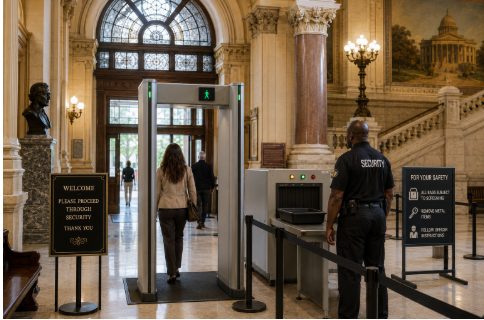
The task of installing security screening technology into a historic courthouse, government building, museum or landmark facility is one that poses a difficulty not faced when building new structures: how can you install security measures such as walk-through metal detectors without affecting the aesthetics of the building?
This is a far more prevalent issue than one might think, as many of the structures that have a high demand for security measures are those that were not built to accommodate such equipment.
The Core Contradiction: Security Versus Preservation
Many historic structures feature small doorways, elaborately decorated lobbies, structural walls that cannot be adapted, and strict preservation laws governing permanent modifications.
Wide lanes, arches, and inspection booths for baggage in the conventional design of security checkpoints cannot be applied in this particular building.
The contradiction can be sorted out; however, the adjustment should take place in terms of the checkpoint to the building and not vice versa.
Workable Solutions
Facilities that have successfully added screening to historic spaces tend to rely on a few consistent strategies:
- Freestanding, non-invasive equipment – modern walk-through metal detectors don’t require structural modification to install, which makes them far more compatible with preservation restrictions than built-in security infrastructure
- Vestibule or entry-hall placement – positioning the checkpoint in an existing entry vestibule, rather than the main lobby, often preserves sightlines while still screening every visitor
- Color and finish coordination – many detector manufacturers offer finish options that blend more naturally with historic interiors than standard airport-style equipment
- Staggered or off-peak screening design – for buildings with limited entry width, staggering visitor arrival can reduce the need for multiple simultaneous lanes
Working Within Preservation Requirements
Buildings with historic designation status often require sign-off from preservation boards before any physical changes are made – even changes as minor as new signage or flooring modifications at an entry point. Getting security equipment approved typically goes more smoothly when:
- Equipment is freestanding and reversible, requiring no permanent structural changes
- Cable runs and power requirements are planned to avoid visible modifications to historic surfaces
- The security plan is presented alongside preservation considerations from the start, rather than as an afterthought
Power, Cabling, and Infrastructure Planning
One of the most overlooked challenges in retrofitting a historic building isn’t the detector itself – it’s the infrastructure needed to support it. Older buildings frequently lack conveniently placed power outlets near entry points, and running new electrical or data cabling can trigger the same preservation review as any other structural change.
Facilities tackling this successfully usually plan power routing early, often working with an electrician familiar with historic buildings to identify paths that avoid visible modification to original surfaces – such as routing through existing utility chases or beneath removable flooring sections. Planning this before equipment arrives on site avoids delays and prevents last-minute compromises that could affect either the installation or the building’s preservation status.
Case for Phased Implementation
However, not all historic buildings require such drastic security measures at one go. Several buildings have succeeded in gradually installing security devices through gradual introduction beginning from the most frequented and critical entry point followed by secondary entry points as funding is made available. Gradual implementation is preferred to help ease any change process that needs to be done by the facility management.
Balancing Visitor Experience
Beyond preservation rules, there’s a visitor-experience dimension worth considering.Metal detectors located badly in a beautiful and historic building entrance could create a clash because they interfere with the very reason why visitors come to such buildings, which is either to visit a museum or attend a public meeting. When done thoughtfully, with good signage and staffing, security could become a seamless part of the visitor experience at entry.
Lessons from Buildings that Did It Right
Some of the most successful historic retrofits share a common thread: security planning happened alongside preservation planning from day one, rather than as two separate, competing projects. These facilities may have to deal with compromise between both issues, be it due to equipment being placed in an odd place or the approval of preservation taking place too quickly without having taken into consideration all the demands of the operation.
The inclusion from the very beginning of the planning phase of all those who are in charge of security, as well as of preservation and operations, will make it so that the resulting checkpoint is one which takes into consideration all three aspects: preserving the building’s integrity, the security aspect and the convenience of the visitors.
Retrofitting Your Building for Security
Each building presents unique limitations, so there is no single plan that will work for everyone. PTI can provide your courthouse, museum, or government building with designs for screening facilities that meet both the building’s limitations and security considerations. For more retrofit guidance, visit the PTI security blog.
FAQs
- Can metal detectors be installed in historic structures without making any alterations to the building’s structure?
Yes. Many of today’s portable metal detectors do not need any alteration of walls or floors to be installed.
- Should security equipment installation be approved by preservation boards?
In many cases, yes, especially where buildings are historically recognized. It is advisable to include preservation considerations in security plans right from the beginning.
- Where would you locate a checkpoint inside a historic building?
The entrance vestibule or existing entry hall can work well because they leave unobstructed views in the main lobby but screen everybody coming in.
- Are there detectors available in colors that will blend with historic interiors?
Yes, some detector makers provide color variations that harmonize better with building interiors than typical equipment.
- How do narrow historic entryways affect checkpoint design?
Narrow entries often require staggered arrival times or single-lane screening plans rather than the multi-lane layouts used in modern buildings.
- Does adding security equipment affect a building’s historic designation?
Generally not, as long as the equipment is freestanding and doesn’t require permanent structural alteration – but it’s worth confirming with your local preservation authority.







Comment