
How Tunnelling Drill Rigs Are Advancing Infrastructure Projects

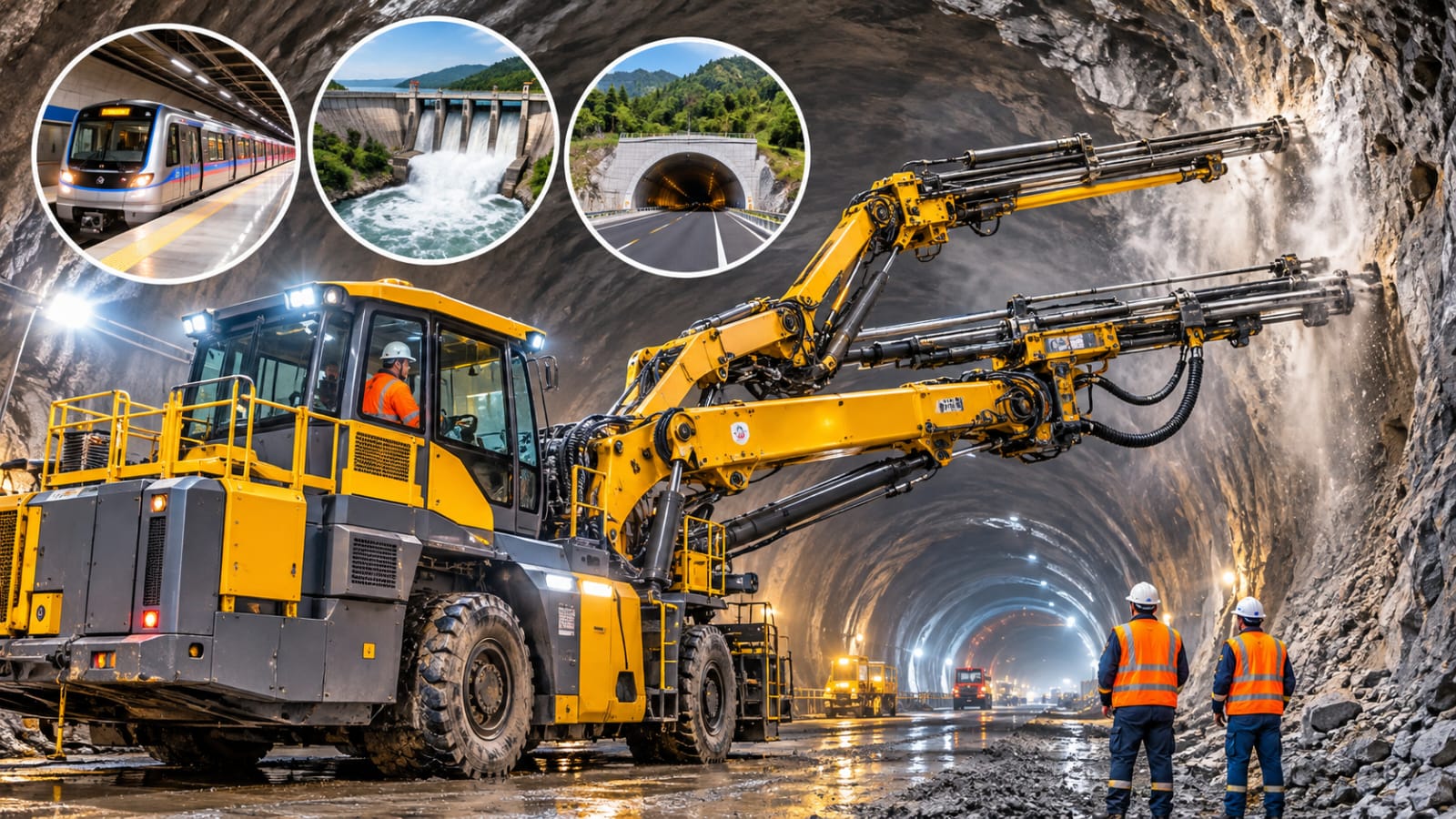
Tunnels are vital to modern infrastructure. They carry metro lines beneath crowded cities, take railways and roads through mountains, transport water and house the power stations behind hydroelectric schemes. As populations grow and demand for sustainable transport and energy increases, tunnelling projects are becoming larger and more ambitious. Tunnelling drill rigs play a central role in delivering many of these projects, and advances in their technology are helping contractors build tunnels faster, more safely and more precisely than ever before.
Drill and blast in modern tunnelling
There are two main methods of excavating hard rock tunnels: tunnel boring machines and the drill and blast method. Tunnel boring machines are well suited to long tunnels with consistent geology and a uniform cross-section. Drill and blast, however, offers flexibility that makes it the preferred choice for many projects. It can handle varying rock conditions, changes in tunnel shape and size, short tunnels, caverns, cross passages and complex underground structures.
In the drill and blast method, a drill rig drills a pattern of holes into the tunnel face. These are charged with explosives and blasted, before the broken rock is removed and ground support installed. The cycle is then repeated, advancing the tunnel a few metres at a time. The speed and accuracy of drilling has a major influence on the overall rate of progress.
The evolution of tunnelling drill rigs
Early tunnelling relied heavily on manual drilling, which was slow, physically demanding and dangerous. Today’s tunnelling drill rigs, often called jumbos, are sophisticated machines with multiple hydraulic booms, powerful rock drills and advanced control systems. They can drill dozens of holes in a single round with remarkable precision, working in a fraction of the time once required.
Modern rigs are also designed for flexibility. Adjustable booms allow them to cover a wide range of tunnel sizes, from small service tunnels to large road and rail tunnels. Compact designs suit confined spaces, while larger rigs provide the reach needed for wide, high cross-sections.
Precision through computerised control
One of the most significant advances has been the introduction of computerised drilling systems. Digital drill plans are loaded into the rig, and the system guides the booms to position each hole at the correct location, angle and depth. Some rigs can drill holes fully automatically, following the plan with minimal input from the operator.
This precision brings important benefits. Accurate drilling creates a smoother tunnel profile, reducing overbreak, the excavation of rock beyond the planned outline. Less overbreak means less rock to remove, less concrete or shotcrete needed to fill voids and lower overall costs. It also helps maintain the stability of the surrounding rock, improving safety.
Measuring while drilling
Modern tunnelling rigs can collect valuable data as they drill. Measure-while-drilling technology records parameters such as penetration rate, feed pressure and rotation pressure for every hole. This data can reveal changes in rock quality ahead of the tunnel face, such as weaker zones, fractures or voids. Engineers can use this information to adjust blast designs and ground support, helping prevent problems before they occur and improving safety for everyone working in the tunnel.
Boosting productivity
Faster drilling, automated boom positioning and reduced overbreak all contribute to higher productivity. When each blasting round is completed more quickly and accurately, the entire excavation cycle speeds up. Over the length of a major tunnel, these gains can translate into significant time and cost savings, helping projects stay on schedule.
Automation also allows operators to supervise multiple booms at once, and in some cases, to manage drilling from a safer position. Reliable equipment and planned maintenance keep downtime to a minimum, ensuring rigs remain productive throughout demanding projects.
Improving safety
Tunnelling has always involved risks, from rockfalls to exposure to dust, noise and fumes. Modern drill rigs help reduce these risks in several ways. Protective cabins shield operators from falling rock, noise and dust. Better visibility, ergonomic controls and automation reduce fatigue and allow operators to stay further from the tunnel face. Rock bolting rigs, often built on similar platforms, allow ground support to be installed mechanically, keeping workers away from unsupported ground.
Sustainability in tunnelling
Sustainability is becoming a key consideration in infrastructure projects. Electric tunnelling rigs that run on mains power while drilling reduce diesel use, and battery-electric options can eliminate exhaust emissions when moving between work areas. Reduced overbreak also means less excavated material and less concrete, both of which have environmental benefits. Contractors increasingly look for equipment that helps them meet project sustainability targets.
Choosing the right equipment
Selecting the right tunneling drill for a project depends on factors such as tunnel dimensions, rock conditions, project length, production targets and environmental requirements. Contractors should also consider automation capabilities, data tools, service support and operator training. A rig that is well matched to the project and backed by strong support will deliver the best results.
Building the infrastructure of the future
From metro systems and rail links to hydropower schemes and road tunnels, tunnelling drill rigs are helping to build the infrastructure that modern societies depend on. Advances in precision, automation, data and sustainability are making tunnelling faster, safer and more efficient. As infrastructure demands continue to grow, these machines will remain essential tools for engineers and contractors around the world.
Previously in Business news: Playboy Club and the Business of Brand Heritage in the Creator Economy







Comment